
I just finished reading a fascinating new paper from researchers at Changchun University of Chinese Medicine that does a great job of highlighting the power of mushrooms to improve gut health.
Published in npj Science of Food, this comprehensive review dives deep into explaining how edible fungi are essentially master gardeners for the microscopic ecosystem living inside our gut, restoring the conditions under which the gut can fix itself.
The Gut Garden You Never Knew You Had
Gut health is trending big time these days. And for good reason. Your gut is home to somewhere between 10¹³ and 10¹⁴ microbial cells. That’s a lot. Roughly the same number as all the cells in your entire body. Think about that for a second. You’re essentially a walking, talking ecosystem. And like any ecosystem, it can flourish or fall into disarray.
Modern life – with its processed foods, antibiotic overuse, environmental toxins, and chronic stress – has been wreaking havoc on this internal garden. The researchers describe it as “dysbiosis,” but you might know it better as bloating, inflammation, and excessive gas. Well, it’s all connected to a microbial imbalance.
Enter the Mushrooms
Drawing on several hundred preclinical and clinical papers, this study elegantly demonstrates that mushrooms are some of the most effective functional foods for improving gut health. The paper focuses on varieties ranging from everyday culinary mushrooms like shiitake (Lentinula edodes) to medicinal fungi like reishi (Ganoderma lucidum) and lion’s mane (Hericium erinaceus).
The magic lies in their bioactive compounds, especially β-glucans, polysaccharides, and terpenoids. Studies show that these bioactive molecules trigger specific responses in your gut microbiome, which in turn can have profound effects on the overall functioning of your digestive system.
The Triad
The researchers describe what they call a “component-microbiota-host” triad. Essentially, a nerdy way of describing the three-way relationship that occurs between mushroom compounds, your gut bacteria, and your body’s cells.
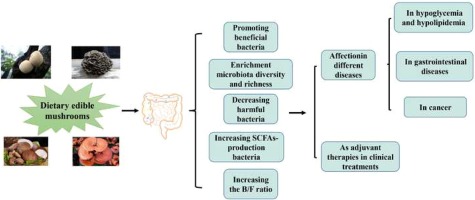
Here’s how it works: When you eat mushrooms, their polysaccharides act like prebiotics, selectively feeding beneficial bacteria like Bifidobacterium and Lactobacillus. These good bacteria, in turn, produce short-chain fatty acids (SCFAs) – particularly butyrate, acetate, and propionate.
SCFAs are vital signaling molecules that strengthen your intestinal barrier, calm inflammation, and even influence your immune system through pathways like GPR41/43 receptors and histone deacetylase (HDAC) inhibition.
In other words, mushrooms feed the bacteria that produce the compounds that regulate your entire system via the gut.
However, it must be stressed that most of these findings come from animal studies and lab experiments. The authors are transparent about this gap. As they note, “realizing this potential in evidence-based human applications requires a concerted effort to bridge the identified gaps, particularly through rigorous clinical trials.”
There’s also the tricky question of dosage. Eating a serving of mushrooms with dinner is very different from taking a concentrated extract. The researchers point out that β-glucans from cereals (used for cholesterol management) are typically consumed at gram-level doses, while mushroom-derived β-glucans come in much smaller amounts.
Best Mushrooms For The Gut
When it comes to specific species, the study highlighted a couple of notable species.
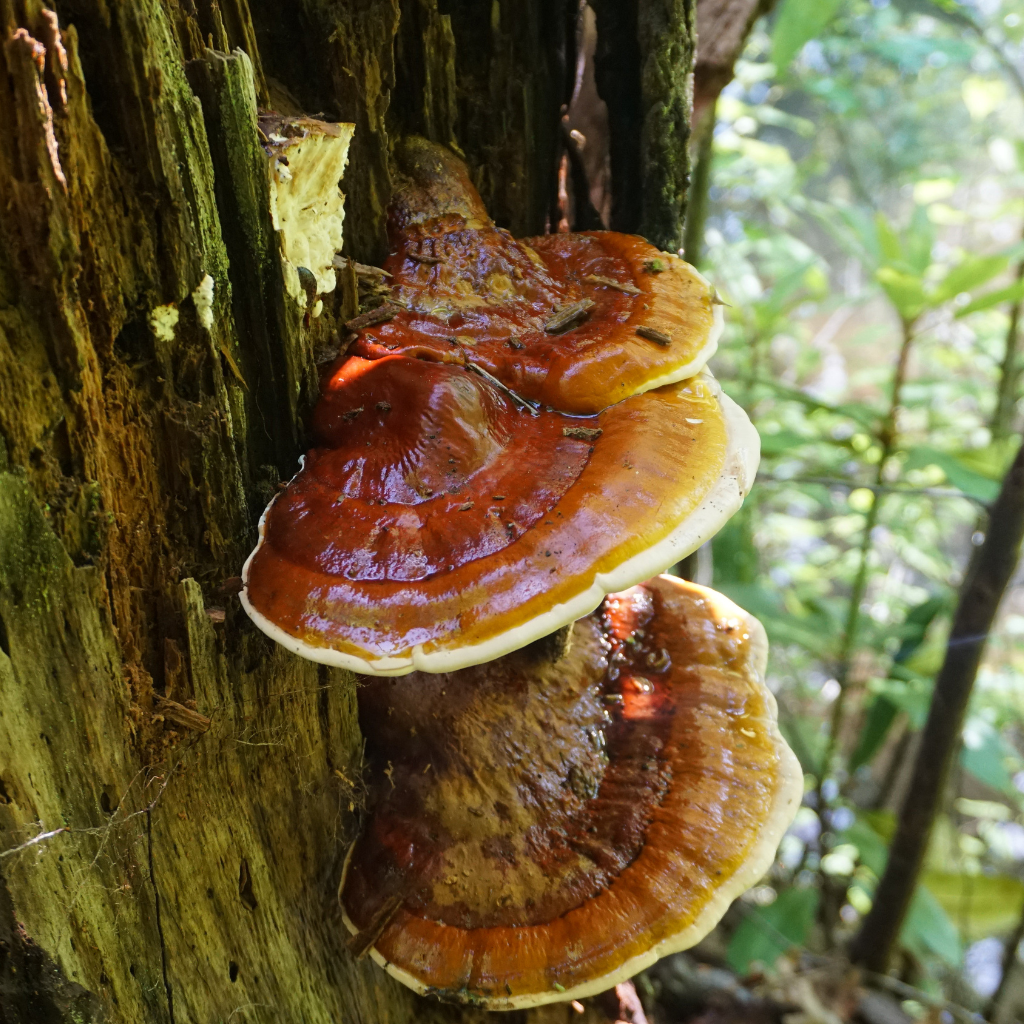
Reishi (Ganoderma lucidum) is the most studied and understood. The study describes how its polysaccharides, in animal models, were observed to reduce the abundance of certain bacteria while promoting others, ultimately lowering inflammatory markers and improving glucose tolerance. One eight-week intervention showed reductions in weight gain, fat accumulation, and inflammation in mice fed a high-fat diet.
Lion’s mane (Hericium erinaceus) is my personal favourite. Beyond its well-known cognitive benefits, this flowing white mushroom appears to work through the gut-brain axis. Its compounds, including hericenones and erinacines, may promote nerve growth factor synthesis while simultaneously modulating gut bacteria involved in tryptophan metabolism.
Turkey tail (Trametes versicolor) is perhaps the most impressive when it comes to microbiome modulation. The study highlights how its polysaccharides (PSK and PSP) work through dual TLR2/TLR4 receptor activation, essentially training your immune system while reshaping your microbial landscape. In Japan and China, turkey tail extracts are actually used alongside conventional cancer treatments, which speaks to its potent immunomodulatory effects.
Shiitake (Lentinula edodes) might be the most accessible gut health mushroom out there as you can find it fresh in most grocery stores. Its compound lentinan is a superstar β-glucan that does double duty. It acts as a prebiotic, selectively feeding bacteria like Lactobacillaceae and Lachnospiraceae, while simultaneously reducing inflammatory species.
Black hoof mushroom (Phellinus linteus) is the metabolic specialist of the group. This one’s particularly interesting if you’re concerned about blood sugar regulation or metabolic syndrome. The study shows how its polysaccharides and flavonoids work by activating GLP-1 secretion (the same pathway targeted by drugs like Ozempic) while enriching butyrate-producing bacteria like Lactobacillus and Butyricimonas.
What This Means for You
The great thing about mushrooms is that there’s really no downside to incorporating more into your life.
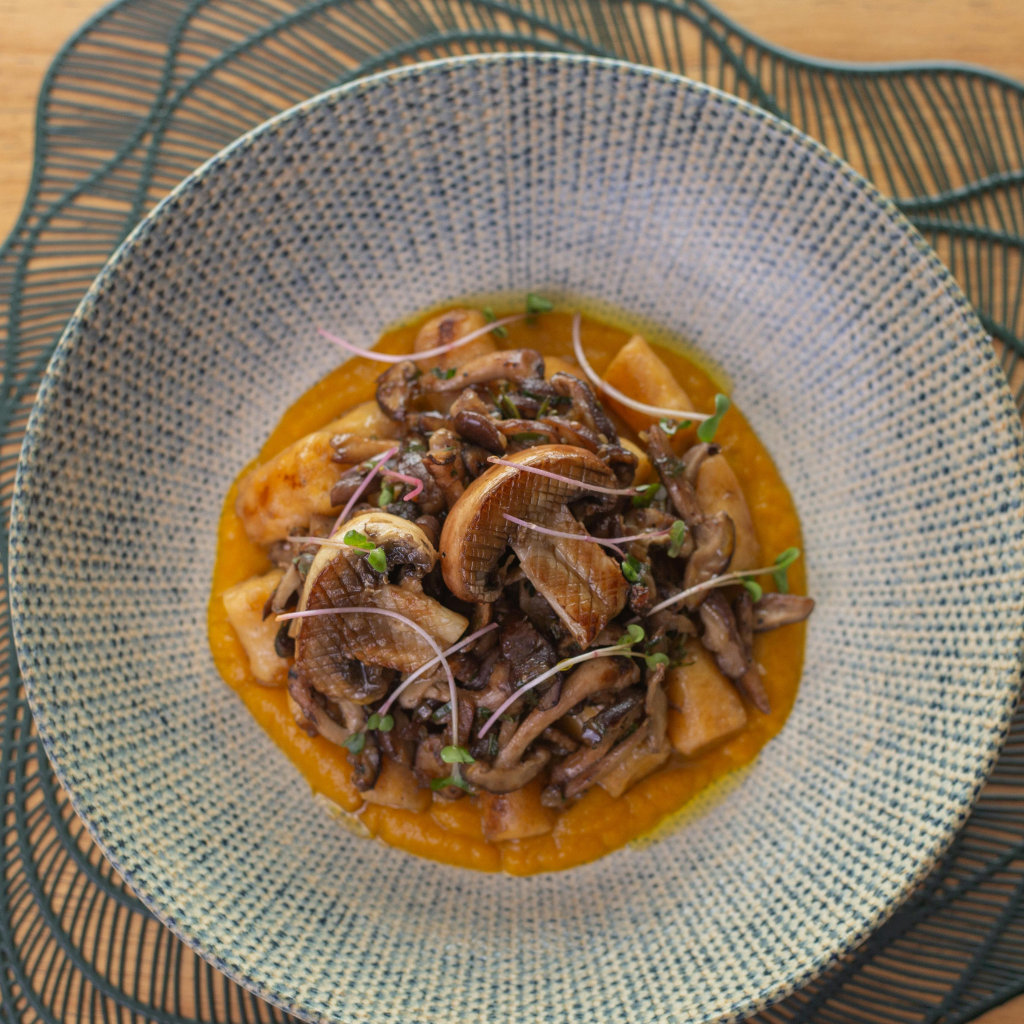
Make mushrooms a regular player in your meals. Shiitake, oyster, maitake, lion’s mane, even humble button mushrooms. Sauté them, roast them, add them to soups and stir-fries. They’re providing dietary fiber, unique polysaccharides, and a symphony of compounds that your gut microbiome genuinely needs. Think of it as feeding the garden that feeds you.
If you have specific health goals, targeted mushroom supplements can be a powerful addition to your routine.
The study makes clear that mushrooms achieve their effects through multiple, synergistic mechanisms. It’s a complex orchestra of bioactive molecules working in concert, which is exactly why both whole mushrooms and quality extracts have their place.
Eat the mushrooms regularly for broad-spectrum benefits and overall gut health. Add targeted extracts when you’re pursuing specific outcomes. And yes, you can absolutely do both.
The Future Is Fungal
What excites me most about mushrooms is that they sit at the intersection of nutrition, microbiology, and medicine. The authors call for “multi-omics technologies and well-designed clinical trials” to move this field forward, and that’s exactly right.
We’re only at the beginning of understanding how to harness fungi for precision nutrition. We’ll soon have tailored interventions based on individual microbiome profiles, specific health conditions, and optimal delivery methods.
But until then, adding more mushrooms to your diet and supplement regime is a great way to nurture your gut and enhance your overall health.



One thought on “New Review Reveals Mushrooms Restore the Conditions Your Microbiome Needs to Heal”