Imagine a jacket that heals its own tears, cleans itself after getting dirty and eventually biodegrades back into the soil instead of sitting in landfill for centuries.
That future may be closer than it sounds.
Researchers have developed a living textile made from the mushroom-forming fungus Cordyceps militaris that remains biologically active after it’s manufactured. Unlike traditional mushroom leather, which is made from dead mycelium, this material is alive, allowing it to regenerate, respond to its environment and even gain new functions through engineered microbes.
The fungal fibres naturally weave themselves into a flexible leather-like sheet without requiring synthetic fabrics or plastic supports. If the material is cut or damaged, fresh fungal pellets can simply be added to the tear, where they grow together and repair the fabric.
The researchers also demonstrated that the living material can be “programmed” with entirely new abilities.
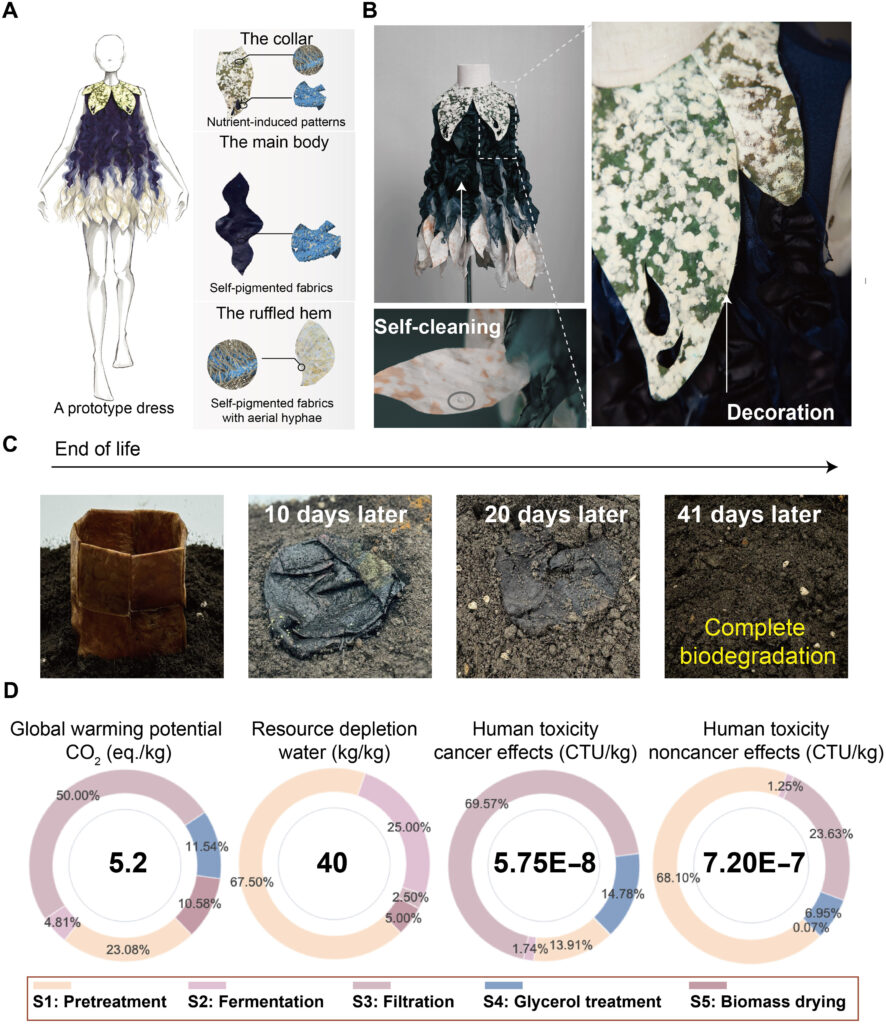
By introducing engineered yeast, they created textiles that generate their own colours biologically instead of using chemical dyes. Adding other fungi allowed the fabric to become water-repellent and self-cleaning, while another species produced a melanin-rich coating that naturally blocks harmful UV radiation.
Perhaps most impressively, once the textile reaches the end of its life, it almost completely biodegrades in soil within 41 days, offering a potential alternative to synthetic clothing that can persist for decades.
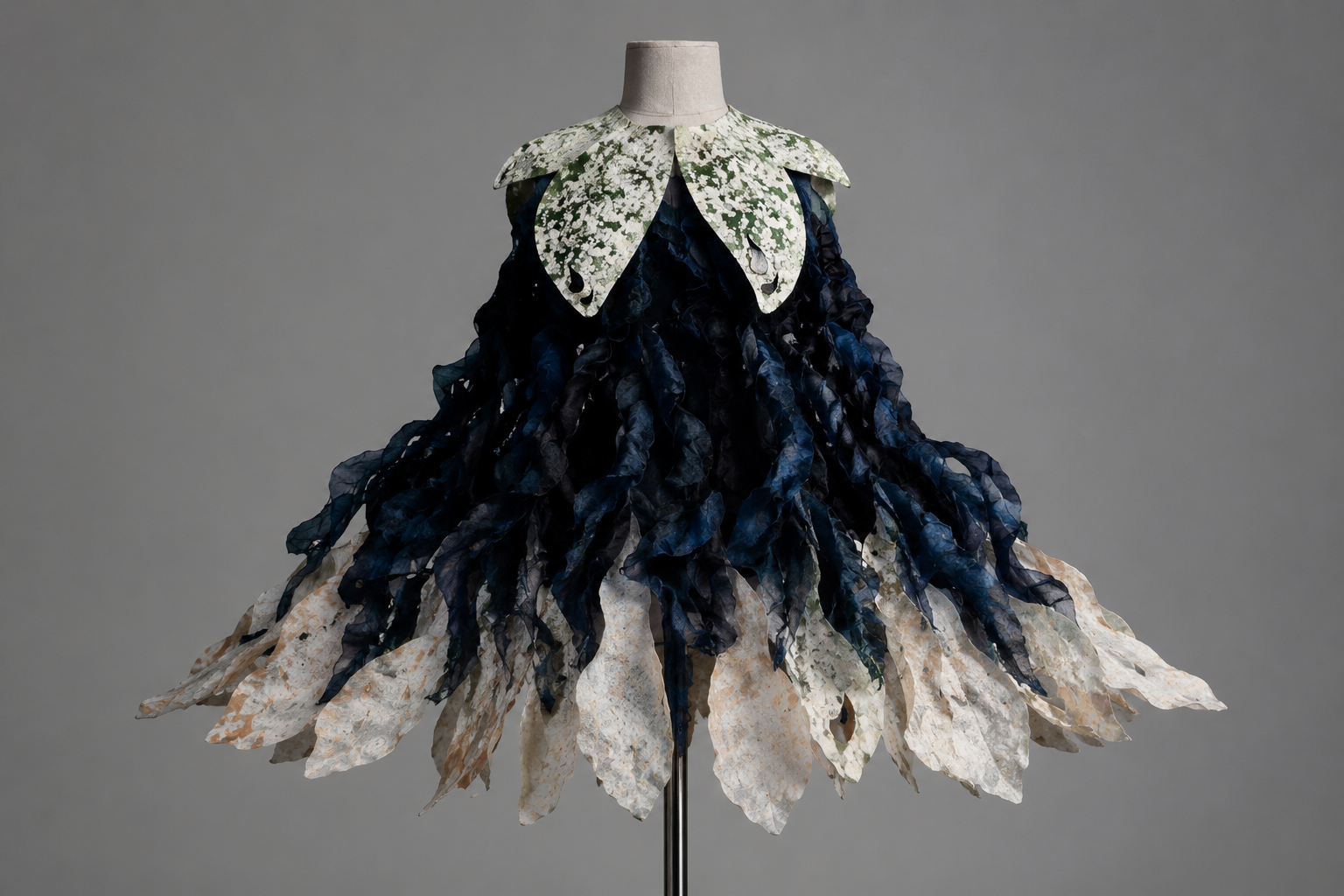
The team even produced a prototype dress using the material, although they admit nobody has actually worn it yet.
The technology is still at an early stage. The material hasn’t yet been tested for everyday durability, washing or long-term wear, and because it remains biologically active, researchers believe its first applications may be in biodegradable packaging, temporary fashion, exhibitions and specialised materials rather than everyday clothing.
Still, it represents a remarkable glimpse into the future of engineered living materials—where clothing may one day be grown instead of manufactured, repaired instead of replaced, and returned to nature instead of landfill.
Source: Ke Li et al, A programmable fungal platform for engineered living textiles.Sci. Adv.12,eaed6937(2026). DOI:10.1126/sciadv.aed6937
Keep up with the research here.