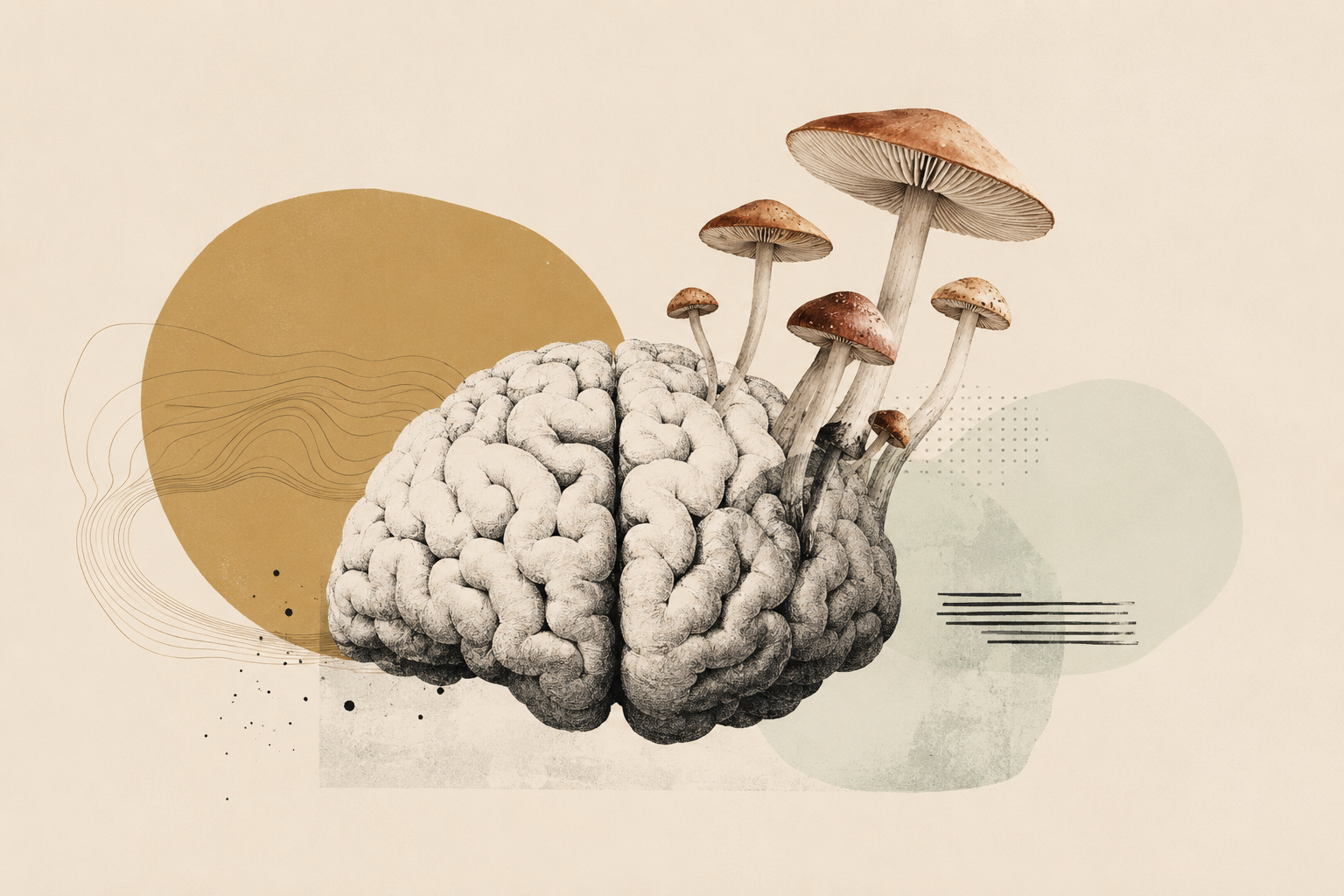
Psychedelic science is booming, but one of the world’s leading research universities says we still don’t understand one of the most important questions: how these drugs actually work inside the brain.
A new feature from Prof. David Nutt in the Cornell Chronicle highlights the growing multidisciplinary effort led by biomedical engineer Alex Kwan, whose lab is trying to uncover the precise neural mechanisms behind compounds like psilocybin.
While clinical studies continue to show promise for conditions such as depression and PTSD, Kwan argues that the field still lacks a deep mechanistic understanding of what psychedelics are doing at the level of cells, circuits and entire brain networks.
“The promise is so great, but our actual understanding of the drug remains quite poor.”
Beyond the Trip
Rather than focusing on the psychedelic experience itself, Cornell researchers are asking questions that could shape the next generation of psychedelic medicines.
Among Kwan’s team’s recent discoveries:
- A single dose of psilocybin increased neuronal connections in mouse brains by around 10%.
- They’ve identified neural circuits responsible for some of psilocybin’s long-lasting effects.
- They’ve shown that psilocybin appears to weaken the rigid feedback loops associated with repetitive negative thinking while enhancing sensory-motor processing.
The long-term goal is to understand exactly which brain circuits produce therapeutic benefits, and eventually develop safer, more targeted treatments.
New Developments
One of the biggest breakthroughs isn’t a drug at all. Cornell researchers have developed ultra-thin, flexible electrodes capable of recording activity from the same neurons for up to a year, which is a huge improvement over traditional rigid electrodes that often damage surrounding tissue.
This technology allows scientists to watch how individual brain cells change over weeks and months after psychedelic treatment, offering an unprecedented view of long-term neuroplasticity. The technology could also prove valuable for studying learning, ageing, Alzheimer’s disease and other neurodegenerative conditions.
Cornell’s research extends beyond mice. Scientists have also been studying psychedelic compounds in fruit flies, discovering that socially isolated flies became significantly less aggressive after consuming the psychedelic DOI.
Remarkably, the researchers found the same serotonin 2A receptor, long known to mediate psychedelic effects in humans, appears to drive behavioral changes in flies as well.
Because fruit flies can be genetically modified at enormous scale, they could become a powerful model for discovering entirely new molecular targets for future psychedelic medicines.
From Hype to Hard Science
The Cornell team also addresses one of the biggest challenges facing modern psychedelic research: separating genuine scientific progress from exaggerated claims.
Chris Schaffer, one of the university’s engineering professors, warns that the recent surge of public enthusiasm has brought what he calls a growing “woo factor” – the belief that psychedelics are a cure for everything.
Instead, the researchers argue that careful, mechanistic science will determine whether psychedelic medicines fulfil their enormous promise.
The comparison they make is ketamine. Although ketamine is now an FDA-approved treatment for depression, it took more than 20 years of rigorous research before it reached clinical practice. Cornell researchers believe psilocybin will require the same patient scientific approach.
Why This Matters
Much of today’s psychedelic excitement comes from promising clinical outcomes. Cornell’s researchers believe the next phase is understanding why those outcomes occur.
That knowledge could eventually help scientists design new compounds that retain the therapeutic benefits of psychedelics while reducing unwanted effects, extending treatment duration or improving safety.
In other words, the future of psychedelic medicine may depend less on discovering new compounds, and more on understanding the remarkable biology of the ones we already have.
Source: Prof. David Nutt writing in the Cornell Chronicle
Keep up with the research here.