
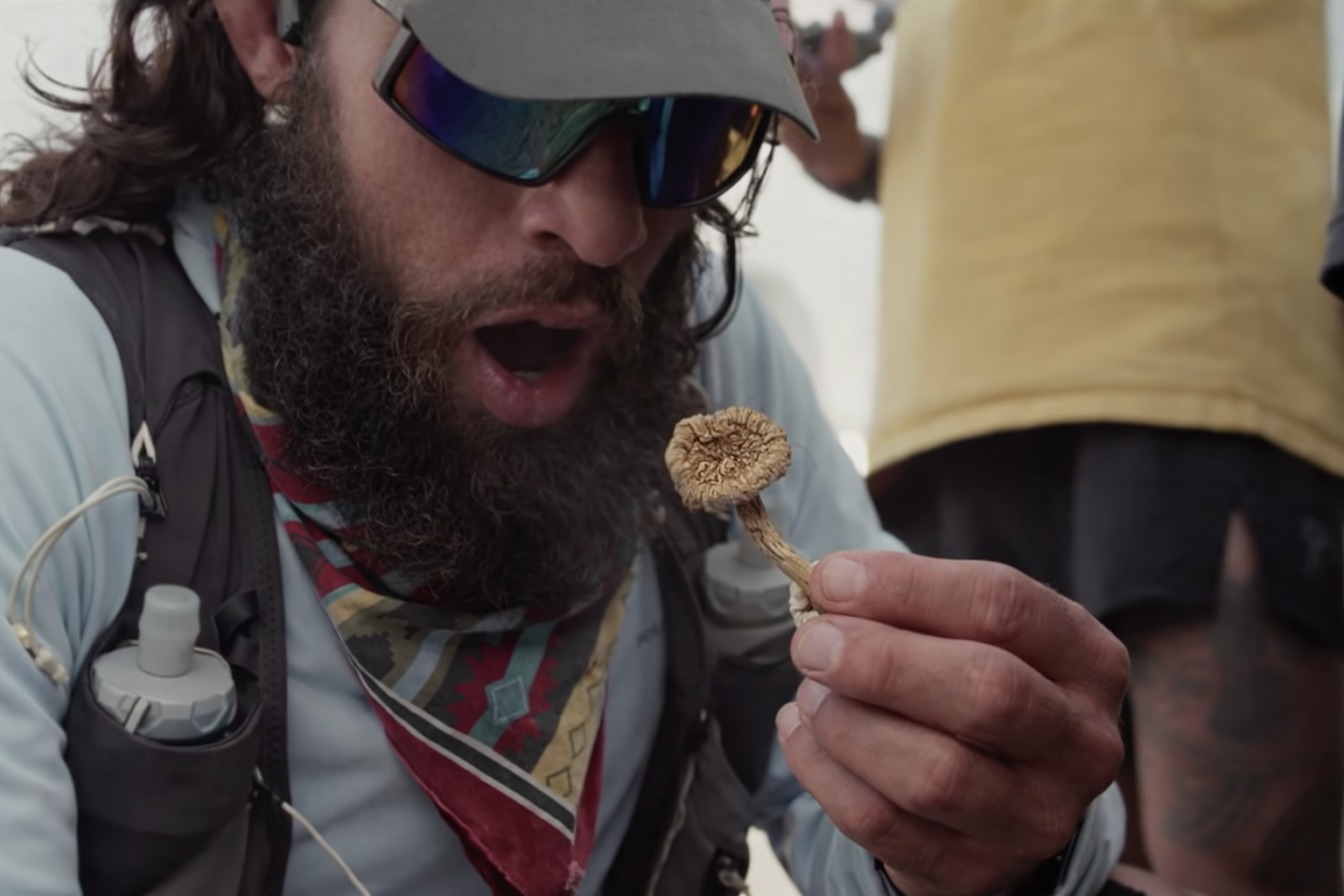
What do you get when you combine a micro-dose with an ultra-marathon? You get Dante Liberato, who recently ran 500 miles from Colorado Springs to Moab while taking psilocybin and LSD.
The whole things was filmed for a documentary, which sees Liberato discover that the drugs didn’t work the way he thought they would.
Rocket Fuel
Frederick Dreier’s piece in Outside magazine follows Liberato, a 26-year-old former MMA fighter turned ultrarunner and psychedelics coach. After injuries ended his fighting career, Liberato found running. Simultaneously he began working with psychedelics therapeutically to shift away from the aggressive mindset combat sports demanded.
The combination seemed promising at first. During a 100-mile race in Colorado, a dose of LSD late in the race felt like “rocket fuel”. His fatigue vanished, focus sharpened, and he sprinted the final miles with energy left over to keep going.
So he designed an extreme test for his new hobby. 11 days, 500 miles, microdosing throughout. The goal was to understand how psychedelics impact human endurance.
What Happened
Around mile 241, outside Olathe, Colorado, Liberato hit a wall. It was more than physical exhaustion.
“I got to a point where it became exhausting taking the medication,” he told Dreier. “I would get overwhelmed with fatigue, and I’d think the psychedelics would help me overcome it, but they’d make me even more tired.”
The revelation was that psychedelics were forcing him to confront the emotions hiding beneath his fatigue.
As the days progressed, Liberato took the substances less frequently. Instead, he turned to something more fundamental: feeling his feelings. “I had to let go of a ton of emotion a few times and just really cry and wail for two or three minutes,” he said. “After those sessions, I’d feel a lightning bolt of energy and drive.”
Root Causes
This isn’t just an extreme sports story. It’s a case study in how psilocybin actually works. And it challenges our culture’s obsession with optimisation hacks.
Psychedelics don’t generate energy. Rather, they redistribute it. Psilocybin temporarily reorganises brain networks, allowing regions that don’t normally communicate to connect. This neuroplasticity requires metabolic resources. So when your mitochondria are already running on fumes from 50-mile days, adding a psychoactive compound doesn’t magically produce more ATP. It demands more from an already depleted system.
Liberato discovered this the hard way. The substances that seemed to unlock superhuman focus during a single race became a burden during sustained multi-day efforts. Why? Because real endurance comes from addressing root causes, not bypassing them.
What actually gave Liberato that “lightning bolt of energy”? Emotional release. Suppressed emotions cause cortisol elevation, parasympathetic nervous system suppression, and inflammatory signalling. When he finally let himself cry, he released the brake. His body could redirect energy from stress management back to movement.
Pontential
Psilocybin mushrooms have been used for millennia, but always in context (ceremony, community, intention, integration). Indigenous traditions understood that these substances don’t give you answers. They create conditions for you to find answers yourself.
Liberato articulated this perfectly: “None of these medicines will give you the answers to your problems. You have to first go through a process internally of creating a healthy relationship with your environment and your community.”
The neuroplasticity window psilocybin opens is real. Research shows increased BDNF (brain-derived neurotrophic factor), enhanced synaptic connections, and reduced activity in the default mode network. But neuroplasticity is a state of potential, not predetermined improvement. What you do during that window matters.
Running 500 miles while microdosing essentially forced Liberato to do intense exposure therapy with his relationship to discomfort, community, and his own emotional suppression patterns. The mushrooms didn’t solve those issues for him, but they did make them impossible to ignore.
Lessons
Most of us aren’t running 500 miles. But we are asking substances (coffee, nootropics, adaptogens, yes even psilocybin) to do work that only we can do. Which is to process our emotions, address our inflammation, repair our relationships, and respect our body’s energy limits.
The research on psilocybin for anxiety and depression shows real promise. But the mechanism isn’t “mushroom fixes brain.” It’s “mushroom creates window where healing becomes possible, if you do the work.”
Liberato completed his 500 miles. He ate his celebratory ice cream sandwich in Moab. And he learned that the most powerful tool for endurance was his willingness to feel what he’d been running from. There’s a lesson there.
Dante Liberato’s documentary will be avilable to watch after July 24 here. (watch the trailer here).
Keep up with psychedelic research here.


Where can my mate Jason view this