
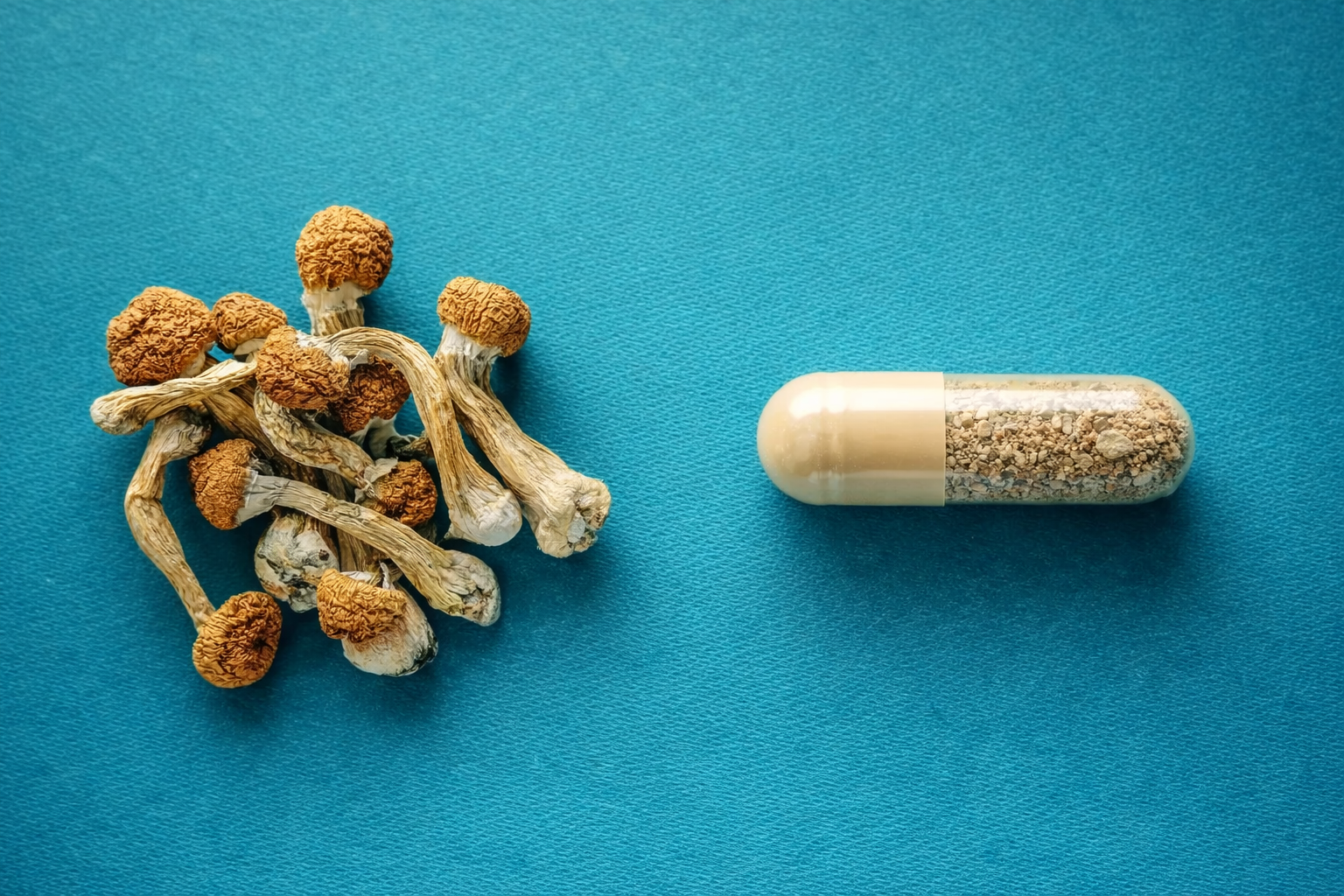
RAND Corporation just dropped the most comprehensive survey on psychedelic use in America, and the numbers around mushrooms are extraordinary.
The Headline Finding
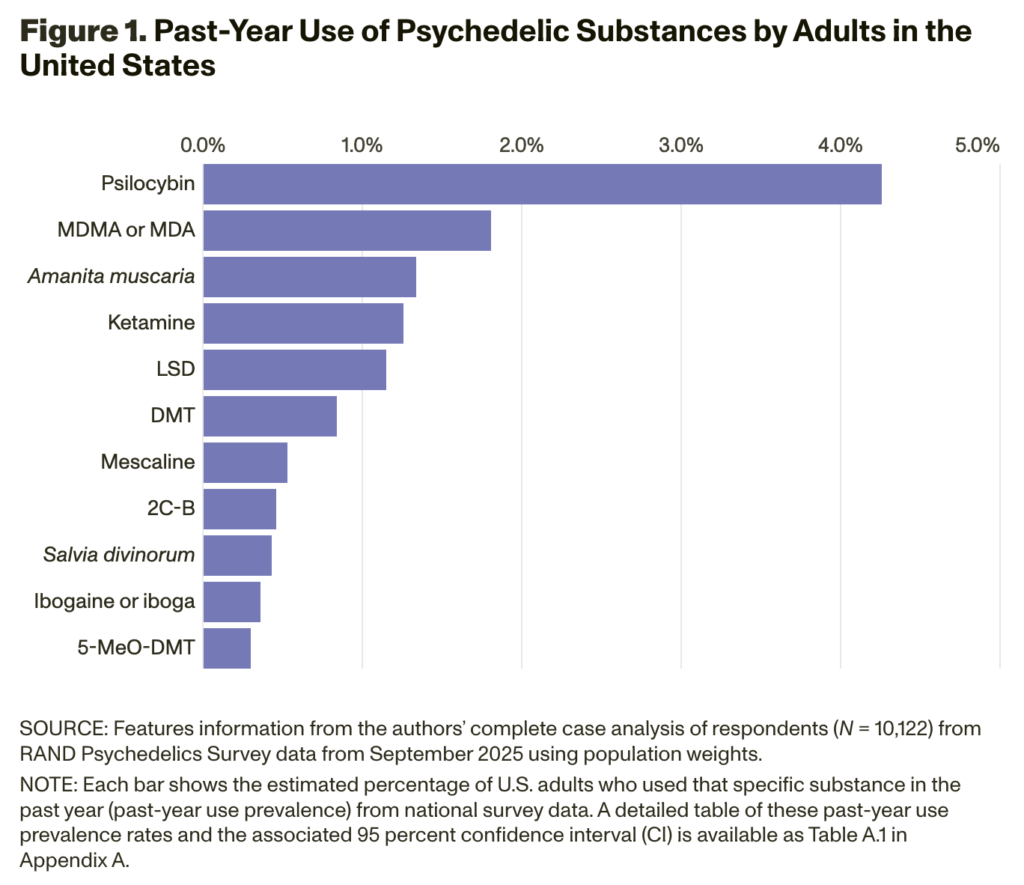
According to the survey published by Michelle Priest, Beau Kilmer, and their team at RAND, approximately 11 million U.S. adults used psilocybin mushrooms in 2025. That’s not a typo. Eleven million people.
To put that in perspective, psilocybin was the most-used psychedelic substance by far, more than double the next substance on the list. We’re talking about 4.3% of American adults having some kind of relationship with magic mushrooms in a single year.
The Microdosing Revolution
Among those 11 million psilocybin users, 69% reported microdosing at least once during the year. That’s the majority choosing to work with mushrooms in a completely different way than the stereotypical “trip” narrative.
The researchers estimated that Americans used psilocybin over 200 million days last year. Nearly half of those days (about 102 million) involved microdosing rather than full doses. I’d say we’re witnessing a massive cultural shift in how people relate to these fungi.
Why Are People Microdosing?
This shows that people aren’t just interested in getting high. It also shows that many aren’t looking for spiritual experiences (though those have their place). People are reporting that they microdose for very practical reasons, like managing anxiety and depression, improving mood, boosting creativity, and generally supporting their daily functioning.
We know larger doses of psilocybin works on serotonin receptors in ways that may influence neuroplasticity, inflammation, and even metabolic processes like insulin sensitivity. When you’re taking sub-perceptual doses regularly, you’re potentially working with the body’s own healing mechanisms rather than overwhelming them.
The decentralised nature of this trend is fascinating too. We’re not waiting for pharmaceutical companies or government approval. People are taking agency over their own health and wellbeing, experimenting carefully, and building a grassroots knowledge base about what works.
The Amanita Surprise
One unexpected finding from the study is that Amanita muscaria mushrooms came in at #3 on the list of most-used psychedelics, with 3.5 million Americans reporting use. These are the iconic red-capped mushrooms with white spots. Unlike magic mushrooms, which contain psilocybin, Amanita muscaria contains two very different chemicals: ibotenic acid and muscimol.
Ibotenic acid excites the brain. It’s considered stimulating, confusing, and sometimes hallucinogenic. Muscimol, on the other hand, depresses the brain, slowing things down, including breathing. Normally, these effects balance out. But in large doses, that balance collapses.
The popularity of Amanita muscaria suggests people are getting curious about the broader world of functional and psychoactive mushrooms. The mycelial network of knowledge is spreading, if you will.
Outdated Laws?
The researchers were careful to note this is self-reported data from September 2025, based on probability sampling of over 10,000 adults. It’s methodologically rigorous stuff designed to represent the U.S. adult population.
But the fact that we needed this survey at all shows how far ahead of official systems people have moved. Federal prohibition is still in place and most psychedelics remain Schedule I substances. Yet millions of Americans have clearly decided that law doesn’t reflect reality or their values around plant medicine and personal sovereignty over consciousness.
Personal Responsibility
The RAND survey results point to something bigger than just drug use statistics. They suggest a cultural movement toward taking responsibility for our own consciousness and wellbeing, using tools that grow directly from the earth, that humans have co-evolved with for millennia.
People are not waiting for broken institutions to change. They’re not relying solely on synthetic solutions created in labs. But rather, reconnecting with the natural solutions that humans have used for thousands of years, learning from them carefully, and integrating that wisdom into our modern lives.
I think the fact that most people using psilocybin are microdosing – not seeking escape or recreation but rather subtle support for living well – suggests we’re maturing in our relationship with these substances.
The Path Forward
One thing the researchers noted is that we still don’t have great data on potential long-term health implications, particularly around cardiac concerns with regular microdosing. That’s the kind of knowledge we need, and it requires more research, not more prohibition.
The survey also highlights how quickly things are changing. The 2025 data shows significantly higher use than just a few years ago. States and localities are reconsidering their policies. Clinical trials are multiplying. The mycelial network is spreading faster than regulators can track.
For those of us interested in holistic health, metabolic optimisation, and decentralised solutions to wellbeing, these mushrooms represent something profound. They are proof that humans don’t need to rely on synthetic pharmaceuticals. The fact that 11 million Americans are working with psilocybin in measured, intentional ways suggests we might be witnessing the early stages of a genuine health paradigm shift.
It’s not about replacing modern medicine, but complementing it. Not escaping reality, but engaging with it more fully. Not waiting for permission, but taking informed responsibility.
The mushrooms, it seems, are doing their work.
This post discusses research from the 2025 RAND Psychedelics Survey. Always approach psychedelic substances with care, research, and awareness of your local laws. This is not medical advice—just one person’s reflections on fascinating data.
Can these DE be bought some where