It’s well established that the fashion industry is terrible for the planet.
Textile manufacturers consume around 200 million litres of water annually, conventional animal leather carries a staggering environmental cost, and shoes, of all things, sit at the sharp end of the crisis. Up to 95 percent of all footwear ends up in landfills, where the rubber, plastic, and foam compounds take generations to break down.
The industry has spent decades looking for materials that don’t cost the earth quite so literally, and the most promising answer may be – you guessed it – fungi.
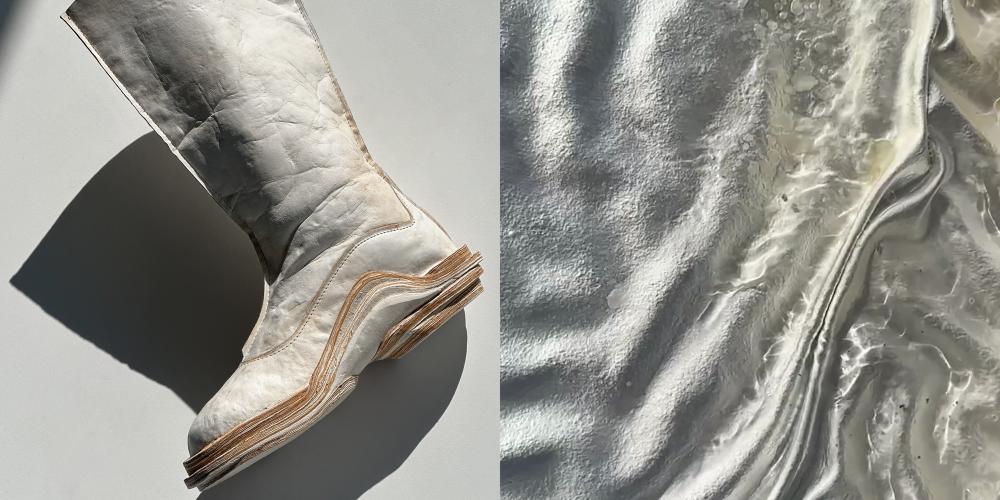
Researchers at Belgium’s Vrije Universiteit Brussel (VUB), working alongside Marie De Ryck, head shoemaker at La Monnaie/De Munt opera house, have just unveiled what they’re calling the world’s first boot crafted entirely from mycelium. Every structural component of the boot – from the sole to the upper and internal architecture – is grown from fungal networks.
Mycelium Explained
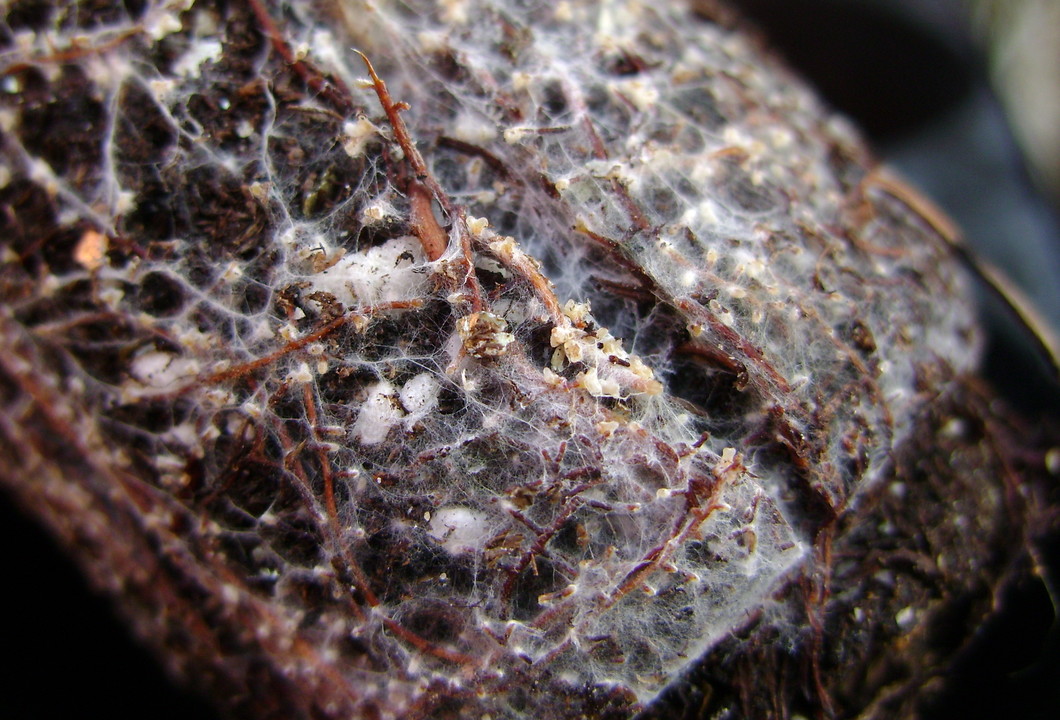
Most of us think of fungi as mushrooms. But mushrooms are just the fruiting body (reproductive organ) of the fungal organism that pop up after rain, release their spores, and disappear. The mushroom is to fungi what an apple is to a tree. Most of the organism lives below the surface as mycelium – a dense web of microscopic threads called hyphae that can extend for miles through soil, breaking down organic matter, exchanging nutrients, and routing chemical signals across the network with a kind of distributed, decentralised intelligence. It’s pretty cool.
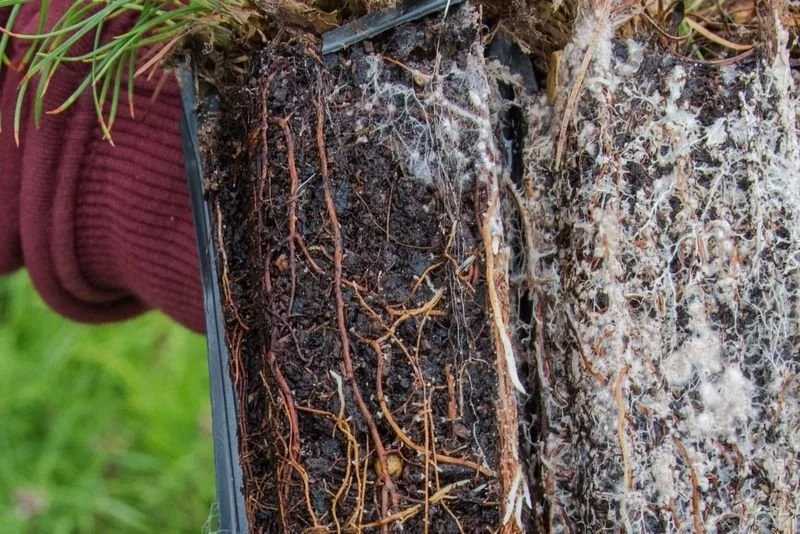
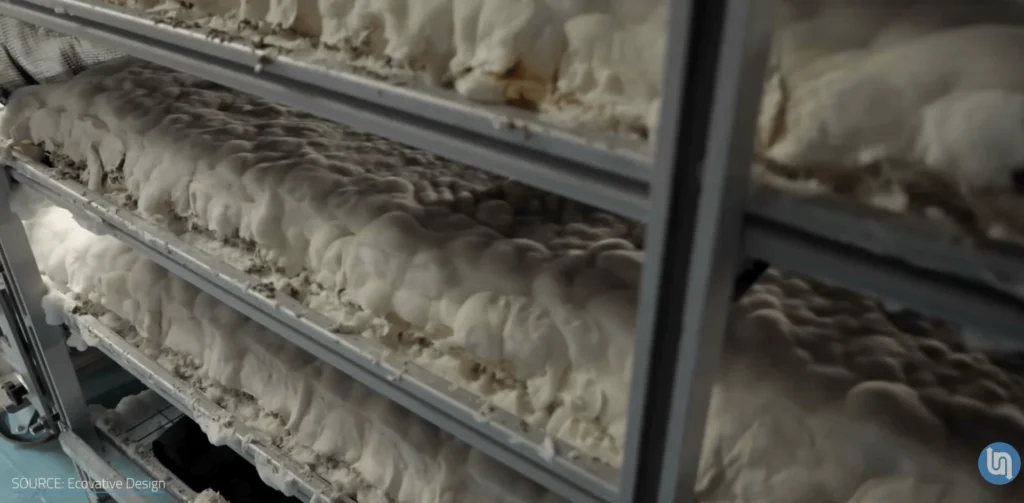
Those fibrous threads have an unsual property. Under controlled conditions, mycelium can be grown into almost any shape. It binds to agricultural substrates, forms composite structures, and produces a range of material properties depending on the species and the conditions you subject it to. Some produce dense, leathery sheets. Others generate foam-like, compressible structures with impressive load-bearing characteristics.
The VUB team exploited this by using two different fungal species – one to supply the malleable, foamlike sole and another to provide the leathery upper section.
If you’re interested in the evolving story of fungi, psychedelics, and nature’s intelligence, our weekly newsletter The Spore Report is worth your time.
Read The Spore Report →Two Years, One Boot
It took over two years of trial and error to make it work. The central problem was geometry. Mycelium grows naturally as flat sheets, which is fine for packaging material or wall panels, but a shoe is a three-dimensional structure with a complex load distribution. The sole needs to absorb impact and return energy. The upper needs to flex without cracking. Getting flat sheets of biological growth to cooperate with those mechanical requirements, without synthetic adhesives or petrochemical treatments, is not easy.
VUB designer Lars Dittrich was frank about what this prototype represents: “a conceptual object intended to frame what is currently possible with the material.” So it isn’t ready for a runway, let alone a factory floor. But the progress documented in just two years of development is what makes it significant. Head shoemaker De Ryck noted that the initial material samples “did not immediately meet the technical requirements of a complex shoe construction,” and watching that gap close is, as she put it, “truly inspiring.”
The Fungal Solution
Mycelium footwear exists inside a much larger story about what fungi can do when used as a material.
Mycelium composites are already being used in construction as a structural alternative to concrete blocks, binding waste agricultural matter into load-bearing forms. We’ve written about this in detail in our piece on how fungi could build our future, where mycelium-based building blocks are being developed as a regenerative construction material.
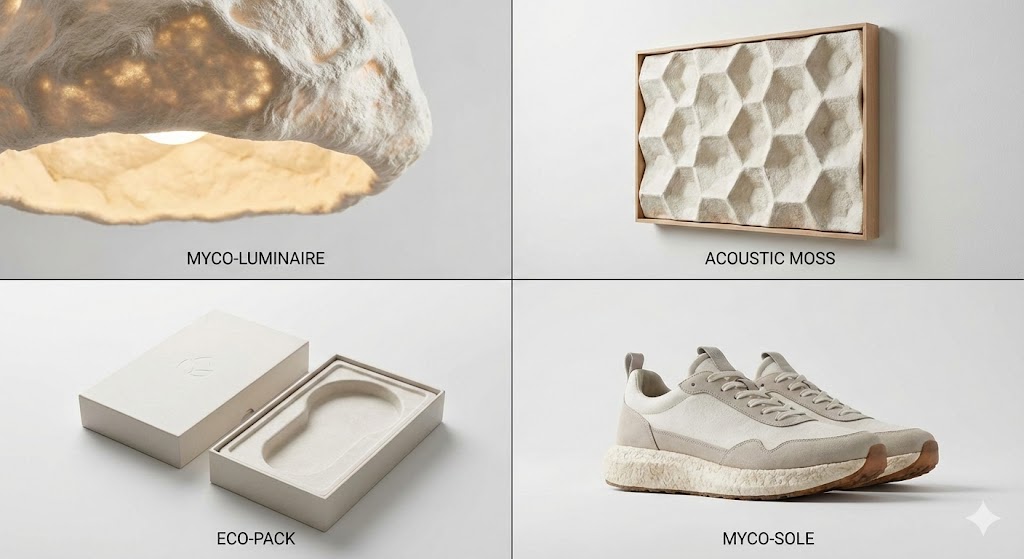
More recently, research emerged showing that certain fungi could consume toxic polyurethane foam from discarded mattresses and transform it into fireproof, eco-friendly insulation within 30 days, a finding we covered here. The same organism that might one day cushion your foot could also insulate your walls and build your house.
This is the ecosystem model in action. Fungi don’t operate as single-purpose tools. They function as decomposers, builders, and connectors simultaneously, taking nutrient-poor or chemically hostile inputs and weaving them into coherent, functional structures. The fashion industry is just beginning to recognise that this is exactly the kind of intelligence it needs.
Why Conventional Alternatives Fall Short
Bio-based leathers made from pineapple leaf fibre (Piñatex) or apple peel are improvements on petrochemical synthetics, but they still often require plastic coatings to achieve durability, which compromises their end-of-life story.
Plant-based soles typically involve synthetic rubber compounds. The materials science of truly biodegradable footwear, something that can handle impact, moisture, and repeated flexion without relying on fossil-fuel-derived chemistry, has remained stubbornly difficult.
Mycelium offers a different approach because it grows its own structure. Rather than processing a plant crop into a usable fibre (which requires energy, solvents, and often synthetic binders), mycelium can be grown into the precise form required and then heat-treated to halt biological activity and stabilise the material.
The result is a composite that is, in principle, fully biodegradable and grown without the land-use intensity of animal agriculture or the energy demands of synthetic production.
Whether it can reach commercial scale without compromising those properties is an open question. Controlled fungal growth at volume requires sterile conditions, consistent temperature management, and reliable substrate supply chains. None of that is impossible, but it isn’t free either.
Is The Future Fungal?
Fungi haven’t solved fast fashion just yet. But this mycelium boot is evidence that the material logic behind conventional footwear may have a biological alternative that operates on entirely different principles. Grown rather than manufactured. Compostable rather than landfilled. Drawing on millions of years of evolutionary engineering rather than decades of petrochemical development.
The fungal kingdom has been solving structural problems at the interface of living systems for far longer than we’ve been making shoes. The question isn’t really whether mycelium can become a serious material platform for the fashion industry. The evidence increasingly suggests it can. The more interesting question is what else we’ve been looking past while assuming the solution had to come from a factory.
If you’re interested in the evolving story of fungi, psychedelics, and nature’s intelligence, our weekly newsletter The Spore Report is worth your time.
Read The Spore Report →