
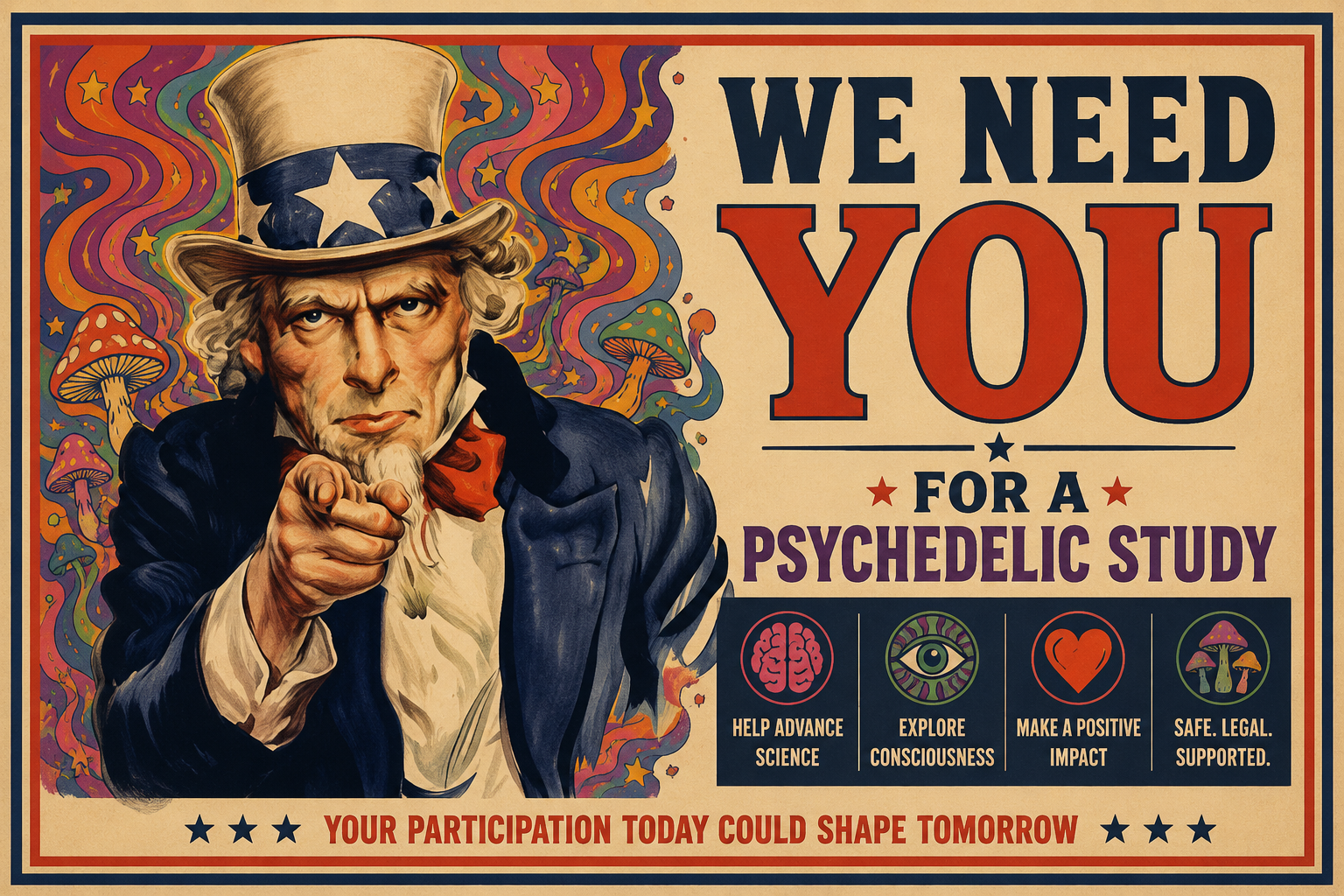
Most psychedelic research happens in carefully controlled conditions. Typically a screened population, in a clinical setting, with standardised doses. This model has given us some of the most compelling mental health data in decades, but it has also, inevitably, told only part of the story.
So UCSF’s Carhart-Harris Lab is now investigating the other side of the story – people taking psychedelics outside the lab.
The CANOPY Project (Cohort Study Assessing Naturalistic Outcomes of Psychedelic Use) is a large-scale, real-world survey initiative designed to follow people who are planning to take psychedelics in everyday contexts.
So if you’re planing a psychedelic retreat, a trippy festival, or a cozy journey at home, consider taking part and helping contributing to the biggest real-world psychedelic study to date.
Why real-world data matters
Clinical trials are built on constraints. You recruit a homogeneous population, standardise the conditions, and control for everything you can. That’s how you establish efficacy. But it also means the findings come from a narrow slice of humanity, often middle-aged, often white, often carrying a specific diagnosis like treatment-resistant depression. What about everyone else?
The CANOPY team’s interest in broadening this lens was sharpened by an accidental finding in a previous naturalistic dataset. A colleague at Imperial College London analysed the data and found a significant proportion of participants had reported some form of eating disorder. No clinical trial had ever included this population. When the team ran the analysis, they found those participants also showed psychological improvements after their psychedelic experiences. It was preliminary, but it was the first empirical data of its kind.
The problem was that the original study hadn’t been designed with them in mind. There were no measures specific to eating disorder symptoms. CANOPY is designed to fix exactly that.
A study that adapts to you
One of the most technically interesting aspects of CANOPY is its personalisation architecture. When you sign up, the intake process profiles you and routes you into the appropriate measurement set. Someone who indicates they live with anorexia will receive different follow-up measures than someone without an eating disorder. The study generates richer, more specific data on sub-populations that clinical trials have largely ignored.
The platform also adapts to how much time you’re willing to give. The short version involves a baseline survey before your experience and a follow-up around one month later. The extended version adds check-ins at one to two days before, one to two days after, one week after, and six months after. If the full version feels like too much, you can still scale back. The more complete the data, the more useful, but partial participation still matters.
The sub-studies: from brain scans to ibogaine
CANOPY functions as an umbrella structure with several active branches underneath. The most developed is BABS (Bay Area Brains). This sub-study is currently live and recruiting people who are planning to take psilocybin for the very first time and who live in the San Francisco Bay Area.
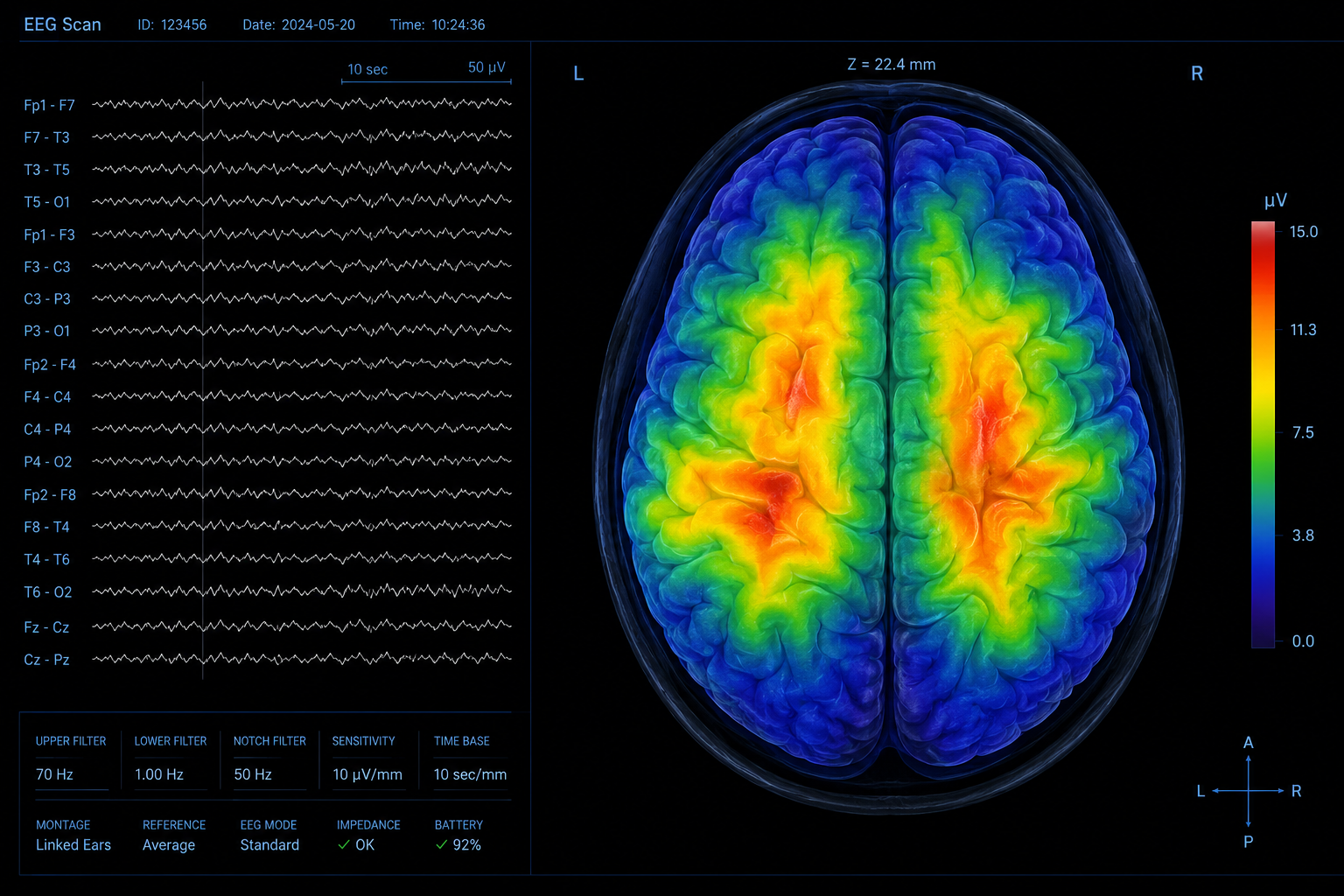
Participants who qualify can come into the lab for fMRI scans before and after their experience, wear an EEG device behind the ear during the experience itself, use an Oura ring for biometric tracking, and provide blood and saliva samples. The goal is to see whether the brain changes well-documented in controlled psilocybin trials also emerge in people taking mushrooms in real-world settings.
A parallel sub-study is being developed around ibogaine. Most of the existing ibogaine research has focused on people with acute diagnoses such as substance use disorders or traumatic brain injury. The CANOPY team is interested in what happens in healthier, non-clinical populations who are going to Mexico or similar destinations for ibogaine experiences, and whether brain changes comparable to those observed in clinical contexts appear there too.
A third strand focuses on healthcare utilisation behaviour. The hypothesis is a straightforward one: if psychedelic experiences improve wellbeing, people may use preventative care more and acute care (emergency rooms, psychiatric admissions) less. This is the kind of outcome metric that insurance companies and employers will pay attention to. The ORCHID study is looking at this specifically in Oregon and Colorado’s state-regulated programmes, with potential expansion to ibogaine and other contexts.
The bigger picture
In a recent edition of his newsletter, Robin Carhart-Harris says if want to understand psychedelics honestly, we need controlled trials and we need to study the world as it actually is.
The clinical model gives us rigour. The naturalistic model gives us diversity. CANOPY is an attempt to build a scientific structure wide enough to hold the real range of human psychedelic experience without pretending that everyone who takes mushrooms is doing so under the same conditions and with the same intentions.
With over 300 signups already in the first weeks and a growing waitlist newsletter exceeding 5,000, the appetite is clearly there.
If you’re planning to take a psychedelic in any context, you can learn more and sign up at here. One sign-up covers all the sub-projects; the intake process routes you from there.
The Spore Report covers the science of fungi, neuroplasticity, and regenerative health every week. If this kind of research is what you want more of in your inbox, subscribe here.

Please sign me up for this. I’m willing to be a test donkey. I have used magic mushrooms for a while over the years . IV done from zero to hero doses. And I use them for depression for many years
I’m looking forward to hearing from you. I want to Go big and I like to be guided and studied for medical users.
Hi, I have done three doses of mushrooms in the past month. Different strains. I usually average one a trip every couple months. This year I may have done it 5 times. A couple of times I didn’t mix it with cannabis.
I take mushrooms once a week to control my anxiety
Sign me up!
I have been taking psilocybin for 5 yrs and completely healed not just my trauma can’t even call it that but in basic terms 17 yrs of sexual abuse with my father and a catholic priest , 35 yrs in the system of pharmaceutical drugs labels and talk therapy amongst a multitude of modalities that nearly killed me , addictions alcohol drugs long term bulimia anorexia, exercise , sex and the list goes on you name it I had it . Now living my best life and full circle in love with every moment this life has gifted me . I now facilitate also .. my life is full of unconditional love and joy and the most incredible union with a man who holds the same date as my father I am writing a book about my life and experience s would love to assist
Sign me up
I am very interested in this research and would like to participate!
I would like to participate in these psychedelic trials!