One small step for man, one giant trip for mankind.
For most people, DMT lasts somewhere between five and twenty minutes. You blast into a reality of impossible geometry, encounter entities that seem more real than waking life, and then, just as you’re beginning to make sense of it, you’re back.
But what if you didn’t have to come back so quickly?
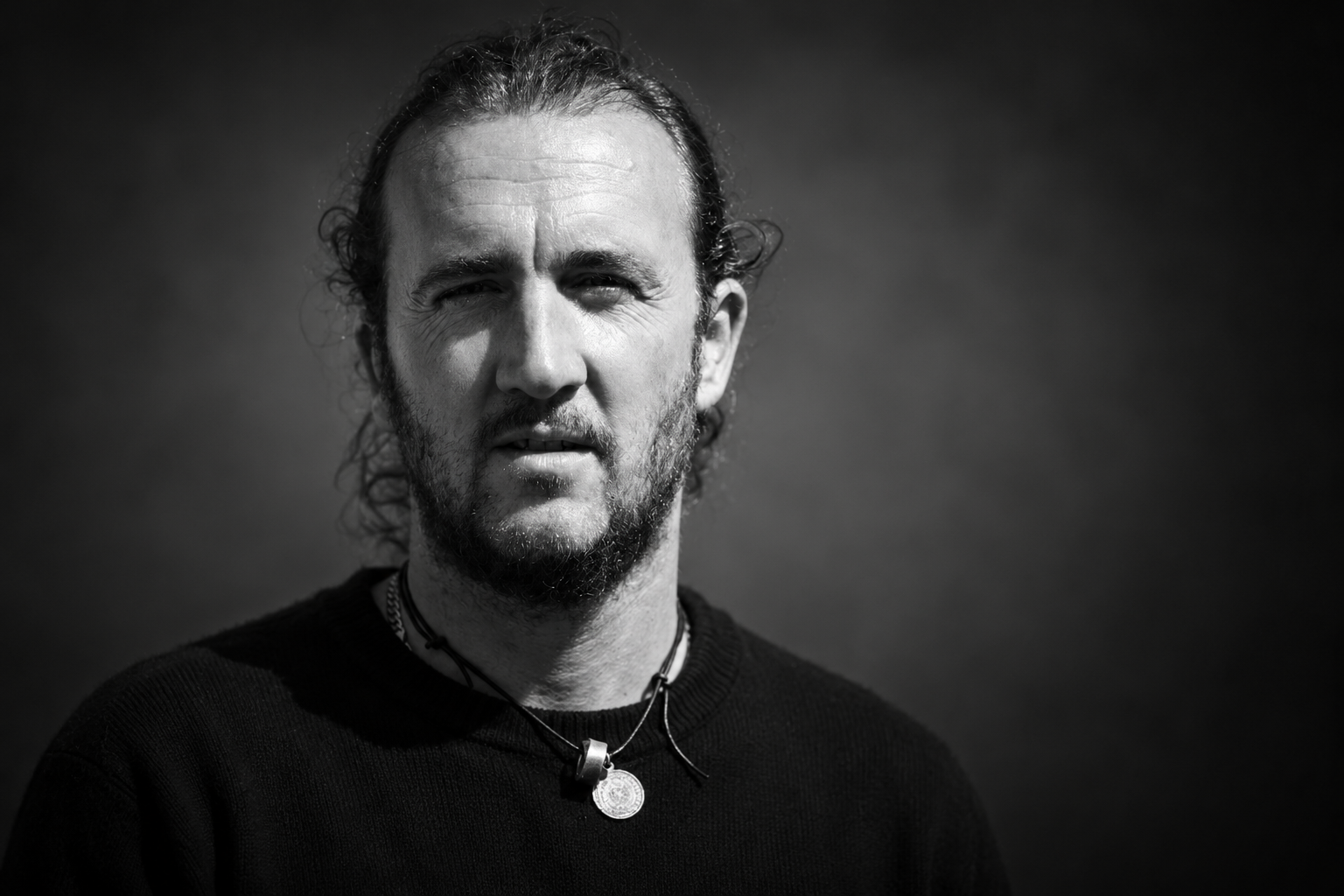
That question led to one of the most unusual neuroscience experiments ever conducted, and Carl Hayden Smith volunteered to become its first human participant.
The psychologist, consciousness researcher and founder of the New Nordic Foundation became “subject zero” in the world’s first studies investigating continuous intravenous DMT infusion. Rather than taking a single breakthrough dose, researchers used medical infusion technology to keep him in the DMT state for extended periods, helping establish whether prolonged DMT experiences could be safely explored.
His experiences have since become some of the most extraordinary stories to emerge from modern psychedelic science.
A New Way of Exploring DMT
Unlike smoked DMT, which disappears almost as quickly as it arrives, intravenous infusion allows researchers to maintain a steady concentration of the psychedelic in the brain.
The technology, originally proposed by neuroscientist Andrew Gallimore and psychiatrist Rick Strassman, works much like the pumps used during general anaesthesia. Instead of delivering anaesthetic drugs, however, the system continuously administers DMT while carefully monitoring physiological responses.
Carl became the first person to test the concept.
Across multiple sessions spread over several months, researchers gradually increased both dose and duration. The early studies demonstrated that, although heart rate initially increased, physiological measures soon stabilised, paving the way for much longer DMT sessions that are now lasting several hours.
For the first time, scientists had a way of studying one of the most profound altered states of consciousness without constantly racing against the clock.
MRI Scanner
Before the extended infusion studies, Carl also participated in Imperial College London’s groundbreaking EEG and fMRI experiments using intravenous DMT. One experience left a lasting impression.
Lying inside a narrow, deafening MRI scanner, unable to move, he suddenly entered the familiar DMT state. Then something unexpected happened. Carl describes being surrounded by entities that appeared deeply concerned. Not about themselves, but about him.
“They’re normally scanning you,” he joked during the interview. “Now suddenly I’m in a scanner.”
Rather than exploring the DMT world, he says he spent much of the experience calming the entities down.
Whether these beings represent subconscious psychological processes, archetypes, or something entirely different remains unknown. Importantly, Carl himself repeatedly emphasises that he does not claim they are objectively real. He remains agnostic, arguing only that the remarkable consistency of these reports deserves scientific attention.
The Context Matters
One of Carl’s biggest lessons wasn’t about DMT itself. It was about context.
The claustrophobic MRI scanner produced an experience completely unlike those in more comfortable environments. He argues that psychedelic experiences are shaped by far more than the drug alone. Mindset and environment matter alot.
But he also highlights something he believes is often overlooked: “body set.” Were you well rested? Have you recently been ill?What have you eaten? Are you physically stressed?
These physiological factors, he believes, may influence psychedelic experiences just as much as traditional “set and setting.” It’s a reminder that psychedelics don’t simply amplify the mind, they amplify the entire organism.
DMT Entities
Perhaps the most controversial part of Carl’s story concerns the entities so frequently reported during DMT experiences.
According to Carl, around three-quarters of people undergoing extended DMT sessions at the Eleusis programme report encountering some form of apparently autonomous being.Some even describe being introduced to the entities’ “children.”
For many scientists, such reports would be easy to dismiss. Carl takes a different approach. He doesn’t claim the entities exist independently. He simply argues that when thousands of people consistently report similar experiences, science should investigate rather than ignore them.
Whether the explanation ultimately turns out to be neuroscience, psychology or something we don’t yet understand remains an open question.
The Lockout Mystery
Carl also discussed one of the strangest phenomena in psychedelic culture: DMT “lockout.”
Some users report that after repeated DMT use they suddenly become unable to enter the experience at all. Instead of breaking through, they encounter blank screens, loud noises or symbolic barriers, sometimes for months or even years.
Current neuroscience struggles to explain this. DMT doesn’t appear to produce the kind of long-term receptor changes that would obviously account for such prolonged effects. For Carl, that’s exactly why it deserves proper scientific study.
Beyond Therapy
Today, most psychedelic research focuses on treating depression, PTSD or addiction. Carl believes DMT may ultimately contribute something even bigger – understanding consciousness itself.
That was, after all, the purpose of the original Imperial studies. To investigate what consciousness actually is.
Whether DMT ultimately reveals hidden properties of the mind or simply uncovers new principles of brain function remains to be seen. Either way, researchers are no longer relying solely on anecdotes from underground psychonauts. They’re bringing DMT into hospitals, MRI scanners and neuroscience laboratories.
And it all began with one volunteer willing to become the first human to stay in the DMT state for longer than anyone thought possible.
Keep up with the research here.