
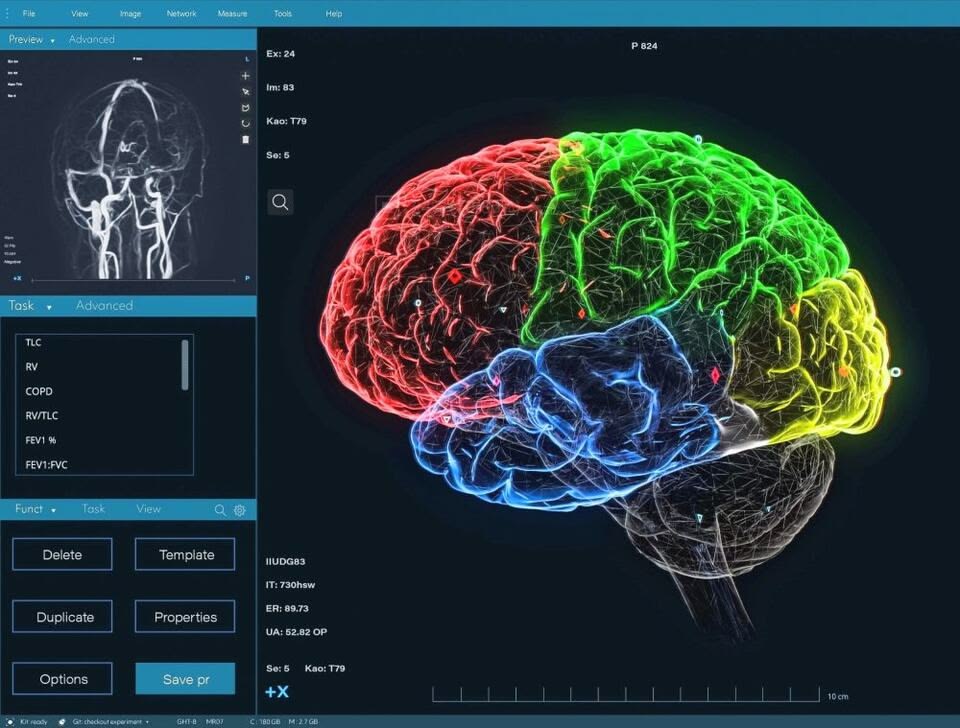
A new UC Berkeley study is the first to investigate whether psychedelics can support healthy ageing in older adults.
The dominant story about the aging brain is been one of loss. Losing the ability to remember, to learn, and to think clearly.
But that story is being challenged.
Researchers at UC Berkeley have launched a first-of-its-kind study, officially titled PLASTICITY (Psychedelic Longitudinal Aging Study In Cognitively Healthy Older Adults), to investigate whether psilocybin can actively support healthy brain aging. It’s the first psychedelic neuroimaging study designed specifically for older adults, and it arrives at a moment when the question couldn’t be more urgent.
Despite decades of psychedelic research, a 2024 review found that older adults represented just 1.4% of all study participants. Arguably the demographic with the most to gain from neuroplasticity-enhancing interventions has been almost entirely excluded from the conversation.
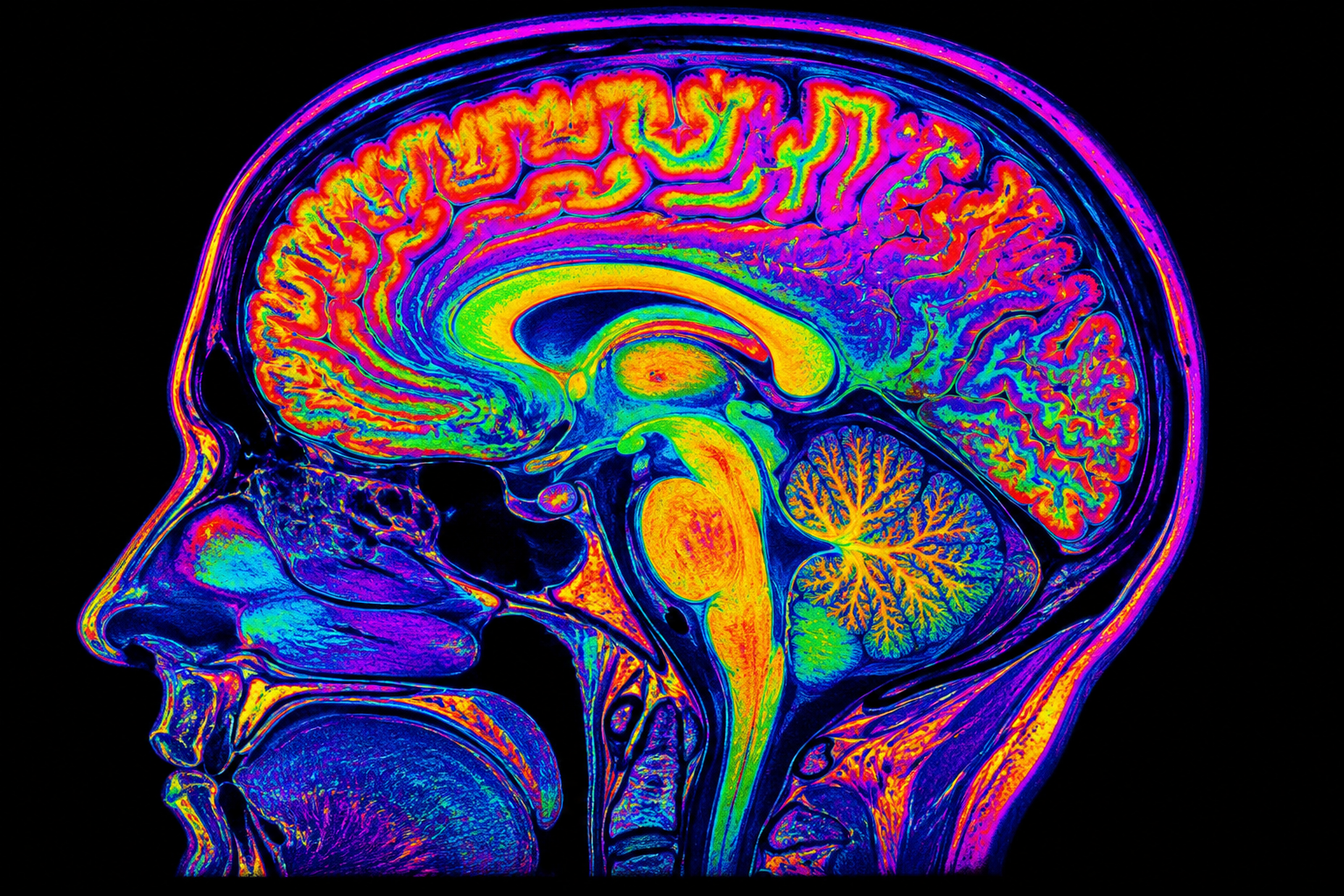
The PLASTICITY study plans to change that. Recruiting healthy adults aged 60 to 85, the Berkeley team will administer synthetic psilocybin and then use a battery of neuroimaging tools, including diffusion MRI and functional MRI, to examine what happens to the brain’s structure and function in the weeks that follow.
The plasticity hypothesis
So why psilocybin specifically?
Animal studies have shown that psilocybin increases the density of synaptic connections in the hippocampus and prefrontal cortex, precisely the regions most vulnerable to age-related decline. Crucially, the structural changes that psychedelics appear to produce move in the opposite direction to those caused by aging. The hippocampus is central to memory formation and retrieval. The prefrontal cortex governs executive function, emotional regulation, and decision-making.
If psilocybin produces the same structural effects in older human brains as it does in animal models, it could, in theory, counteract some of the most damaging changes that come with age.
Tyler Toueg, the UC Berkeley doctoral student in neuroscience who co-led the study’s design, wants to know whether those potentially beneficial brain changes can actually be measured in living older adults. That’s no easy feat and would represent a significant step from animal models toward clinical application.
The toolkit problem
Before coming to Berkeley, Toueg studied risk characterisation for Alzheimer’s disease. What he found was sobering. Even if researchers could predict a person’s cognitive trajectory earlier and more accurately than current methods allow, what they could actually offer that person wouldn’t change much. Exercise. Sleep. Eat well. Stay socially connected.
This is valid advice, but it’s an underwhelming toolkit for one of the most complex and devastating challenges in modern medicine. The tools around promoting successful aging, he has noted, are under-explored.
This is the gap the PLASTICITY study is trying to address by asking whether there’s a way to actively promote positive outcomes in people who are already healthy.
More than memory
The study isn’t just looking at structural brain changes. It’s investigating the full texture of how psilocybin might reshape the ageing experience.
There’s a useful way to frame what the researchers are tracking: on one side, the conditions associated with worse aging outcomes – depression, anxiety, chronic stress, and rumination; on the other, the qualities associated with successful aging – purpose, emotional regulation, social connection, and awe. Previous psychedelic research, conducted mostly in younger populations, suggests psilocybin tends to reduce the former and strengthen the latter. The PLASTICITY study wants to know if that holds in older adults a month after a single experience.
The inclusion of awe as a research target reflects the influence of psychologist Dacher Keltner, whose work has been influential in questioning what he calls the “deficit model” of well-being: the tendency in medicine and psychology to wait for something to break before intervening, rather than proactively cultivating the conditions for human flourishing. That framing is foundational to what makes this study conceptually distinct.
There’s also a physiological dimension. The team will track vagus nerve activity, a key regulator of the stress response, to see whether psilocybin produces sustained increases in vagal tone during positive emotional states. Given that chronic stress is one of the most significant drivers of accelerated biological ageing, this pathway could be central to understanding how psychedelics exert their effects beyond the acute experience.
A 50-year mismatch
For nearly five decades, legal psychedelic research in human subjects was essentially frozen. The result, as Michael Silver, director of the Berkeley Center for the Science of Psychedelics, has pointed out, is a significant mismatch. During the years when psychedelic research stalled, neuroscience advanced enormously. The non-invasive tools we now have for measuring structural and functional brain changes are remarkable. But they were never applied to psychedelics as they developed, because the research wasn’t happening.
Much of the recent resurgence has focused on clinical trials for specific disorders, depression, PTSD, addiction. That work is important, but it’s oriented toward FDA approval rather than basic science. You don’t need to understand the mechanism if you’re just testing whether something works and is safe enough.
The PLASTICITY study is doing something different – foundational research, in healthy participants, aimed at the deeper questions. How does psilocybin produce its effects? What is actually happening in the brain during and after a psychedelic experience? What is the relationship between structural brain changes, subjective experience, and long-term well-being?
We don’t yet know what the answers look like. But for the first time in a long time, we’re building the evidence base to find out.
Where things stand
The study began enrolling participants in November 2024. Two participants have now completed all study visits and provided full datasets. The team’s goal is to have 20 participants dosed by the end of 2026.
It’s early, but the question being asked is long overdue, and the people asking it have the tools, the expertise, and the intellectual range to do it properly.
For the first time, we’re actually studying what psilocybin does to the aging brain. Whatever the PLASTICITY study finds, it will change how we think about intervening in the aging process.
Source: UC Berkley News
Adults aged 60 to 85 interested in participating in the PLASTICITY study can contact the Berkeley Center for the Science of Psychedelics at BCSPresearchsubjects@berkeley.edu or (415) 874-1308.
Sign me up
I can’t speak to plasticity but micro-dosing psilocybin seems to narrow and sharpen focus leading to gains in attention and also productivity if one is engaged in a pursuit or task. It is a really Good feeling.
Hi I would like to know more. I am a photographer, Guitarist, and artist. I am are very keen in finding out more and would be interested in completing in your study. I am 75 years young. And would leap at the chance to explore the possibilities that this could do for me and at the same time helping others.
Where do you sign up?
There‘s been so much convincing clinical research results and at long last psilocybin’s resp. Psychedelics is receiving the mainstream attention it deserves!
How does one become part of this study?
Adults aged 60 to 85 interested in participating in the PLASTICITY study can contact the Berkeley Center for the Science of Psychedelics at BCSPresearchsubjects@berkeley.edu or (415) 874-1308.
Do you have information on psilocybin affecting cycling women more monthly when their estrogen is high because there are more docking stations available for the receive agents?
https://thesporereport.com/your-psilocybin-sensitivity-fluctuates-with-your-estrogen-levels-new-animal-research-suggests/
I am 86 – can I register for experiments. I lived in San Francisco from 1963 to 1969 I have a lot of experience with LSD in those tumultuous days…. Thank you……
I would love to participate in your research on psychedelics such as psilocybin. I have been monitoring the info on it for years and always felt it was a very valuable asset for the brain. I am 76 now and feel like I would be a good candidate. Please consider me. Thank you!
Do we have to go to California
I have within a week ago had a stroke partially paralyzing my left hand. It is a big deficit for me so 7 days ago I couldn’t chord or note a string on my guitar. I started with 3-4 acupuncture treatments along with Chi Gong and Kung Fu. I Started back micro dosing .08grams of Psylocibin every other day. Both days allowed major progress jumps and connectivity to my brain. I look forward to daily improvements in my left hand dexterity and speed……..
I am 88 years old. I have been microdosing since October 2017, following the Fadiman protocol (one day on, 2 days off). Mostly psilocybin, but sometimes LSD (10-25 µg). I have logged all of my ingestions and dosages, usually 0.2 g. At present, I have had 541 doses. At the time I started, at age 79, I also started studying for my MA in music. I completed that and am just finishing my PhD dissertation.
How / where do I sign up?