
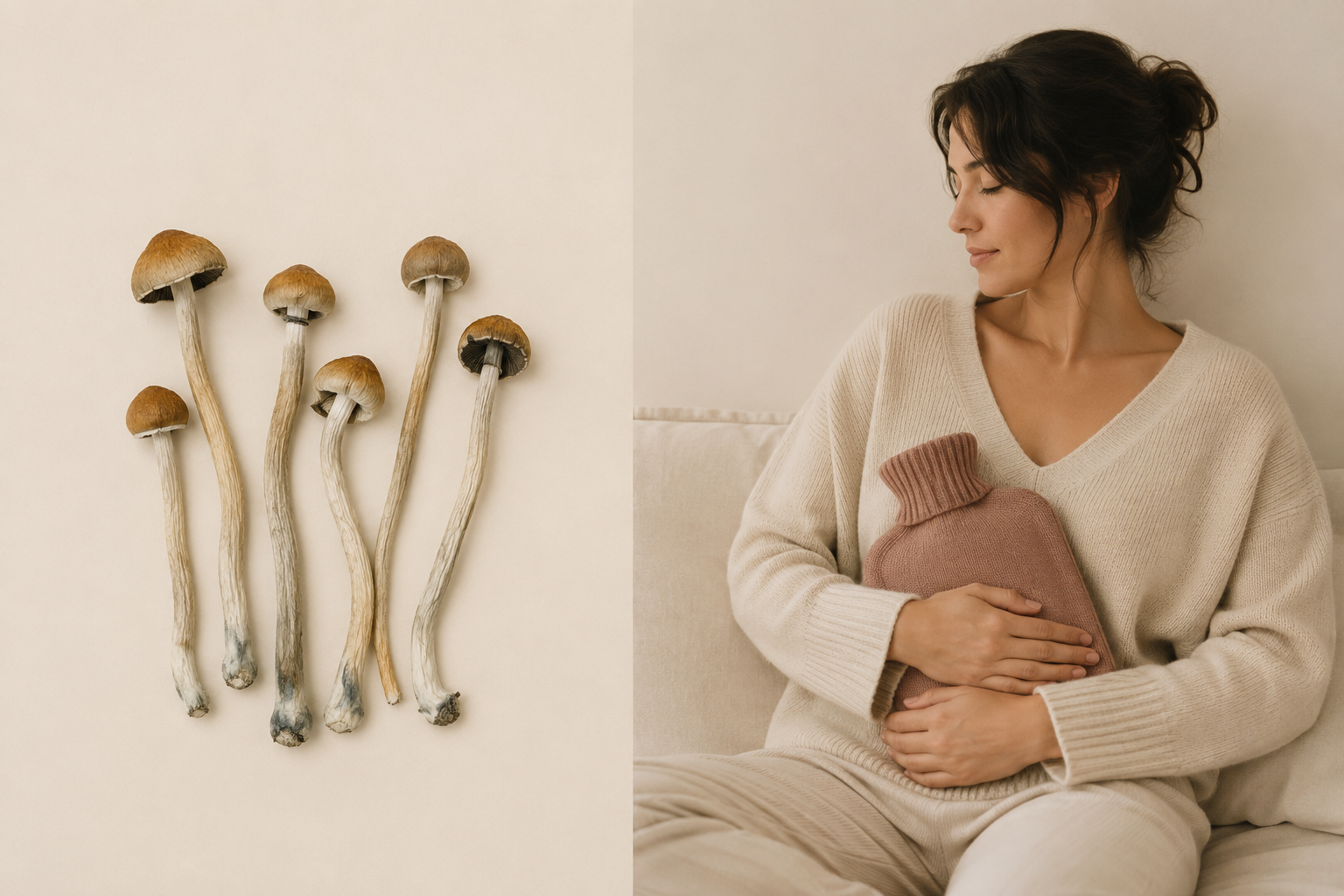
New animal research suggests estrogen levels directly influence how the brain responds to psilocybin, and it has real implications for how we think about psychedelic therapy.
There’s a problem with psychedelic research. Most of what we know comes from studying adult male subjects. The majority of clinical trials, the foundational animal studies, and the mechanistic work on serotonin receptors is basically all built on a narrow slice of human biology. This matters for all kinds of reasons, and a new study published in Neuropharmacology just highlighted an important one.
Psilocybin doesn’t affect everyone’s brain the same way. And one of the clearest variables is estrogen levels.
What the Researchers Found
The study, led by A.L. Zylko and M.S. McMurray at Miami University, set out to do something relatively straightforward: observe how rats at different life stages responded to psilocybin. Adolescent rats versus adult rats. The measurement was a well-established proxy for psychedelic-like states in rodents – a rapid, full-body shaking movement that gets triggered when serotonin receptors of the type psilocin targets are activated.
Adults reacted strongly. Within five minutes of receiving psilocybin, they showed a robust increase in this behaviour. But early and late adolescent groups showed almost no response.
That’s interesting in its own right, suggesting the adolescent brain processes psilocybin very differently, possibly because of how serotonin systems are configured during the years when the brain is still being built and pruned. Now, the absence of the shaking behaviour doesn’t mean the drug had no effect. Sdolescent brains might express neurological responses through different physical behaviours entirely. But the functional sensitivity, at least as measured here, was clearly muted.
The Sex Difference Surprise
While analysing the adult groups, the research team noticed something they hadn’t specifically designed the study to find. Adult female rats showed significantly more of the shaking behaviour than adult male rats given the same dose.
This was clear enough that the team launched a secondary study to understand what was driving it. And their attention landed on the estrous cycle, the female rodent equivalent of the human menstrual cycle.
They tracked each female rat’s hormonal cycle across two weeks, then administered psilocybin at two distinct phases: diestrus (relatively low estrogen) and proestrus (peak estrogen levels). The results tracked directly with the hormones. In the low-estrogen phase, the rats showed more of the drug-induced shaking behaviour. In the high-estrogen phase, the response was dampened.
More estrogen, less sensitivity to psilocybin. Less estrogen, more.
Why Estrogen Would Do This?
The working hypothesis is that estrogen appears to influence the precise location and behaviour of the serotonin 2A receptor – the primary target through which psilocin produces its effects. Hormonal shifts may cause receptors to be pulled inward from the cell surface, effectively hiding them inside the cell where the drug can’t reach them easily. Estrogen may also alter the downstream signalling cascades that fire once the drug binds to the receptor.
This is a good reminder that the brain isn’t a static circuit board. It’s a living system in constant conversation with the rest of the body. Hormones are part of that conversation. Estrogen does more than just affect reproductive biology. It modulates cognition, mood regulation, neuroplasticity, and, as this study suggests, how your brain physically responds to serotonergic compounds.
The Adolescence Question
One of the more reassuring findings here was what the researchers didn’t find. After letting the adolescent-exposed rats grow to adulthood, they ran them through anxiety testing, cognitive flexibility tasks, and then gave them a fresh dose of psilocybin. On every measure, the rats that had received psilocybin during adolescence performed identically to those that hadn’t.
No lasting anxiety differences. No impairment in the ability to adapt to changing rules (a cognitive marker relevant to depression). And no change in adult drug sensitivity. A single adolescent exposure, at this dose, left no detectable behavioural signature.
Adolescent brains have naturally high plasticity, which could mask subtle structural changes that weren’t measured. Different doses, different timings, and different outcome measures might tell a different story. So don’t take this as a green light for adolescent use. But it does complicate the assumption that any psychedelic exposure during development is catastrophic.
The Bigger Picture
If estrogen levels influence psilocybin sensitivity in this kind of magnitude, then:
A single standardised dose delivered to a mixed-sex group of clinical trial participants may be producing meaningfully different experiences depending on where each person is in their hormonal cycle. A woman in a low-estrogen phase might have a substantially more intense response than the same woman a week later. This could explain some of the variance in outcomes that currently gets attributed to psychology or intention.
It also raises questions about the therapeutic implications for post-menopausal women, women using hormonal contraceptives (which flatten the natural estrogen cycle), and anyone else whose hormonal baseline sits outside the male norm that most of the field has assumed.
The psychedelic therapy conversation has largely been structured around set, setting, and dose. This research suggests we should probably add biology to that list.
The Spore Report covers the science of psychedelics, fungi, and neuroscience. Join thousands of readers who want to actually understand what the research says. Subscribe to The Spore Report newsletter here.


2 thoughts on “Your Psilocybin Sensitivity Fluctuates With Your Estrogen Levels, New Animal Research Suggests”