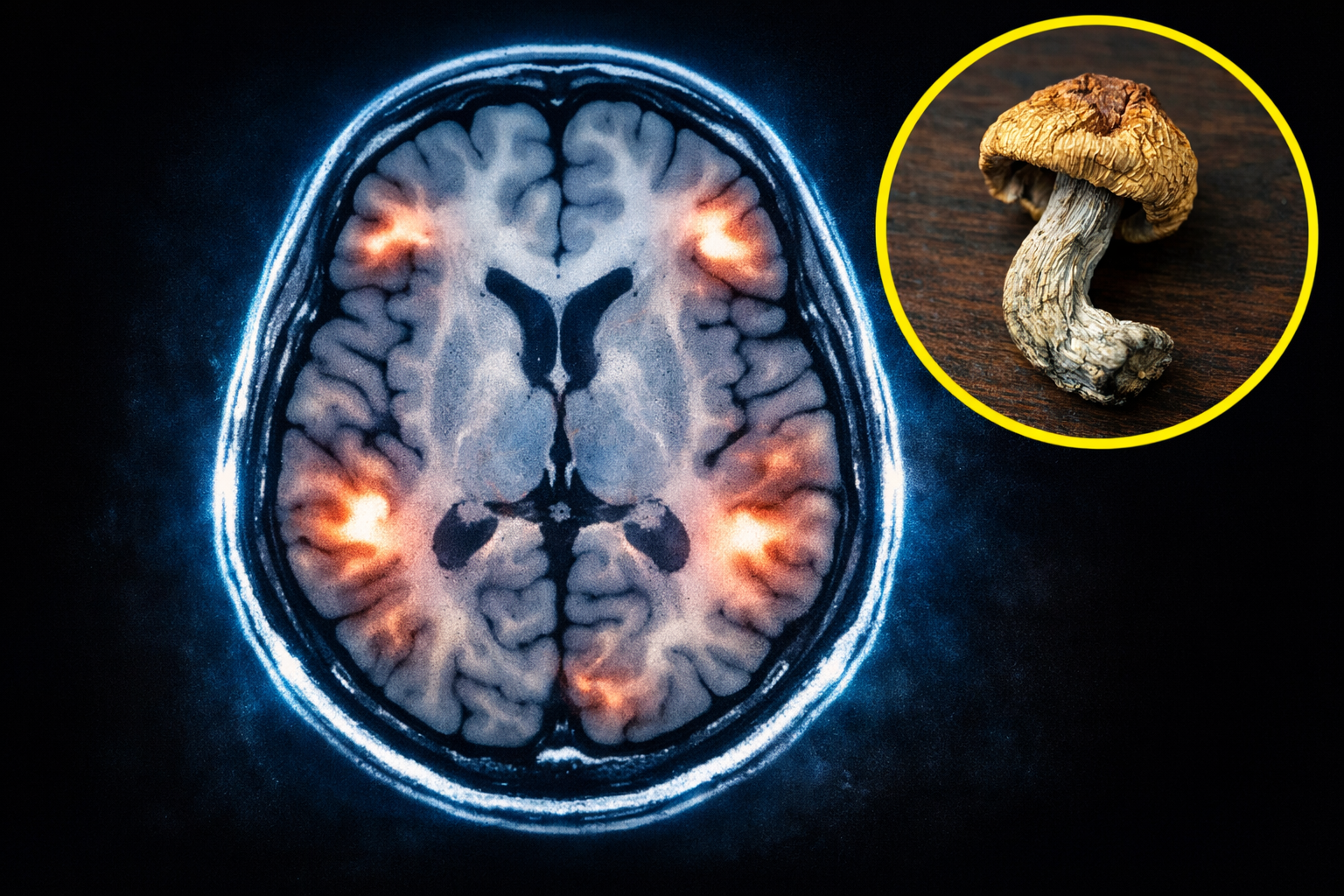
A single dose of magic mushrooms reduced OCD symptoms faster and more durably than any existing medication.
Let’s be honest about something first. OCD gets badly misunderstood. It’s not about being a neat freak or double-checking your front door. For the roughly 1–3% of people who genuinely have it, OCD is a relentless, grinding loop. It involves intrusive thoughts that feel urgent and real, compulsive behaviours you feel you have to perform because the alternative is unbearable. No amount of willpower or talk therapy fully interrupts it.
And, brutally, between 40 and 60 percent of people with OCD don’t respond to conventional treatments. Antidepressants and CBT simply don’t work for them.
That’s who this new study was designed for.
What Happened in the Trial
Christopher Pittenger and his team at Yale School of Medicine ran the first-ever randomised, placebo-controlled trial of psilocybin for OCD. It’s a small study (28 adults) but it’s rigorous and in a field where most psilocybin research has been observational.
These participants had lived with OCD for an average of two decades. They’d each tried at least two different treatments that hadn’t worked. They were people the system had run out of answers for.
Half received a single oral dose of psilocybin (0.25mg per kilogram of body weight) – enough for a classic psychedelic experience. The other half got niacin (vitamin B3) which can cause flushing and a slightly altered physical state – acting as a placebo with some teeth, designed to make blind conditions harder to break.
Then they measured symptom severity using a standard OCD scale (0–40).
Within 48 hours, the psilocybin group’s scores dropped by an average of 9.76 points. The niacin group barely moved.
One week later, 70% of psilocybin participants still showed around a 35% reduction in symptoms. And at the 12-week follow-up, the benefits held.
“It’s Better and Faster Than Other Medications”
That quote comes from Professor David Nutt at Imperial College London. For those who don’t know, Nutt lost his government advisory position for arguing that drug policy should follow evidence rather than politics.
His explanation for why psilocybin might work for OCD given to New Scientist:
“If we give you a trip, we think we can break the cycles of obsessive thinking and behaviour. The whole point of OCD therapy is about teaching people to behave differently. So rather than check the lights 15 times, you check them twice.”
This is the neuroplasticity hypothesis in plain English. The brain on psilocybin becomes, for a window of time, more flexible. Thoughts that felt fixed, urgent, and inescapable become less dominant. The rigid architecture of the obsessive loop temporarily loses its grip.
Nutt has seen this in depression research too. He recently showed a single dose of DMT reduces depressive symptoms, describing how patients who previously had depressive thoughts dominating their entire mental landscape found that, after the psychedelic, their brains simply didn’t grant those thoughts the same authority anymore.
Why This Is Different
This study is valuable for a few reasons:
First, it’s placebo-controlled. That’s really hard to do with psychedelics as participants can usually tell whether they’ve had a trip or not, and that expectancy effect can inflate results. Pittenger acknowledges this openly as a limitation; most participants figured out which group they were in. But they tried to mitigate it, and the design is still far more rigorous than most.
Second, the population is treatment-resistant. These aren’t people who might have improved with more conventional therapy anyway. They’re people for whom the existing toolkit was empty. Improvement here is harder to explain away.
Third, the effect was fast. Alex Kwan at Cornell called the speed and durability of the improvement “remarkable”, and he’s right to. Antidepressants for OCD take weeks to show effect, and the response rates are modest. This was 48 hours.
Not Fully Understood
Psilocybin is thought to work for OCD via a number of pathways. Here are the leading theories:
- Neuroplasticity: Psilocybin temporarily softens the brain’s entrenched neural patterns, allowing new ones to form. The psychedelic experience may act as a kind of forced reboot.
- Default Mode Network disruption: The DMN (the brain system associated with rumination, self-referential thought, and the narrative sense of “I”) gets temporarily quieted or recalibrated. This is the same network implicated in depression, and it’s overactive in OCD.
- Inflammation: There’s emerging evidence psilocybin may reduce neuroinflammation. Some researchers think psychiatric disorders have an inflammatory component that’s been underappreciated.
As Kwan put it: “If we can uncover that biology, it could transform how we think about treating many psychiatric disorders, not only OCD.”
The Risks
One participant who had persistent suicidal thoughts began actively planning to act on it during the trial. The risk passed with monitoring. But this is serious, and Pittenger doesn’t downplay it.
Psilocybin is no joke. It’s not dangerous in the way that, say, opioids are dangerous. You can’t physically overdose, and it’s non-addictive. But it can amplify and surface whatever is already present in a person’s psychology. For someone carrying something very dark, that can be destabilising.
The lesson isn’t that psilocybin is too risky. The lesson is that clinical safeguards aren’t optional. Set, setting, screening, and support are a needed part of the therapy. The drug is a catalyst. The container is everything.
This is something that’s easy to lose in the public conversation about psychedelics, which tends to oscillate between “magic cure” and “dangerous drug.” The actual answer, as usual, is more nuanced and more interesting.
Beyond OCD
This isn’t just an OCD story. It’s a story about what happens when you study how the brain changes under psychedelics, and find that those changes can be clinically meaningful, durable, and rapid.
The dominant model of psychiatric treatment for the last several decades has been to find the neurotransmitter imbalance and to correct it with a drug taken daily. That model has helped millions of people. It has also failed millions of people.
What psilocybin research is surfacing is a different model. Many mental health conditions might be better understood as patterns of rigid, self-reinforcing loops, rather than as simple chemical deficits. And therefore a carefully administered experience, rather than a daily maintenance drug, might be the best way of disrupting those patterns in ways that last.
It’s a fundamentally different way of thinking about mental health treatment. And the evidence is accumulating that it works.
Source: “Psilocybin for Treatment-Resistant OCD: A Randomised Controlled Trial” by Christopher Pittenger et al., Yale School of Medicine.