A decade in the making, a 40-person RCT has produced results that could reshape how we think about one of addiction medicine’s hardest problems.
There are no approved medications for cocaine use disorder. For a condition that’s increasing, with overdose deaths in the US climbing sharply after 2019, that’s a problem. Contingency management (essentially, paying people to stay clean) is the closest thing to a proven intervention – and even that has limits in real-world settings.
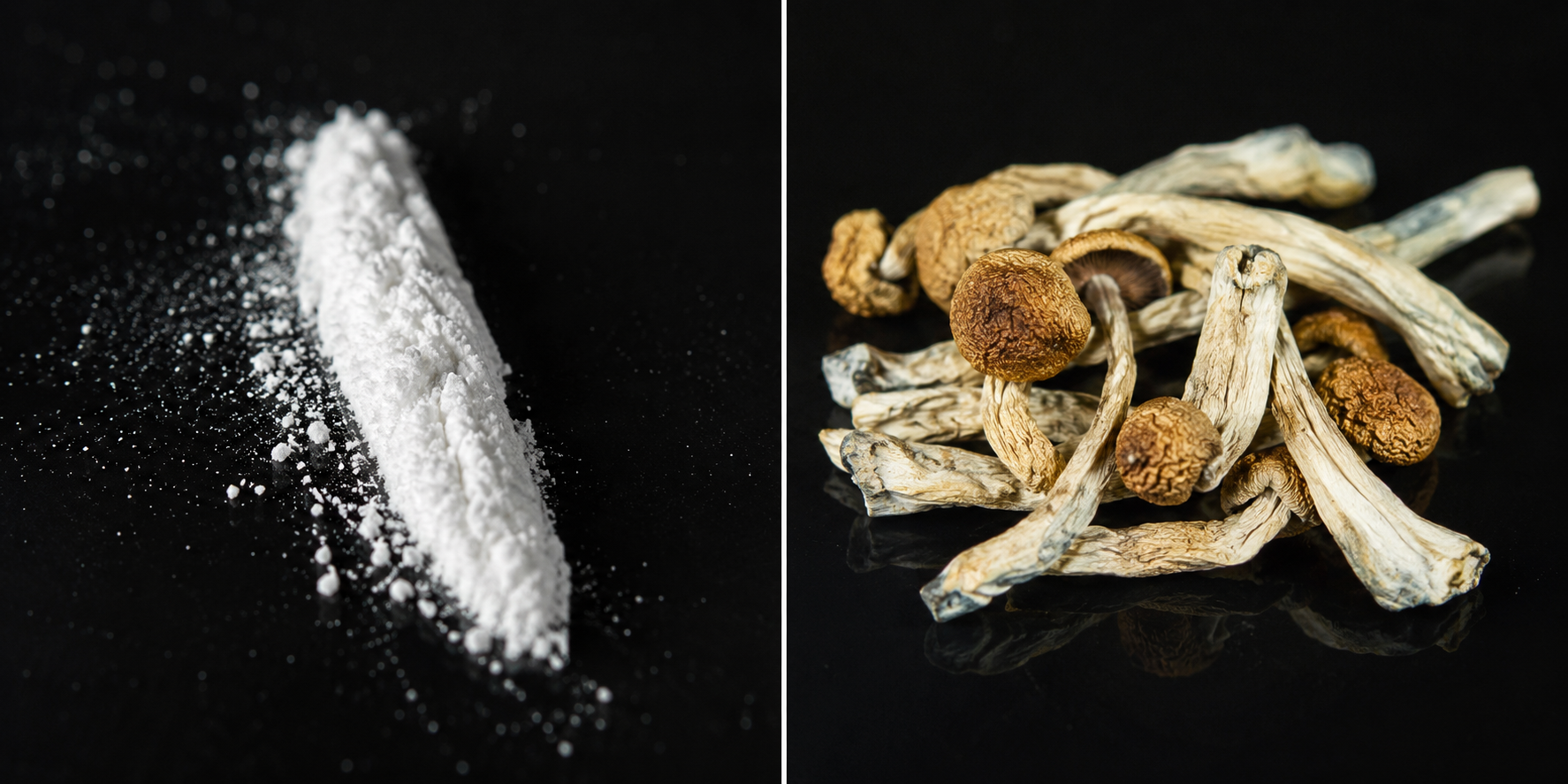
Into that gap steps a new randomised clinical trial, published May 7th in JAMA Network Open, which is the first study of any psychedelic in the treatment of cocaine use disorder. Led by Peter Hendricks at the University of Alabama at Birmingham, the trial ran from 2015 to 2024 – nine years of recruitment, data collection, and deliberate, methodical work. And the results are pretty remarkable.
What They Did
Forty adults with cocaine use disorder were recruited from the Deep South of the US. The sample was deliberately representative: 82.5% were Black, 65% had an annual income of $20,000 or less, and cocaine use spanned more than two decades on average. Most had tried to quit before. This was not a WEIRD sample (Western, Educated, Industrialised, Rich, Democratic) – the demographic makeup that has plagued most psychedelic research to date.
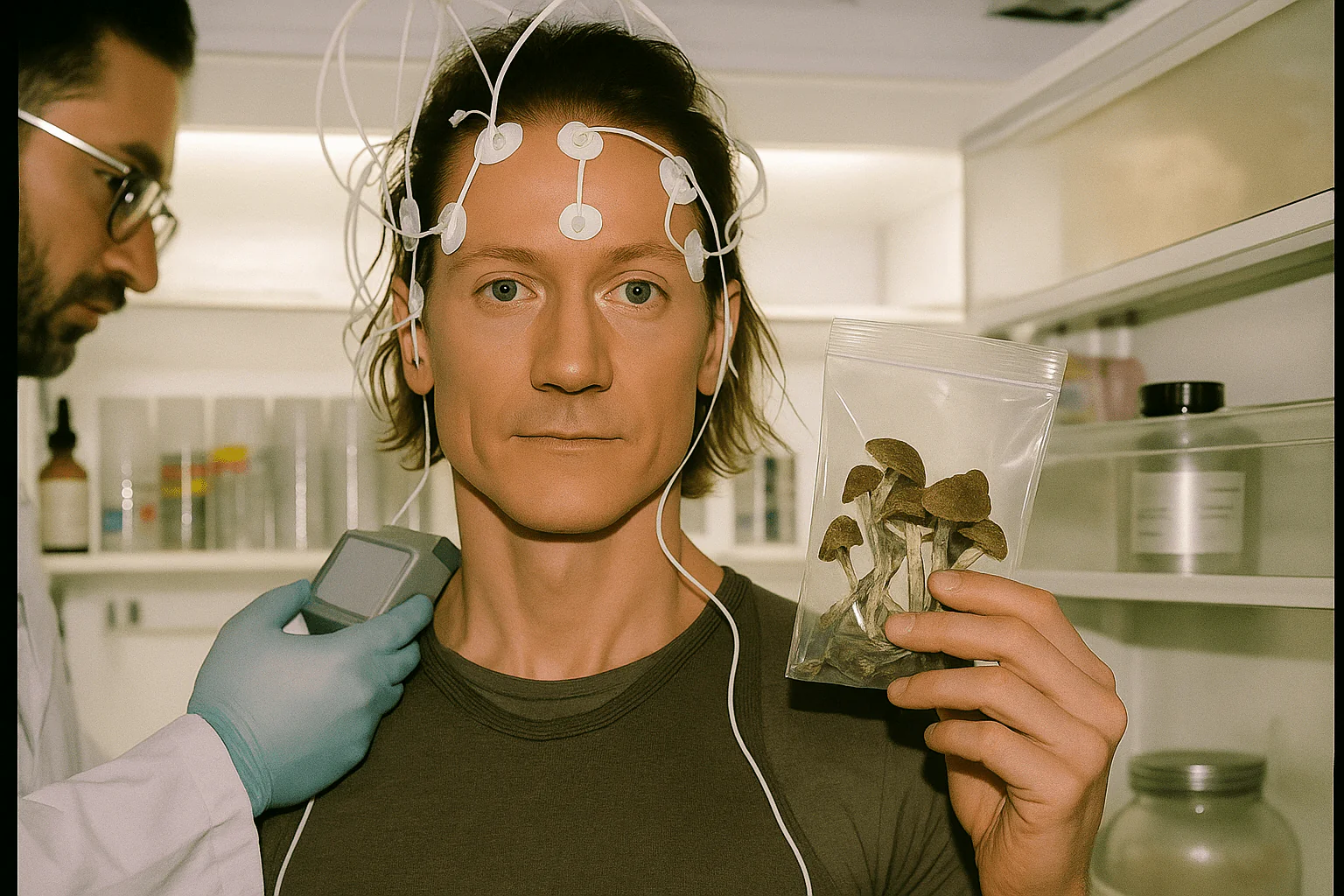
Participants received four to five two-hour preparation sessions of manualized psychotherapy, combining client-centred and cognitive-behavioural approaches. Then came the drug session, which consisted of a single oral dose of psilocybin at 25 mg per 70 kg of body weight, or 100 mg diphenhydramine (an antihistamine) as active placebo. Five weekly integration sessions followed, and then outcomes were assessed at 90 and 180 days post-treatment.
The trial was quadruple-blind: participants, therapists, outcome assessors, and statisticians were all masked to allocation.
What They Found
The results held up across all three primary outcomes.
Psilocybin recipients reported significantly more cocaine abstinent days across the post-treatment period (an average of around 29 percentage points more than placebo). Six of 20 people in the psilocybin group achieved complete cocaine abstinence from the end of treatment through day 180. In the placebo group, that number was zero.
On time to first lapse, the psilocybin group had a hazard ratio of 0.28 compared to placebo. At the 90-day mark, 55% of psilocybin participants had not lapsed; in the placebo group, 21% had not. No serious adverse events occurred.
For a condition with no real treatment options, that’s a meaningful signal.
Better Representative Samples
One of the most important features of this trial is who was in it. Hendricks has been blunt about the field’s failures here, and his directness is worth quoting at length.
“Psychedelics have long been popular among the college-educated elite, the intelligentsia, and, as you know full well, especially in recent times, the ultra-wealthy. When a psychedelic study is recruiting, these are the people on the lookout.,” he told Psychedelic Alpha.
His framing of what the field needs is pointed: “This is fundamentally a matter of collaboration rather than extraction. Science has for too long been extractive. We must be collaborative.”
Because only 3 of 40 participants had any prior hallucinogen experience, diphenhydramine performed well as a placebo. Around half of the placebo group correctly guessed their allocation, consistent with chance-level performance. Contrast that with trials recruiting self-selected psychedelic enthusiasts, where unblinding is almost guaranteed.
The Mechanism
Hendricks served as the primary therapist throughout the trial, which gave him an unusual vantage point on what was actually happening for participants.
“I saw what appeared to be the resolution of ambivalence secondary to insights around the incompatibility of cocaine use with deeply held personal values and beliefs, and enhanced thought-action repertoire — engagement with a wider range of more adaptive behaviour to cope with negative affect, life stressors, and the urge to use.”
He points to psychological flexibility as a plausible mechanistic frame, consistent with the broader psychedelic-assisted therapy literature. But there’s also something in the phenomenology of the experience itself, something harder to operationalise.
“Anecdotally, I think for many people the reaction to the psilocybin experience was: ‘Enough is enough. I’m never doing this again. Once and for all, I’m done with cocaine.'”
This maps onto what William Miller, the originator of Motivational Interviewing, has called quantum change: sudden, dramatic, and enduring shifts in values and behaviour that don’t follow the gradual arc most therapeutic models assume. Psilocybin may be unusually good at catalysing this by reorganising the relationship a person has with their own life.
This research builds on previous research showing psilocybin can help with tobacco and alcohol addiction. As addiction is fundamentally a disorder of rigid, self-reinforcing neural patterns, psilocybin has been shown to disrupt this at multiple levels.
Psilocybin reduces default mode network cohesion while simultaneously increasing inter-network connectivity, allowing different brain regions to communicate more flexibly. Psilocybin increases neuroplasticity, allowing the brain to become briefly more malleable, so psychotherapy during that window has amplified effects.
And classic psychedelics can also induce mystical experiences of unity, which appear to cause abrupt and sustained changes in behaviour and perception.
Could More Doses Be More Effective?
Perhaps the most surprising finding, given how chronic and relapsing cocaine use disorder tends to be, is how well the effects held through 180 days. No significant group-by-time interaction was detected, meaning the treatment effect was not decaying over the follow-up window.
Hendricks was candid about his surprise. “I guess I was, only because addiction is, by nature, a chronic, relapsing condition.” But he also reframes the question. Cocaine use is, at some level, a choice – a behaviour that, with sufficient motivation, people can and do abandon permanently. “There are countless success stories from outside the world of psychedelics to support this idea.”
The question the field now needs to answer: does a second dose extend or deepen that effect? Fourteen of the twenty psilocybin participants did not achieve complete abstinence. Hendricks has already flagged this for future research: “If a second (or third, or fourth, etc.) dose increases the likelihood of this outcome, then I think we should explore this.”
Limitations
This is a 40-person trial. The confidence intervals on some outcomes are wide. The lead author served as the primary therapist, which introduces potential allegiance effects (mitigated, but not eliminated, by the manualized protocol). Fidelity monitoring of psychotherapy was beyond the scope of the study. And like all clinical trials, the sample is a self-selected, highly motivated subset of a broader clinical population.
Hendricks says: “Given the small sample size and resulting wide CIs around the effect size estimates, findings should be interpreted with caution and conceptualized as hypothesis-generating rather than confirmatory.”
But none of that diminishes what has been demonstrated here. A clean positive signal in a first-in-condition trial, with a representative population, using rigorous methodology, over nearly a decade of work. This is exactly what early-phase research is supposed to look like.
What Next?
Hendricks lays out the roadmap: “A large multisite trial or trials that can inform a new drug application — a priority in light of the executive order — pragmatic trials, and those that allow us to optimise dosing regimens and psychotherapy protocols.”
The executive order he references is the Trump administration’s 2025 directive to fast-track psychedelic research, which has added regulatory momentum to a field that was already building clinical momentum. Whether that translates to faster, better-funded trials for populations who look like the ones in this study – rather than the ones who can afford premium wellness retreats – remains to be seen.
Hendricks thought this study might end his career. Instead it may have opened a door for a population that addiction medicine has largely written off.
The full trial is published in JAMA Network Open: doi.org/10.1001/jamanetworkopen.2026.11029. An extended interview with Peter Hendricks is available at Psychedelic Alpha.