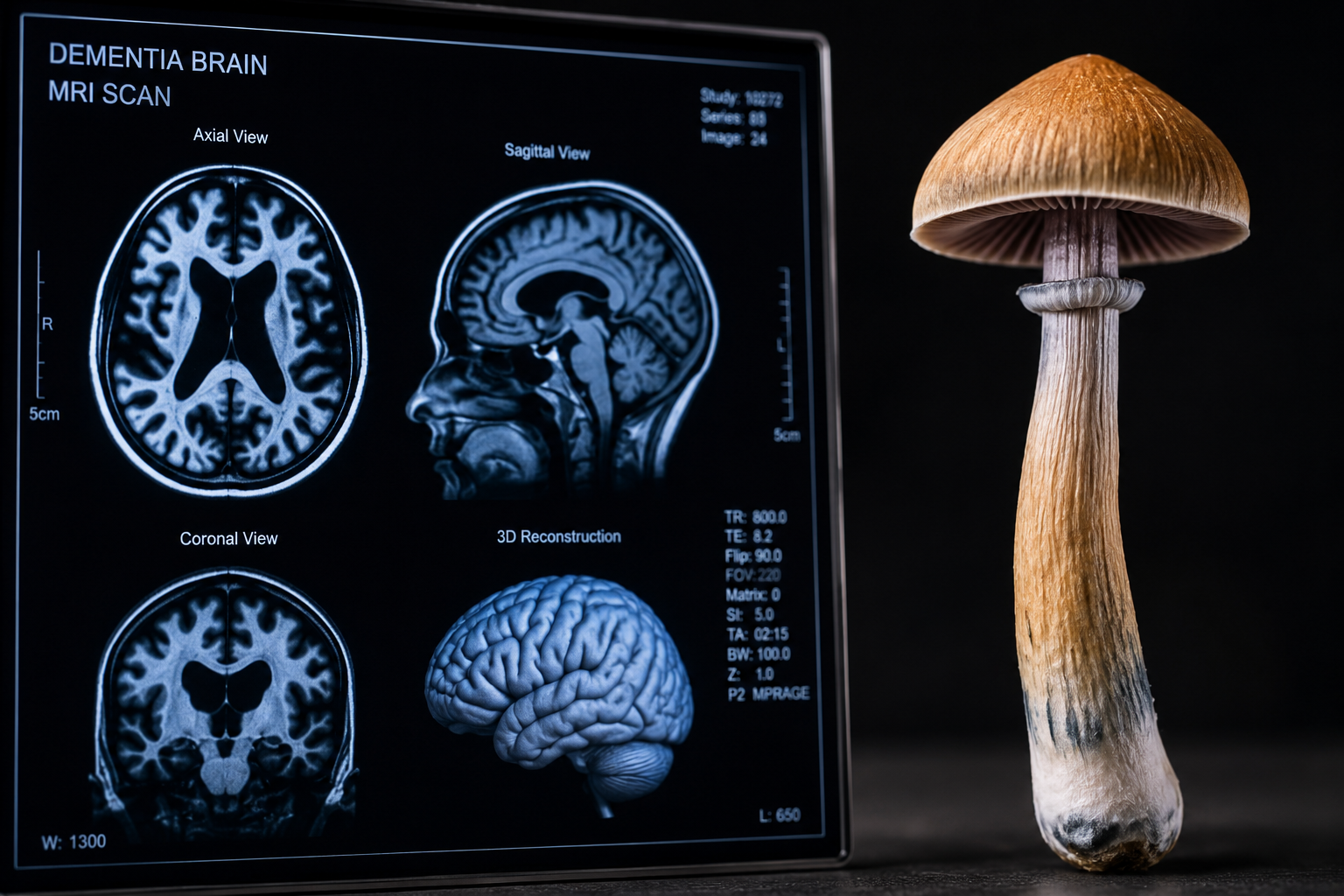
There is a particular kind of person you have probably met at least once. The 80-year-old who is still mentally sharp, quick witted, and with a vivid memory. Scientists have a name for them: SuperAgers.
For a long time, these people were treated as outliers. Lucky inheritors of good genes or mysterious beneficiaries of some unknown grace. But a new study just published in Nature has gone looking for the biology behind that grace, and what they found is quietly extraordinary.
What the Study Found
The research examined human hippocampal tissue from five distinct groups of people: young adults with normal memory, older adults with normal memory, SuperAgers with exceptional memory, people in the early stages of Alzheimer’s changes, and people with established Alzheimer’s disease. The hippocampus is the brain region most tightly coupled to memory formation.
Using single-cell genetic and epigenetic analysis across roughly 356,000 individual brain cell nuclei, the team was able to identify cells at different stages of adult neurogenesis – the process by which the brain, even in old age, generates new neurons. They were looking for neural stem cells, neuroblasts, and immature neurons, and they were looking at not just what genes were active, but how accessible the underlying DNA was. This is a layer of biology called chromatin regulation that sits above the genetic code itself.
The findings press on several assumptions at once.
First, adult neurogenesis does exist in the human hippocampus. This has been debated, but the molecular evidence here is fairly direct. Second, Alzheimer’s disease is associated with a clear disruption of this process. The regulatory environment that allows neurons to develop is being compromised long before symptoms become obvious. Third, and most striking, SuperAgers carry a distinct “resilience signature”. A specific molecular pattern of neurogenesis that appears to preserve memory even as the rest of the aging process continues.
The bottom line is that the aging hippocampus has clear molecular patterns. The separation between healthy memory and Alzheimer’s decline begins to appear in the cellular soil well before a clinical diagnosis, and preserved neurogenesis seems to be a vital reason why some people stay cognitively healthy into old age.
What This Means
It is worth pausing here to absorb what this is actually saying before moving to implications.
The dominant model of Alzheimer’s for decades centred on amyloid plaques and the idea that the disease is primarily a story of protein accumulation that poisons neurons from the outside. But the picture emerging from this research points toward something earlier and more fundamental. The brain’s internal capacity for regeneration, for growing and maintaining new neurons within the hippocampus, appears to be a critical determinant of whether a person ages well cognitively.
This is where the machine metaphor that dominates how we talk about the brain starts to break down. We have spent decades asking how to repair broken parts, clear blocked pathways, remove toxic accumulations. That is engineer thinking. But the brain doesn’t behave like a machine with components that either work or fail. It behaves more like an ecosystem that’s dynamic, interdependent, capable of regeneration when the right conditions are in place, and capable of collapse when the conditions that support it erode quietly over time.
An ecosystem doesn’t decline because one part breaks. It declines because the environment that sustains the whole thing slowly degrades. And that is precisely what this research describes. The early signs of Alzheimer’s are disruptions in the regulatory environment where new neurons are meant to develop. The soil becomes hostile before the forest visibly dies.
If that framing is right, then the relevant question shifts. Rather than asking only how we eliminate the bad things that accumulate, we start asking how we preserve the generative capacity of the system itself. The focus moves from cleanup to cultivation. And cultivation is a category of thinking that connects, interestingly, to something much older than modern medicine.
If that reframe from machine to ecosystem changes how you think about your own brain health, I built a 7-day protocol around it. It’s called the Decentralised Brain Protocol, and it works from the ground up: the mitochondria, metabolism, sleep, light, and nutrition that your brain runs on. Get it here.
Where Mushrooms Enter
This is where we have to be careful, because the connections are genuinely interesting but the evidence varies enormously depending on which mushroom and which mechanism we’re discussing.
Lion’s Mane and the Neurogenesis Link
Lion’s Mane (Hericium erinaceus) is the mushroom most directly relevant to the neurogenesis story. It contains compounds called hericenones and erinacines, which appear to stimulate the production of nerve growth factor (NGF) – a signalling protein that supports neurons in growing, repairing, and surviving.
Animal studies have shown increased hippocampal neurogenesis. Small human trials in people with mild cognitive impairment have shown cognitive improvements, though the effects appear to reverse when supplementation stops. The proposed mechanisms include upregulated NGF signalling, improved synaptic plasticity, reduced neuroinflammation, and antioxidant protection.
Conceptually, this fits the Nature paper’s findings rather well. The resilience signatures found in SuperAgers aren’t simply about having more neurons. They’re about having a cellular environment that supports neuronal development. Lion’s Mane could contribute to maintaining that environment in the hippocampus. Human evidence remains limited and mixed, but the direction of effect in studies that do exist is consistent with what you would want to see.
The Ergothioneine Story
Ergothioneine is a sulfur-containing antioxidant that the human body cannot synthesise on its own. We have to obtain it from food, and mushrooms are one of the richest dietary sources available.
What makes ergothioneine unusual is that the brain appears to actively retain it through a specific transporter called OCTN1, which is one reason researchers suspect it may matter for cognitive resilience rather than simply passing through.
The connection to the Nature paper’s findings is not trivial. The study found that memory resilience and decline in aging were strongly tied to the molecular state of hippocampal stem-like and immature neuron populations, with early chromatin-level disruption appearing before full Alzheimer’s disease takes hold.
The health of the cellular environment surrounding those developing neurons (the ecosystem conditions, if you like) seems to matter enormously. Ergothioneine is interesting precisely because it may help that environment by reducing the oxidative and inflammatory stress that degrades it.
The human evidence, while not definitive, is notable. In the 2025 Hisayama prospective study, 1,344 older adults without dementia were followed for a median of 11.2 years. Higher serum ergothioneine was associated with meaningfully lower risk of all-cause dementia, Alzheimer’s disease, and non-Alzheimer’s dementia. This association held after adjustment for multiple confounders, and it appeared even in people who already had mild cognitive impairment at baseline.
There is also early intervention evidence. A 2024 randomised, double-blind, placebo-controlled pilot in older adults with mild cognitive impairment found that ergothioneine supplementation over a year was safe, associated with better learning performance, and linked to stabilised neurofilament light chain compared with placebo. Neurofilament light is a marker of neuronal injury, so its stabilisation in the supplemented group is the kind of signal that warrants larger trials.
Reishi and Psilocybin
Reishi (Ganoderma lucidum) contributes to this picture primarily through neuroprotection rather than neurogenesis. Its triterpenes and polysaccharides appear to reduce brain inflammation, lower oxidative stress, protect neurons from amyloid toxicity, and improve mitochondrial function.
These mechanisms don’t target neurogenesis directly, but they address several of the same biological pathways that the Nature study identified as relevant to cognitive decline. Less tending to one broken part, more stabilising the broader conditions of the system.
Psilocybin is scientifically the most intellectually exciting candidate here, and also the one requiring the most caution. Mouse studies have shown that psilocybin-treated animals exhibit better brain function, reduced neuroinflammatory signalling, more hippocampal neurogenesis, and better preservation of synaptic proteins without reducing amyloid-beta plaques. That final observation is interesting. If the effect isn’t happening through plaque clearance, it may be acting through the brain’s inflammatory and plasticity environment, which is precisely what the SuperAger study points to as critical.
There is an ongoing Johns Hopkins pilot studying psilocybin in people with mild cognitive impairment and early Alzheimer’s, though that trial focuses on mood and quality of life rather than neurodegeneration directly. The mechanism stack that makes psilocybin interesting because increased neuroplasticity, reduced inflammation, potential influence on hippocampal neurogenesis through 5-HT2A signalling aligns well with the direction of the Nature findings.
The Bigger Picture
There is a coherent story emerging here, and it is worth stating it clearly.
The Nature study found that what separates SuperAgers from people with declining memory is the presence of a particular kind of regenerative capacity, maintained at the molecular level in the hippocampus, visible in the state of stem-like cells and immature neurons long before any clinical sign of trouble appears. The soil matters most.
Mushrooms, from this vantage point, offer something that fits the ecosystem frame rather well. Rather than a targeted pharmaceutical intervention against a single mechanism, they represent a cluster of compounds that appear to act on the conditions in which neurons develop and survive. Less oxidative stress. Less inflammation. Better mitochondrial function. More supportive growth-factor signalling. The brain as ecosystem, restored toward conditions where its own regenerative processes can operate.
This is not a claim that any mushroom prevents or treats Alzheimer’s. The honest summary is that the evidence is promising, biologically plausible, and partly supported in humans, but not proven treatment. What we can say is that mushrooms represent one of the more coherent dietary levers for supporting the kind of hippocampal environment that the study describes as central to cognitive resilience.
The practical takeaway is this: eat mushrooms regularly as part of a broader brain-health pattern, and treat Lion’s Mane, Reishi, and ergothioneine supplementation as useful adjuncts. Exercise, sleep quality, blood sugar control, blood pressure, hearing health, social connection, and overall dietary pattern still carry far stronger evidence for preserving cognition than any single compound. Mushrooms belong in the picture, but they aren’t the whole picture.
What makes them worth paying close attention to is not magic. It is that when you stop thinking of the brain as a machine to be fixed and start thinking of it as an ecosystem to be tended, mushrooms stop looking like a quirky supplement and start looking like one of the more underappreciated ways of maintaining the conditions where memory is either made or lost. A new generation of science is beginning to show us exactly what those conditions look like.
Want to put this into practice? The Decentralised Brain Protocol is a 7-day system built on the same first-principles thinking to restore the energy systems your brain actually runs on. Mitochondria, metabolism, light, sleep, minerals, nutrition. When you fix the inputs, clarity tends to return on its own. Get it here →
Source: Human hippocampal neurogenesis in adulthood, ageing and Alzheimer’s disease
If you found this useful and want to stay close to the research connecting natural compounds to brain and metabolic health, the Spore Report is where I go deeper. It’s a newsletter built for people who take this seriously. You can subscribe at thesporereport.co.uk.