For decades, psychedelic researchers have focused on how substances like psilocybin and ayahuasca change individual consciousness. But a provocative new preprint asks a very different question:
What happens when psychedelic experiences spill out into politics, religion and social change?
According to University of Exeter psychologist Dr. Leor Roseman, psychedelics, under the right conditions, can trigger what he calls “micro-messianic” experiences. Moments when people feel they’ve discovered a mission capable of changing the world.
Beyond Oneness
Many psychedelic theories focus on feelings of unity, compassion and ego dissolution. Roseman argues there’s another, often overlooked, side to psychedelic experience.
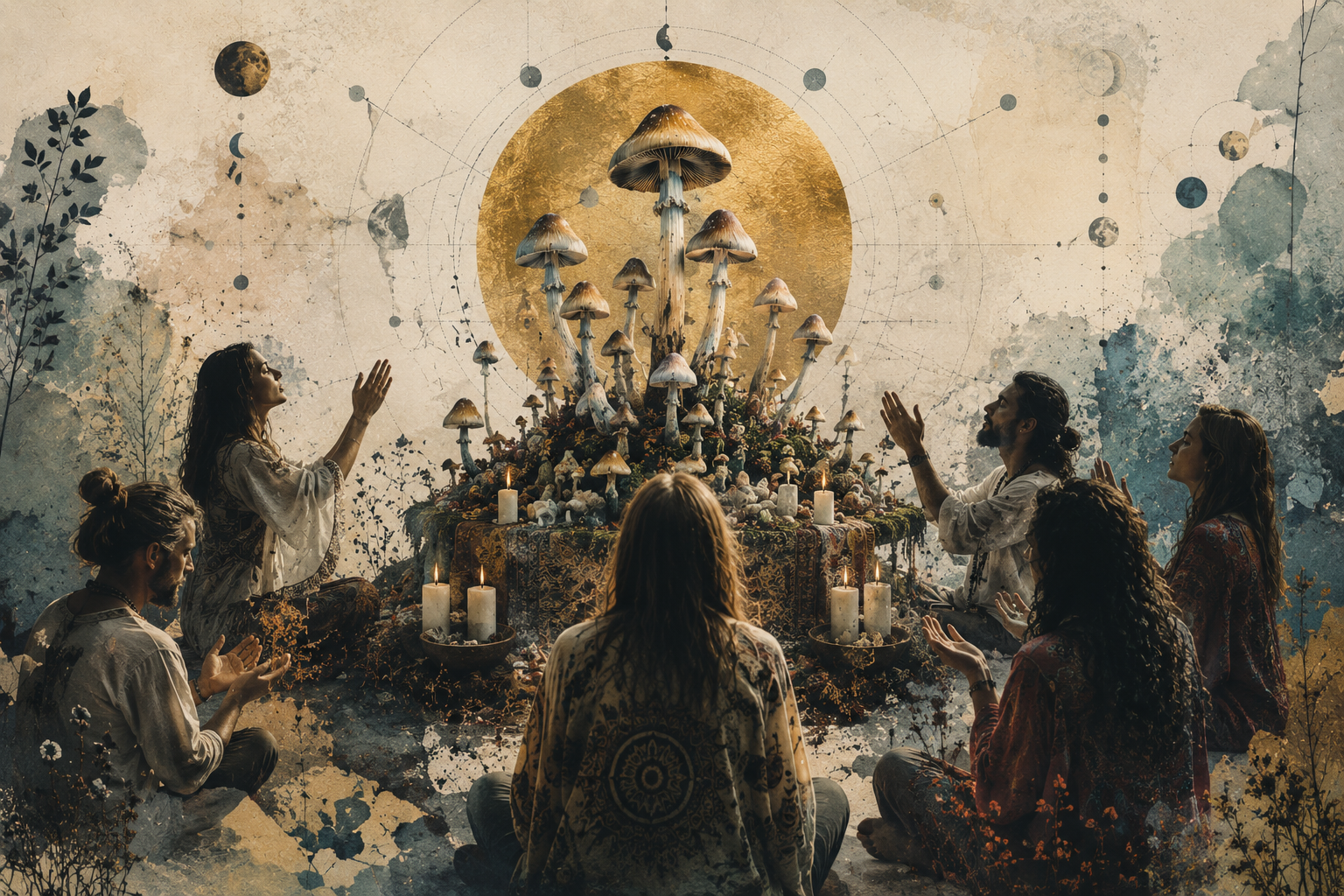
Instead of dissolving into universal love, some people emerge with an overwhelming sense of purpose, convinced they’ve received an important message that demands action. These experiences aren’t simply mystical. They’re prophetic. The person feels responsible for transforming the world around them.
The paper explores several famous examples from psychedelic history.
Allen Ginsberg famously declared himself a messiah during a psilocybin experience before helping popularize psychedelics throughout the counterculture.
Santo Daime founder Master Irineu reported visionary encounters that inspired him to create one of the world’s largest ayahuasca religions.
John Wilson (“Moonhead”) helped transform peyote from local Indigenous practices into what eventually became the Native American Church.
According to Roseman, each followed a similar pattern:
- A powerful psychedelic revelation
- A lasting commitment to that vision
- New rituals or ideas
- The spread of a movement
- Eventually, a new social or religious tradition emerged.
Roseman argues these experiences become especially influential during periods of uncertainty. Social unrest, cultural change and political instability create fertile ground for people seeking new meaning.
Rather than viewing these experiences as delusions or grandiosity, he suggests they can act as catalysts for genuine social innovation.Many ultimately fade away. But occasionally, they reshape culture.
A Different Way To Think About Psychedelics
One of the paper’s most intriguing ideas is that psychedelics may spread through society because they inspire people to share them. Roseman compares this to agriculture, borrowing Yuval Noah Harari’s famous observation that humans didn’t domesticate wheat – wheat domesticated humans.
Similarly, psychedelics may “spread themselves” by inspiring people who feel called to introduce others to these experiences. From this perspective, psychedelic history is a story of ideas, visions and movements carried forward by people convinced they had encountered something profoundly important.
Roseman doesn’t argue that everyone who has a psychedelic experience becomes a prophet. Most so-called “micro-messianic” moments never grow beyond the individual. Many quietly disappear. Others inspire art, research, activism or personal healing rather than mass movements.
His central point is simply that psychedelics can occasionally generate an unusually powerful sense of mission, and throughout history, those moments have sometimes changed far more than a single person’s life.
The Bottom Line
As psychedelics move further into mainstream medicine, this paper reminds us they have always been more than clinical tools. They’ve shaped religions, political movements, countercultures and personal identities.
Whether that’s viewed as inspiring, dangerous or simply fascinating may depend on who’s telling the story. But if Roseman is right, psychedelics don’t just alter consciousness. Sometimes, they alter history.
Source: Roseman, L. (2025). Micro-Messiahs: When Psychedelics and Politics Meet (preprint). Department of Psychology, University of Exeter.
Keep up with the research here.