

In 2000, Yale researchers gave ketamine to ten people with depression. Almost all of them got dramatically better after a single dose. Six years later, Johns Hopkins gave volunteers psilocybin. Fourteen months after the session, many of them were still describing it as one of the most significant experiences of their lives. Like the birth of a child, some said.
Those two results changed things. And the argument they started is whether you actually need the psychedelic experience to get the benefit. Or whether the trip is, in some sense, beside the point.
Clayton Dalton’s piece in The New Yorker this month is the best account I’ve read of where that argument currently stands. It centres on David Olson, a chemical neuroscientist at UC Davis, who has spent years making the case that the trip and the therapy can be separated. He just ran the first human trial of a drug designed to prove it.
What’s actually happening in your brain
The clue that set all of this in motion came from a 2010 Yale study. Ketamine, given to rats, caused neurons in the prefrontal cortex to physically grow new branches, (dendritic spines), which are the connection points between brain cells. Depression and chronic stress cause those branches to wither. The drug helped them regrow. And when researchers blocked the proteins responsible for that growth, the mental health benefits vanished with it.
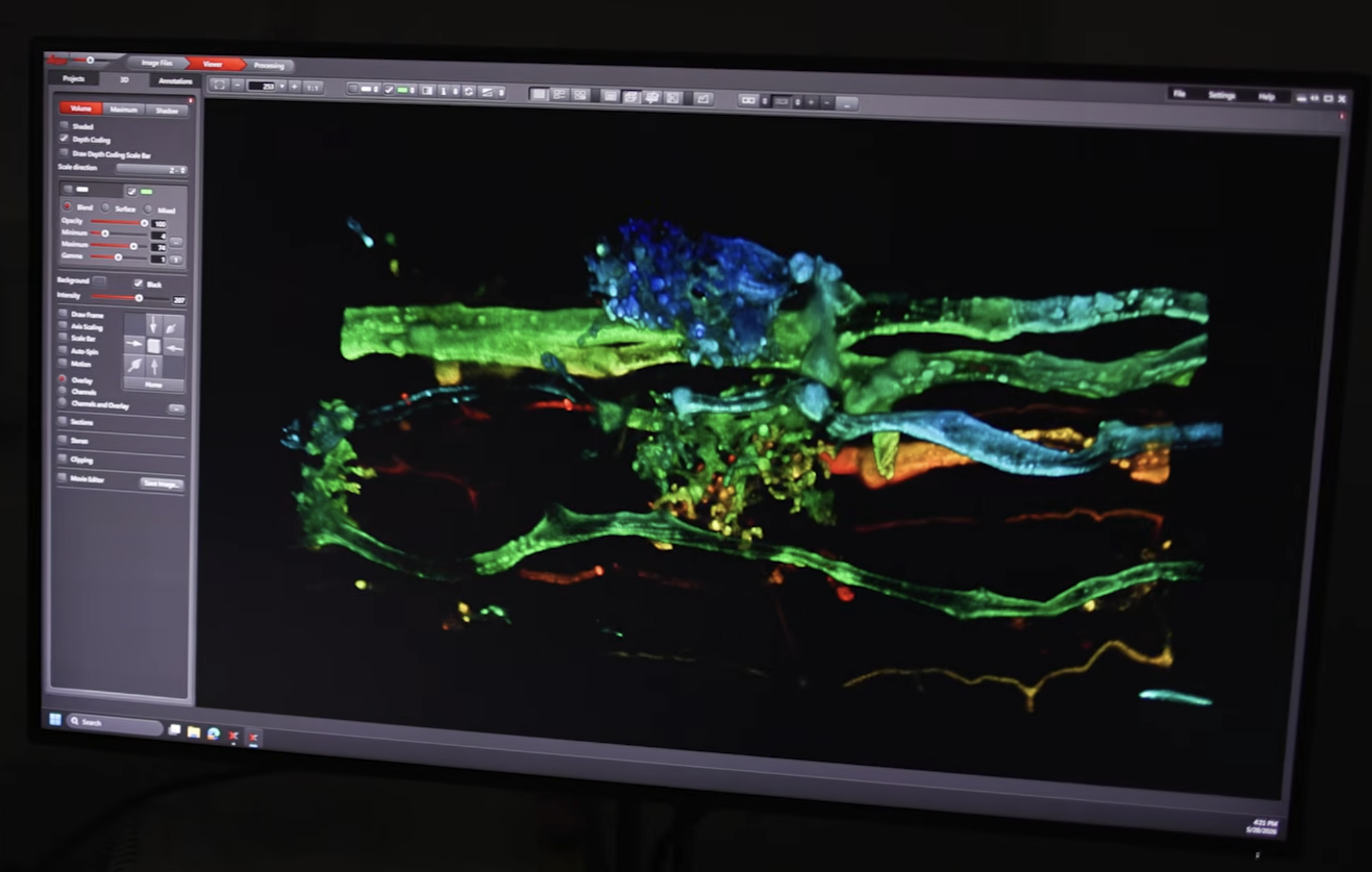
Olson repeated the experiment with psilocin, LSD, DMT, and MDMA. Same result across all of them. Dendritic growth in isolated neurons, then in fruit flies, then in live rodents. The neurons in the microscope images looked, as Dalton describes it, like newly fertilised trees.
His read on this was neuroplasticity (the brain’s physical capacity to rewire itself) is the actual antidepressive mechanism. Not the visions. Not the sense of ego dissolution or oceanic unity. The dendrites regrowing in the prefrontal cortex. And if that’s what’s doing the work, then theoretically you don’t need the trip at all.
Taking the molecule apart
Olson’s background is in function-oriented synthesis, which is basically the idea that within any given molecule, different clusters of atoms do different jobs. A psychedelic compound might have one structural motif responsible for the hallucinogenic effects and another responsible for neural growth. Separate them and you have something new.
He started, of all places, with a pair of books by Alexander Shulgin – PiHKAL and TiHKAL – written by a chemist who synthesised nearly 200 novel psychedelic compounds and documented the effects of many of them on himself. Olson had a grad student go through both books and cross-reference them with drug forums on Reddit, hunting for compounds that reportedly didn’t produce much of a trip.
What followed was years of iterative chemistry. Make a compound, screen it for hallucinogenic potential, test it for dendritic growth, adjust, repeat. He found, for instance, that flipping two atoms in the LSD molecule meaningfully affected how psychedelic it was. Eventually he landed on a compound called zalsupindole, structurally close to DMT but apparently non-hallucinogenic. Dendritic growth in the cortex, but no trip.
In 2025, 18 patients with major depression took zalsupindole for a week in a monitored setting. No safety concerns. No subjective psychedelic effects. Nearly all of them reported meaningful improvement in symptoms, sustained for at least a month. Two reported their depression had gone entirely. The FDA has approved a larger placebo-controlled trial.
The case against
The sceptics in Dalton’s piece aren’t pushovers, and their arguments are worth sitting with.
Robin Carhart-Harris at UCSF, who has spent years scanning brains on psychedelics, describes the healthy brain as a snow globe in motion, with patterns shifting and reforming. Depression settles the snow. Psychedelics shake the globe. The trip is just what it feels like when that happens. If zalsupindole doesn’t shake anything, the snow might just stay settled, however many dendrites regrow.
Then there’s the psychological dimension, which is harder to dismiss than the neuroplasticity people sometimes suggest. Dalton quotes a neuroscientist describing a woman who, during a psilocybin session, had the sudden, clarifying realisation that her drinking was hurting her children. So she stopped. Another patient understood something about the origins of his OCD that significantly improved his symptoms. These aren’t just reports of feeling better. They’re accounts of people seeing something, in a way that changed how they acted.
Roland Griffiths, who ran the original Johns Hopkins psilocybin work before his death in 2023, built his entire framework around these kinds of mystical experiences, the feelings of unity and love, and what he called oceanic boundlessness. A 2022 review of twelve studies found a significant association between those mystical experiences and actual therapeutic outcomes.
Carhart-Harris is more cautious about the mysticism framing. “You look up mystical in the dictionary and you see supernatural, which is a problem,” he told Dalton. But his imaging data still points to something unique happening during a trip, something beyond branch growth. The whole architecture of communication between brain regions becoming less constrained, more recombinant. Whether zalsupindole replicates that, nobody knows yet.
More Than Mental
I’ve been writing about the mitochondrial and metabolic roots of mental health for a while now. This is the idea that depression isn’t just a psychological event but a cellular one. The brain is the most metabolically expensive organ in the body. Under chronic stress it starts rationing. Dendritic pruning, in this frame, is austerity. The brain is cutting complexity it can’t afford to maintain.
Neuroplasticity, then, is downstream of energy. A brain with functioning mitochondria, adequate sleep, low inflammation, and regular movement has the substrate to rewire. A depleted brain probably doesn’t, regardless of what signal you send it. Which might explain why psychedelics and lifestyle factors seem to potentiate each other rather than substitute.
My own experience tracks with this. I used a 5g trip two years ago to quit smoking, after failing repeatedly through other means. It wasn’t that the mushrooms gave me willpower. Something more fundamental shifted, like my relationship with who I was, what I wanted, what felt worth protecting. But I was also lifting weights three times a week by then, playing football again after a 16-year gap, getting outside regularly. I think all of that mattered. The mushrooms opened a window. But the exercise had been doing something to the frame, keeping the brain in a state where change was actually possible.
This is backed up reasonably well by the research. Aerobic exercise independently promotes BDNF, the same growth factor that drives dendritic development. Time in nature, meditation, and psychedelics all seem to activate overlapping plasticity pathways. They’re different levers on the same mechanism. Which makes them more interesting in combination than any one in isolation.
The access problem
There’s a practical thread in all of this that doesn’t get enough attention. Psychedelic therapy, as it currently exists, is expensive and labour-intensive. In Oregon, where psilocybin therapy was legalised in 2023, a third of the new clinics have already closed. The model is hard to sustain economically, and the people most affected by treatment-resistant depression are often the least able to access it.
Neuroplastogens, if they work, fit into the existing pharmaceutical infrastructure. A GP can prescribe them. You take them at home. No facilitator required, no lengthy sessions, no cultural gatekeeping. That’s not the most poetic vision of mental health treatment, but it is one that could actually scale.
There’s a real tension between these two models. The one that says healing is a full experiential event requiring presence and guidance and the weight of a shifted consciousness, and the one that says healing is a biological process we should deliver as efficiently as possible. I predict both are probably partially right. They’re likely suited to different people, different conditions, different stages of illness. What matters is having both options available, not having one crowd out the other.
Where this lands
Nobody knows yet whether the trip matters. That’s just the honest answer. The zalsupindole trial was 18 people, no placebo, everyone knew what they were taking. Promising, not conclusive. Olson would say the same.
But the question, as Dalton frames it, is enormously clarifying. For years the debate in psychedelic research has been tangled up with philosophy. Neuroplastogens strip that back and ask it in the lab. If zalsupindole produces durable remission in a proper trial, it tells us something fundamental about what the brain actually needs. If it doesn’t, it tells us something equally fundamental about why experience matters.
David Yaden, the Roland Griffiths Professor of Psychedelic Research at Johns Hopkins, told Dalton he was open to being wrong. “It would undermine my entire perspective,” he said. “And that would be really interesting.”
That’s the right attitude. Hold the theory loosely, keep watching what the data actually says, and stay willing to be surprised by why things work.
Read the full article here (although it’s behind a paywall).
If you want to follow this space without the hype — The Spore Report is where I break down the research that’s actually moving things forward.
One thought on “Does the Trip Actually Matter?”