For decades, LSD has been demonized as a dangerous drug that will fry your brain. But a remarkable collection of new studies suggests that the truth is very different to what we’ve told.
Published across multiple journals over the past year, these studies paint a surprisingly coherent picture. Researchers are finding evidence that LSD can positively reorganize brain activity, increase cognitive flexibility, improve mood, protect against neurological injury, and may even inspire the development of next-generation brain medicines.
While much of this research remains early, together it offers one of the clearest snapshots yet of where LSD science is heading.
1. LSD Makes the Brain Less Predictable
Several neuroimaging studies examined how LSD changes activity across the human brain.
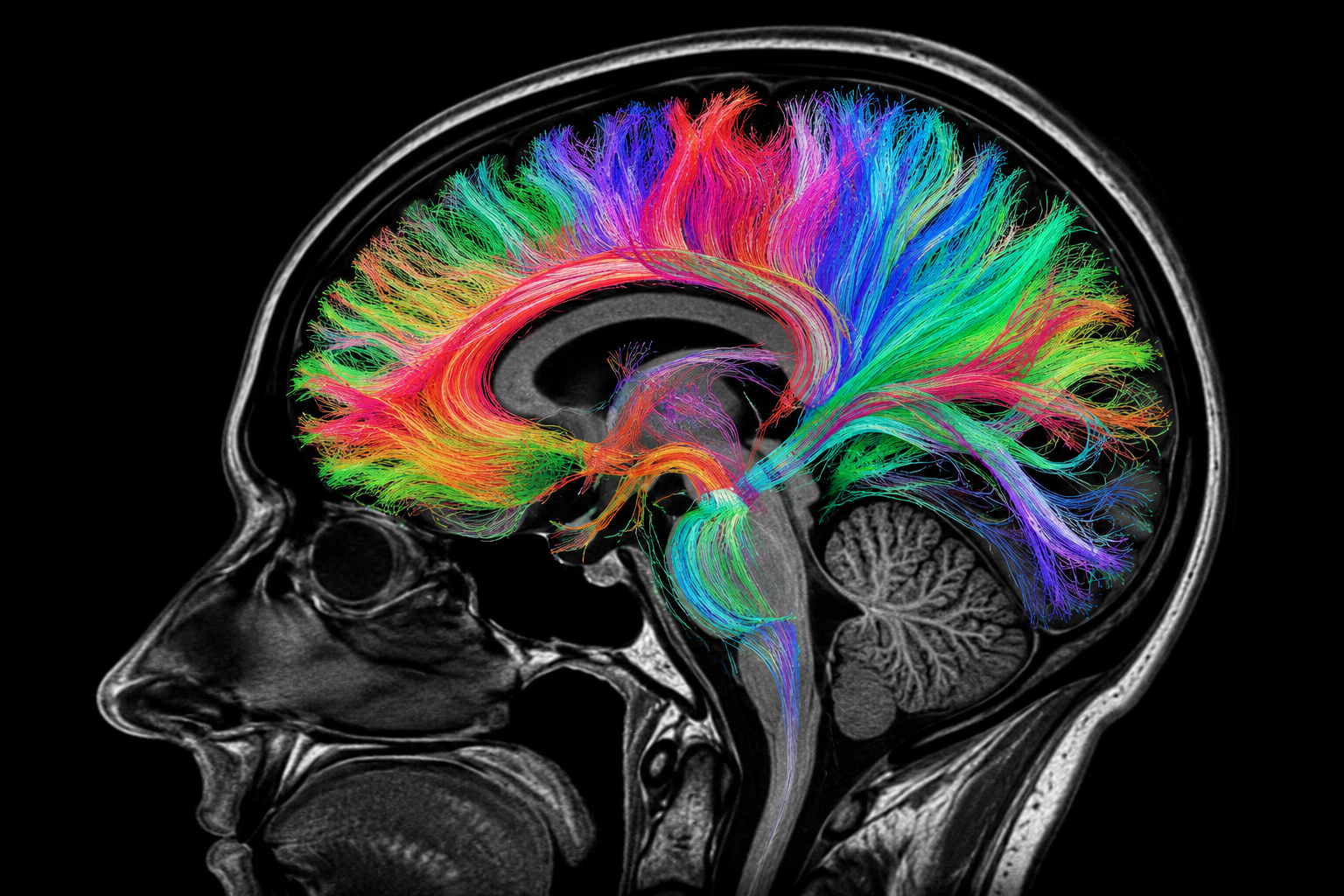
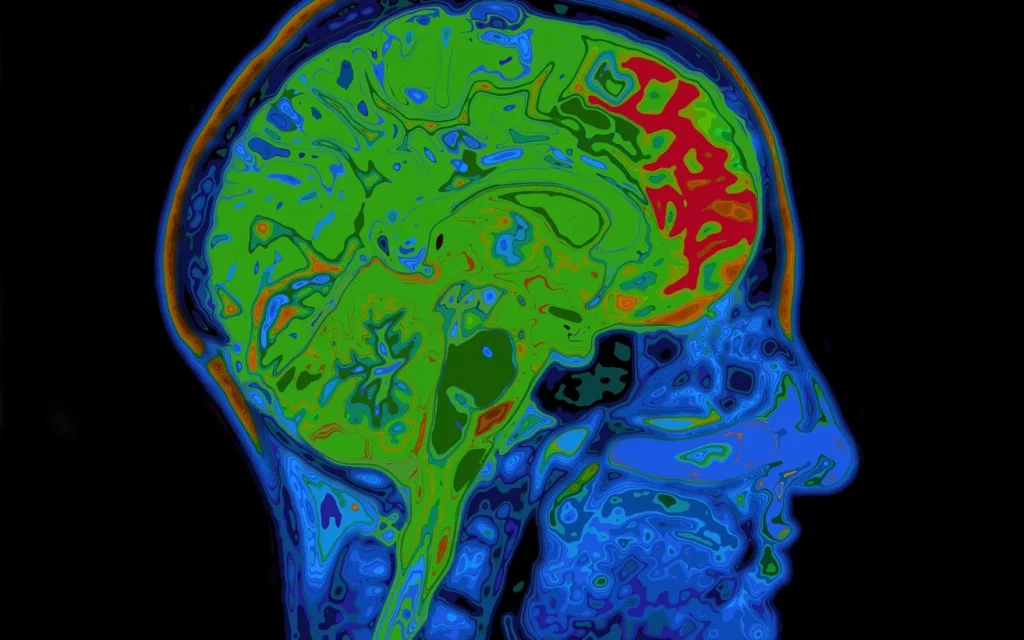
Rather than simply “speeding up” brain function, researchers found that LSD reduced the synchrony of local brain networks. Regions that normally fire together became less rigidly organised, particularly areas involved in vision, touch and the default mode network (the system associated with self-reflection and our sense of identity).
Instead of operating in tightly separated modules, the brain appeared to become more globally integrated. This supports the influential Entropic Brain Hypothesis, which proposes that psychedelics temporarily increase the brain’s flexibility by allowing it to escape deeply ingrained patterns of activity.
For many researchers, this may help explain why psychedelics can sometimes help people break entrenched habits of thinking associated with depression, addiction and other psychiatric disorders.
Source: La-Torraca-Vittori, P., et al. (2025). Knocking at the Doors of Perception: Relating LSD Effects on Low-Frequency Fluctuations and Regional Homogeneity to Receptor Densities in fMRI. European Journal of Neuroscience.
https://pubmed.ncbi.nlm.nih.gov/41305961/
2. The Brain Shifts From Rigid Processing to Flexible Thinking
Another computational modelling study looked beyond simple brain scans. Researchers estimated how LSD alters the balance between excitation and inhibition across different regions of the cortex. Interestingly, sensory regions became more inhibited while higher-order associative areas became relatively more active.
In simple terms, the brain appeared to rely less on incoming sensory information and more on internally generated processing. This may help explain why people under LSD often report vivid imagination, altered meaning, novel perspectives and unusually creative thinking.
The study also found greater synchronisation across distant brain networks, suggesting that regions which normally operate independently begin communicating far more extensively.
Source: Zhang, L., et al. (2025). Lysergic acid diethylamide-derived excitatory/inhibitory ratio change enhances global synchrony in functional brain dynamics. PLOS Computational Biology.
https://journals.plos.org/ploscompbiol/article?id=10.1371/journal.pcbi.1013822
3. Tiny Doses May Improve Emotional Processing
Not all researchers are studying full psychedelic experiences. One trial investigated whether a very low 26-microgram dose (below the level typically associated with strong hallucinations) could alter emotional processing.
Participants with more depressive symptoms normally showed a blunted brain response to rewards and losses. After receiving LSD, however, their brains produced a much stronger response to negative feedback, resembling patterns typically seen in healthier individuals. Remarkably, those showing the largest neural changes also reported improved mood, with benefits still present two days later.
Although far from proving LSD is an antidepressant, the findings suggest even low doses may temporarily restore healthier emotional processing.
Source: Glazer, J., et al. (2026). Reward-related neural activity after low doses of LSD in participants with depressed mood. Journal of Psychopharmacology.
https://pubmed.ncbi.nlm.nih.gov/41529826/
4. Microdosing Shows Early Promise for Depression
Another Phase 2a study followed 19 adults with major depressive disorder who microdosed LSD twice weekly for eight weeks.
Participants adjusted doses between 4 and 20 micrograms while tracking mood, energy, creativity and social functioning through a smartphone app.
Researchers observed that:
- Mood improved on dosing days.
- Happiness remained elevated for several days afterwards.
- Participants reported greater creativity and social connection.
- No obvious tolerance developed over the eight weeks.
By the end of the study, depression severity had fallen by roughly 60% on average. However, it’s important to interpret these findings cautiously. The trial was open-label, meaning participants knew they were taking LSD, making placebo effects impossible to rule out. Larger randomised controlled trials will be needed before firm conclusions can be drawn.
Source: Daldegan-Bueno, D., et al. (2026). LSD microdosing for major depressive disorder: Mood and pharmacokinetic outcomes from a Phase 2a trial. Progress in Neuropsychopharmacology & Biological Psychiatry.
https://pubmed.ncbi.nlm.nih.gov/41713673/
5. LSD Users Were Less Likely to Have Alcohol Use Disorder
Researchers also analysed health data from almost 140,000 American adults. After adjusting for age, education, income and other drug use, recent LSD users were approximately 30% less likely to meet criteria for alcohol use disorder than non-users.
Among those who did have alcohol use disorder, LSD users also reported fewer symptoms.
This does not prove LSD prevents alcoholism. The research simply identifies an association. Many other factors, including personality, lifestyle and pre-existing differences, could explain the relationship.
Still, the findings align with growing clinical research exploring psychedelics as potential treatments for addiction.
Source: Zech, J. M., Richard, J., & Jones, G. M. (2026). The Relationship Between Psychedelic Use and Alcohol Use Disorder in a Nationally Representative Sample. Journal of Psychoactive Drugs.
https://pubmed.ncbi.nlm.nih.gov/41208129/
6. Unexpected Protection Against Severe Seizures
One of the biggest surprises came from entirely different research.
Scientists studying epilepsy in mice initially wanted to determine whether LSD might worsen seizures. Instead, they found the opposite.
Male mice receiving LSD showed dramatically lower rates of status epilepticus (a dangerous prolonged seizure state) and none died, while many untreated animals did.
Brain recordings suggested LSD reduced the strength of large-scale rhythmic activity, introducing enough “noise” into neural networks to prevent pathological over-synchronisation.
Although this research was conducted only in mice, it hints that psychedelics may possess previously unrecognised neuroprotective properties.
Source: Rabinovitch, B. S., et al. (2026). Lysergic acid diethylamide inhibits status epilepticus and mortality in a mouse model of acute kainic acid-induced motor seizures. Next Research.
https://www.sciencedirect.com/science/article/abs/pii/S3050475925005718
7. Scientists Are Building LSD Without Hallucinations
Perhaps the most exciting development concerns a new experimental compound called JRT.
Researchers at the University of California, Davis modified just two atoms within the LSD molecule. In laboratory studies, JRT promoted the growth of dendrites and synapses (the physical structures that allow neurons to communicate) even more effectively than LSD itself. In mice, it reversed stress-induced neuronal damage and improved cognitive flexibility.
Crucially, it did not produce the behavioural marker scientists commonly use to predict hallucinogenic effects.
If similar results eventually translate to humans, compounds like JRT could offer many of LSD’s brain-repairing properties while avoiding the intense psychedelic experience.
Source: Rabinovitch, B. S., et al. (2026). Lysergic acid diethylamide modulates hippocampal and cortical local field potential oscillatory rhythms in male mice. Brain Research.
https://pubmed.ncbi.nlm.nih.gov/41485616/
The Bigger Picture
Taken individually, each of these studies answers only a small question. Together, however, they suggest a broader shift in how scientists understand psychedelics like LSD.
Rather than acting simply as drugs that produce unusual experiences, LSD appears capable of temporarily reorganising brain dynamics in ways that may promote flexibility, emotional learning and neural repair.
Many important questions still remain unanswered. Most human studies involved relatively small numbers of participants. Some relied on open-label designs that cannot fully separate genuine drug effects from expectation. Several findings come from animal research that may not translate directly to people.
But the direction of travel is becoming increasingly clear. Researchers are moving beyond asking whether psychedelics alter consciousness.
They’re beginning to understand how those changes occur, and how they might eventually be harnessed to treat depression, addiction, neurological disease and perhaps many other conditions.
The psychedelic renaissance is no longer simply about altered states. Increasingly, it’s becoming a story about brain plasticity, neural flexibility and the future of medicine.
Keep up with the research here.