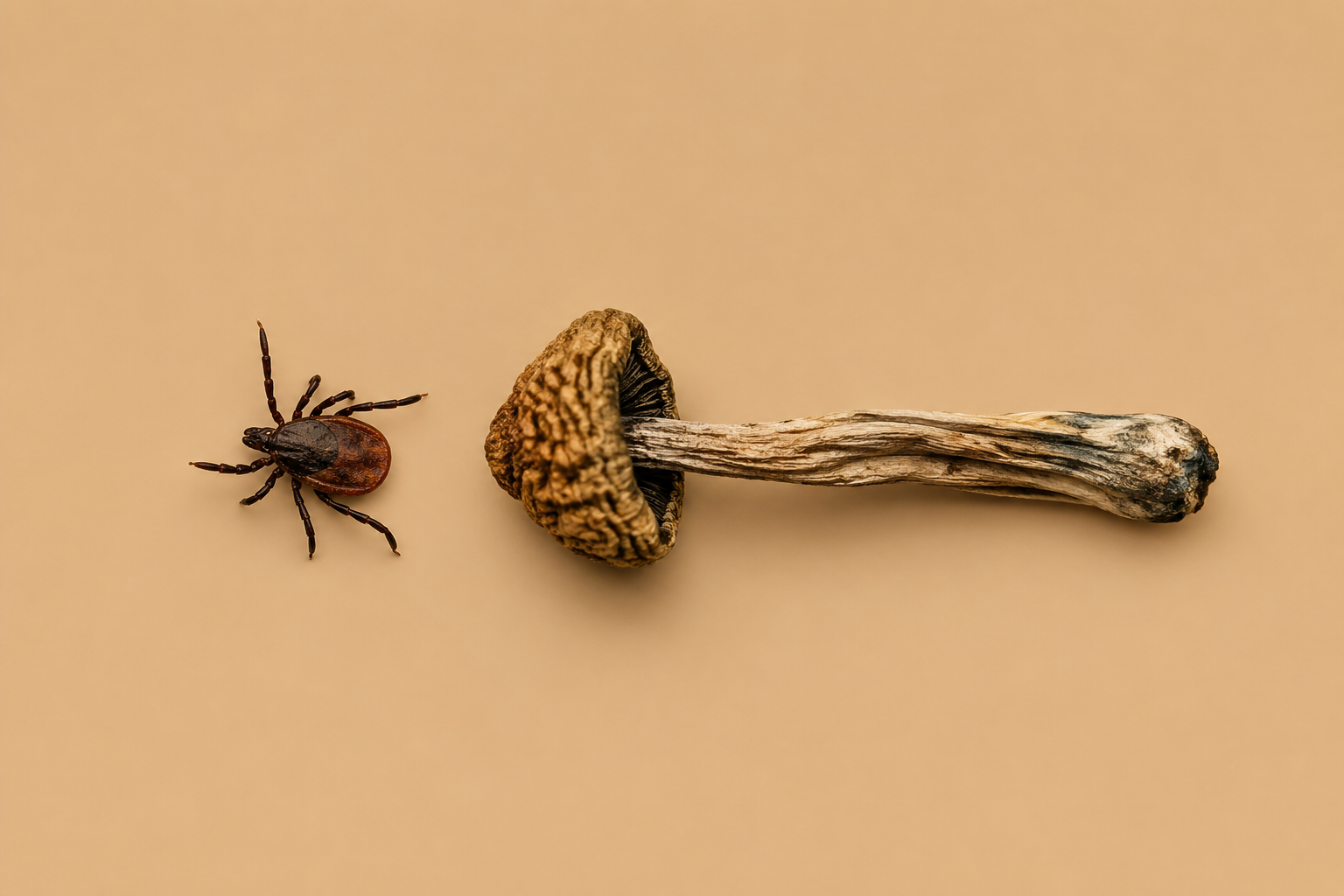
A Johns Hopkins trial offers the first clinical evidence that psilocybin-assisted therapy may meaningfully help patients with post-treatment Lyme disease.
For the estimated 10–20% of Lyme disease patients who never fully recover after antibiotics, options have been frustratingly limited. Fatigue, pain, cognitive fog, and mood disturbance can persist for years. Not only has no treatment has been approved, but there is also no reliable biomarker. Many patients are simply told there is nothing more to be done.
But a new pilot study published in Scientific Reports suggests psilocybin-assisted therapy might offer hope.
Researchers at Johns Hopkins University enrolled 20 adults with well-characterised post-treatment Lyme disease (PTLD) – people with documented prior infection, completed antibiotic courses, and ongoing symptoms lasting a median of 5.7 years. Over 8 weeks, participants received two psilocybin sessions (15mg followed by either 15mg or 25mg depending on response) alongside psychological preparation and integration support.
What the Study Found
At the 6-month follow-up, overall PTLD symptom burden had dropped 40% from baseline. Mental and physical quality of life scores both improved by around 13%. Depression scores fell 50–60%. Sleep disturbance dropped 40–50%. Fatigue declined around 25–30%. Pain measures across sensory, affective, and total subscales all decreased by 35–55%.
These weren’t short-lived improvements either. Gains appeared within two weeks of the final session and remained largely stable across the 3- and 6-month follow-up points. Effect sizes throughout were large (Cohen’s dz 0.6–1.5), which is notable for a condition this treatment-resistant.
No serious adverse events related to the intervention occurred. The most common side effects were transient hypertension (90%), headache (65%), and elevated heart rate (35%). All of which resolved without medical intervention. All 20 participants completed both dosing sessions.
Why This Matters
PTLD remains one of medicine’s more contested diagnoses. It has no validated biomarker, no approved treatment, and sits in a grey zone between infectious disease and chronic illness. Over 40% of those affected may meet criteria for major depression, and rates of suicidal ideation are elevated compared to the general population.
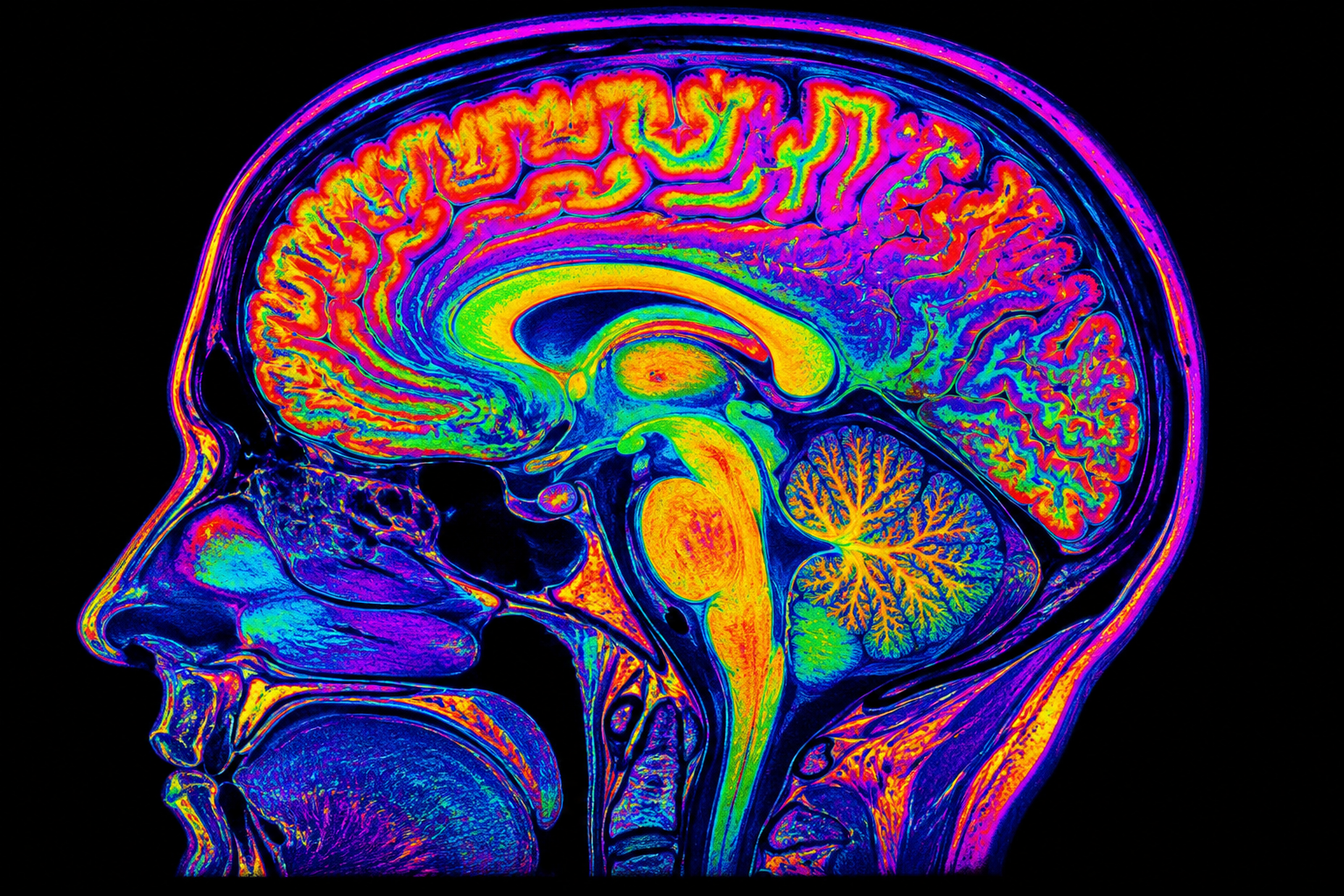
Psilocybin’s may help in a number of ways. The researchers point to several overlapping pathways: its well-documented antidepressant and anxiolytic effects; evidence from preclinical models suggesting classic psychedelics can modulate cytokine signalling and reduce neuroinflammation; and neuroplasticity-related changes that may help dislodge entrenched patterns of suffering at both biological and psychological levels.
PTLD patients have been shown to exhibit elevated markers of brain inflammation – activated microglia and raised kynurenine levels – both of which may theoretically be targets for psilocybin’s anti-inflammatory properties. The team collected biological samples pre- and post-treatment that will be analysed separately, which may help clarify what is actually happening at the cellular level.
Important Caveats
This was an open-label, uncontrolled pilot with 20 participants. It was designed to generate hypotheses and justify larger trials, not to prove efficacy. Without a placebo group, it is impossible to rule out expectancy effects or natural fluctuation in symptoms over time. The sample was also demographically narrow: predominantly white, educated adults, reflecting a known trend in both Lyme disease prevalence and psychedelic research.
The integrated nature of the intervention (two doses of psilocybin combined with psychological support) also makes it difficult to isolate what is doing what. That is a feature, arguably, of how psychedelic-assisted therapy should be delivered. But it complicates any attempt to attribute outcomes to the drug alone.
The Bigger Picture
This study joins a growing body of work exploring psilocybin for conditions beyond depression and end-of-life anxiety – including fibromyalgia, Parkinson’s disease, cluster headaches, and now infection-associated chronic illness. The authors explicitly call for future trials in PTLD, ME/CFS, long COVID, and fibromyalgia, suggesting a shared framework may be emerging for post-infectious syndromes that currently lack effective treatment.
For patients who have been told there is nothing left to try, that is a meaningful signal, even from a small, preliminary study.
Read the full study in Scientific Reports: Pilot study of psilocybin in patients with post-treatment Lyme disease
Want more science like this, straight to your inbox? The Spore Report covers psychedelics, neuroplasticity, and regenerative health. Subscribe to The Spore Report →