
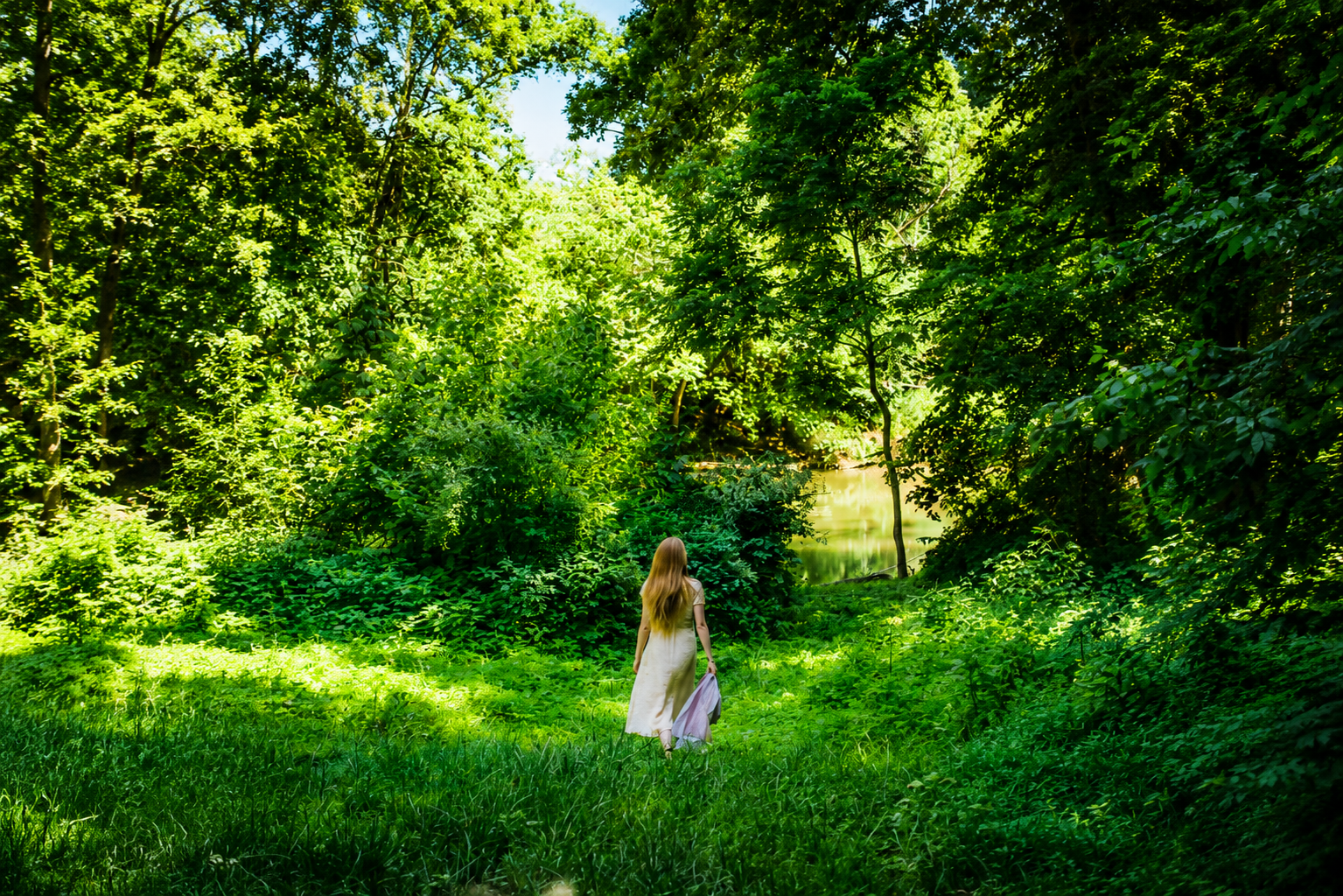
When you walk into a forest your heart rate drops, your blood pressure falls and the stress hormones circulating in your bloodstream begin to clear. None of this requires effort or intention. It happens automatically, below the threshold of conscious thought, as if some older part of your biology recognises the environment and relaxes.
A 2020 literature review published in Environmental Health and Preventive Medicine synthesised findings from 14 intervention studies examining the effects of forest bathing on adults with pre-hypertension or hypertension. What emerged was a clear picture: time in forests lowers blood pressure, reduces pulse rate, shifts the autonomic nervous system toward parasympathetic dominance, and improves mood across nearly every study format and population tested.
What the Research Found
Across the 14 studies reviewed, forest bathing interventions produced measurable reductions in both systolic and diastolic blood pressure in the majority of participants. The effect sizes were not trivial. One Chinese RCT found that 20 sessions of forest walking over 20 consecutive days reduced systolic blood pressure by nearly 25% and diastolic blood pressure by almost 30% in hypertensive middle-aged men. E
ven a single session produced meaningful results: a Korean trial reported an 8.4% reduction in systolic blood pressure after just one hour of forest walking compared to city walking in the same participants.
A single 4.5-hour forest therapy program in Japan produced an 11.5% drop in systolic blood pressure in men with pre-hypertension. The effects were not confined to blood pressure. Heart rate variability (HRV), a sensitive marker of autonomic nervous system balance, increased consistently across studies involving forest walking and passive forest viewing.
In one Japanese study, just 10 minutes of sitting and viewing forest landscapes produced a 30% increase in high-frequency HRV power and a 3.5% reduction in heart rate compared to viewing an urban environment.
The psychological findings tracked alongside the physiological ones. Study after study using the Profile of Mood States questionnaire recorded significant increases in vigour and significant decreases in tension, anxiety, depression, fatigue, confusion, and anger following forest exposure. The same participants who walked in cities showed the reverse pattern: fatigue increased, positive mood declined.
Perhaps most striking were the findings on sustained effects. One study found blood pressure reductions lasting five days after a single day of forest therapy. Another showed that improvements in blood pressure and quality of life were still measurable eight weeks after a three-day forest therapy program.
Previous research has shown that forest bathing produced a measurable change in immune function.
Why the Forest Works
The researchers point to the autonomic nervous system as the central mechanism. Chronic stress keeps the sympathetic branch chronically activated, a state associated with elevated cortisol, raised heart rate, constricted blood vessels, and persistently elevated blood pressure. Forest environments appear to do the opposite. They activate the parasympathetic branch, the rest-and-digest system, driving the physiological cascade in the direction of repair and recovery.
The markers of this shift are clearly visible in the data. Cortisol levels fell significantly in multiple studies following forest therapy. Urinary adrenaline, noradrenaline, and dopamine all dropped after forest walking, indicating reduced sympathoadrenal activity. A seven-day forest walking program in hypertensive elderly people showed significant reductions in endothelin-1, a potent vasoconstrictor, as well as reduced activity in the renin-angiotensin system, one of the primary physiological levers controlling blood pressure, and lower circulating interleukin-6, a pro-inflammatory cytokine.
Taken together, these effects represent significant downregulation of the biological machinery that drives hypertension.
Participants in these studies were guided to engage all five senses. They listened to birdsong and moving water, observed light through tree canopy, touched bark and leaves, and deeply breathed phytoncides (volatile organic compounds released by trees).
This multi-sensory immersion appears to be the active ingredient. The effect is not simply exercise, since walking in urban environments consistently produced smaller effects than equivalent walks in forests, and even passive sitting and viewing of forest landscapes produced significant physiological changes.
What Works, and How Much
The review identified four main intervention types: forest walking, landscape viewing in a forest, combined walking and viewing, and structured forest therapy programs involving multiple relaxation activities. Forest walking and forest therapy programs showed the most consistent and significant effects.
On duration, the findings suggest that two hours of forest walking or four hours of a structured forest therapy program is sufficient to produce meaningful short-term physiological and psychological benefits in people with elevated blood pressure. However, shorter exposures, including 17 minutes of forest walking and 10 minutes of passive forest viewing, still produced measurable shifts in HRV and heart rate.
On frequency, the evidence points toward repeated sessions producing compounding benefits, particularly for cardiovascular and metabolic markers. But the single-session data shows you do not need a week in the mountains to move the needle. A morning in a forest, walked at an unhurried pace, appears to be enough to shift your nervous system in a measurable way.
The Practical Translation
If you have elevated blood pressure, or simply a nervous system running hotter than it should, the research here is unusually clear for a lifestyle intervention. Two hours in a forest, once or twice a week, done slowly and with sensory attention rather than fitness targets, produces effects that are physiologically comparable to, and in some cases larger than, a session of moderate urban exercise.
The protocol is ass follows:
Move slowly. Most studies instructed participants to keep a steady, comfortable pace. This is not a cardiovascular workout. The goal is parasympathetic activation, not aerobic conditioning.
Leave the noise behind. Studies consistently asked participants to refrain from conversation, caffeine, and phones during the intervention. The sensory environment of the forest needs space to do its work.
Use all your senses. This is not a walk with earphones in. The protocol involves listening, looking, touching, and breathing. Some studies explicitly directed participants to attend to visual, auditory, olfactory, and tactile stimuli. This attentional engagement appears to be part of what makes forest bathing distinct from a walk in a park.
Do it in the morning if possible. The majority of studies showing the strongest effects were conducted in the morning, when cortisol is naturally elevated and the forest environment has the most room to pull it downward.
Give it time. A single session produces short-term benefits. Sustained practice over weeks appears to produce deeper, more durable changes in cardiovascular and metabolic function.
A Note on What This Is Not
Forest bathing is not a replacement for antihypertensive medication in people whose blood pressure requires pharmacological management. The studies reviewed here included participants both with and without medication, and both groups benefited, but nobody stopped their prescription because they went for a walk in the woods.
What the research does support is forest bathing as a serious, evidence-based complementary strategy for reducing the biological burden of chronic stress, which sits upstream of hypertension in the first place. If the deeper problem is a nervous system that never fully downregulates, then the forest may be one of the few environments that speaks directly to that system in a language it understands.
We are part of nature, not visitors to it. Forests do something to our biology that drugs and gyms simply cannot replicate, because neither a pill nor a treadmill is a substitute for the environment we evolved inside.
The Spore Report covers mycology, psychedelic science, and the emerging science of consciousness. Subscribe here.

One thought on “The Forest Calms Your Nervous System Better Than Any Drug Or Exercise”