Kacia Julius was paralysed a year ago. Now she’s microdosing psilocybin, and her legs are moving. Here’s what the science says about why.
There is a video going viral on Instagram that is difficult to watch and impossible to look away from. In it, a young woman named Kacia Julius, who was paralysed from a spinal cord injury less than a year ago, sits with her legs bouncing and shaking with a kind of electric energy. Her muscles, dormant for months, are firing.
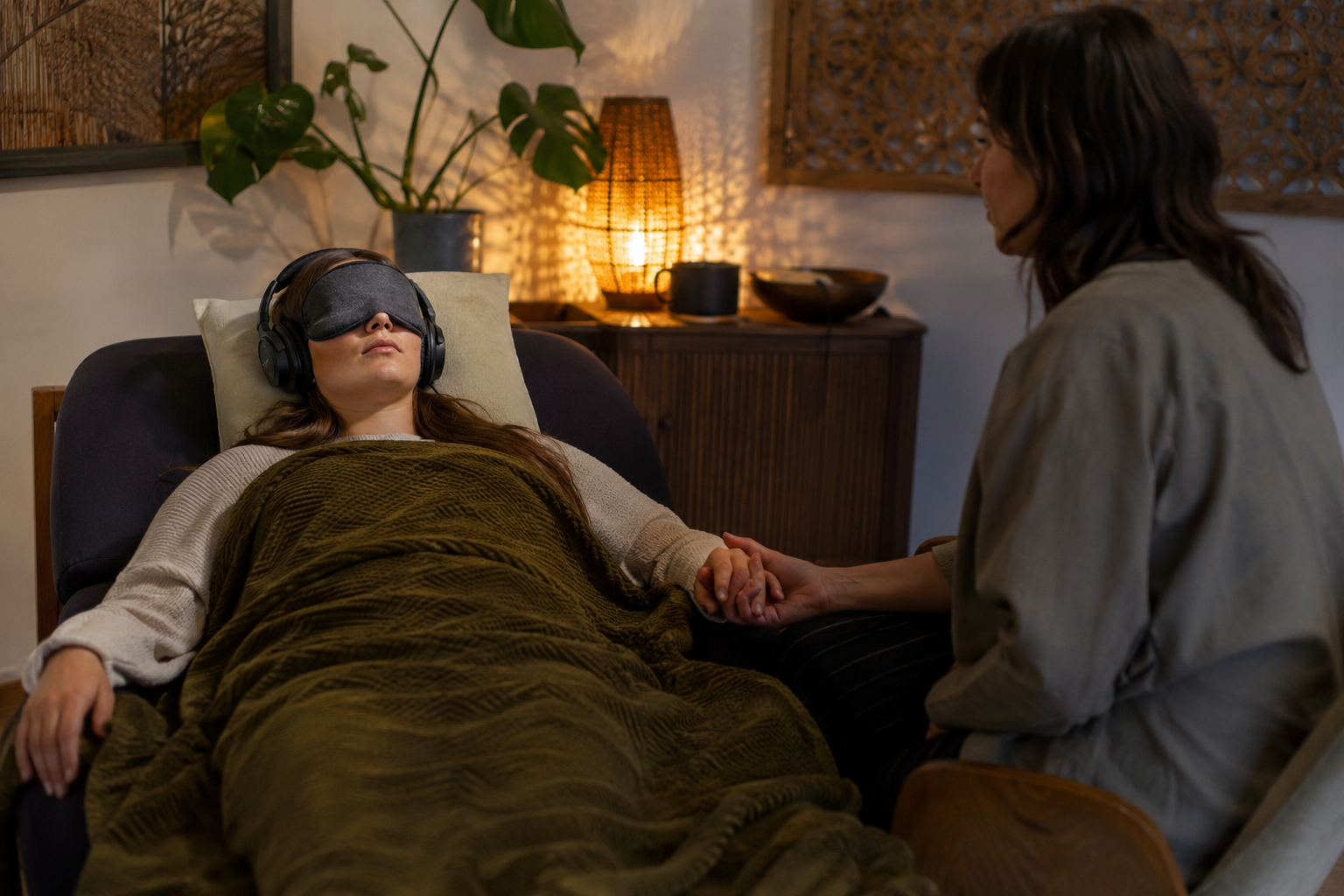
Kacia has been microdosing psilocybin (the active compound in so-called “magic mushrooms”) as part of a deeply personal healing protocol she documents openly on her Instagram account, @kaciajulius. Alongside the microdosing, she practises manifestation, holds onto radical hope, and films everything. Her account has become an inspiration in the paralysis and psychedelics communities simultaneously.
Now this is not a scientific study. And she’s careful not making medical claims. But she is refusing to accept the ceiling that her diagnosis placed over her life, and she’s doing something about it.
How it started
Just months before the accident, Kacia and her partner Falak had fallen in love. They were passengers together, asleep in the backseat of a car, when the driver lost control on an icy road. By some grace, everyone in the vehicle survived. But Kacia alone suffered a serious spinal cord injury that paralysed her from the chest down and permanently altered the course of both their lives.
Kacia first learned about psilocybin’s potential through a podcast called Live to Walk Again. A firefighter appeared as a guest and shared his testimony about using the compound as part of his own recovery journey. Something in his story moved her enough to try it herself.
When she first used a microdose therapeutically, she described an immediate and overwhelming sense of well-being. There was a shift in her internal landscape that she hadn’t felt since her injury. And then something else happened. Her muscles began to fire. In ways they hadn’t in a very long time.
The videos she posted of the aftermath – her legs trembling, bouncing, awakening – went viral almost immediately. And with them came the question that researchers, neurologists, and paralysis advocates are now asking: could psilocybin actually help damaged nerves heal?
What the science says
The science, while still emerging, is far more compelling than most people realise.
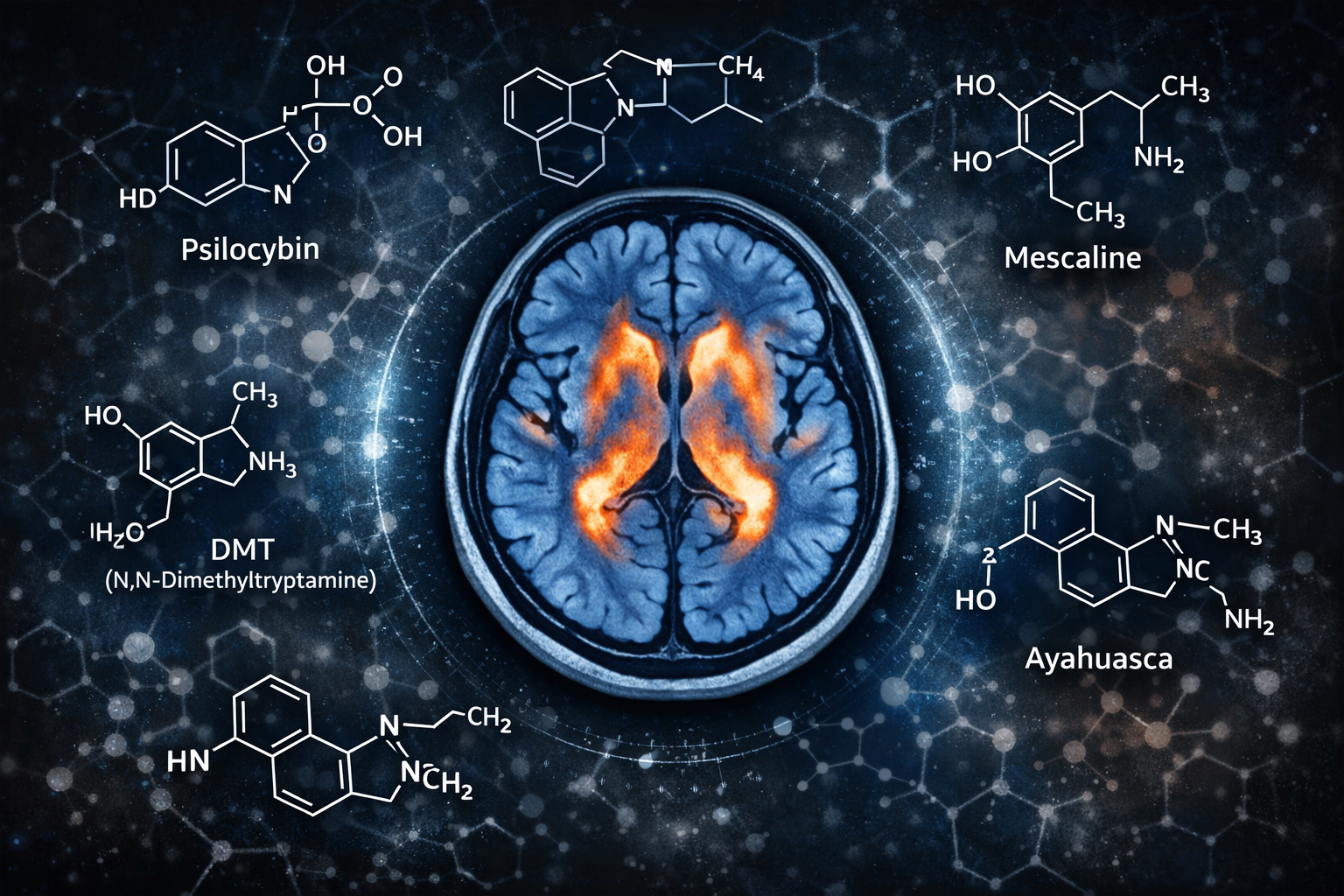
Psilocybin is a serotonergic psychedelic, meaning it primarily acts on the brain’s serotonin system. But its most exciting property is what it does to the brain’s physical architecture. It promotes neuroplasticity, the brain’s ability to form new connections, rewire itself, and adapt.
A review found that 15 out of 16 studies demonstrated psychedelic-induced neuroplasticity, suggesting these structural changes may underpin psilocybin’s therapeutic potential. This isn’t fringe science. A single dose of psilocybin has been shown to increase the expression of plasticity-related genes (including c-Fos, BDNF, and mTOR) and to enhance dendritic spine density and complexity in both the hippocampus and frontal cortex, with effects detectable a week later.
What does that mean in plain language? It means psilocybin doesn’t just alter how you feel. It physically changes the structure of your brain, and those changes persist long after the compound has left your system.
For someone with a spinal cord injury, this matters enormously. Paralysis, particularly partial paralysis, is not simply a case of a severed wire. It involves disrupted, underactive, and often dormant neural signalling pathways. The question researchers are beginning to ask is whether psilocybin’s neuroplastic effects could help reawaken those pathways in the body.
Psilocybin acts via 5-HT2A receptor activation and as a positive allosteric modulator at the BDNF-TrkB-mTOR pathway, with neuroplastic effects that can occur rapidly and be prolonged. This can lead to persistent changes in spine density that far outlast the clearance of psilocybin from the body.
Researchers believe this makes it a potentially far more effective and sustained treatment than anything currently available for nerve-related conditions.
And there is already documented evidence (small scale, anecdotal, but consistent) of psilocybin interacting specifically with spinal cord injury. Published reports from online discussion forums describe people with spinal cord injuries experiencing a consistent pattern of neuromuscular and autonomic hypersensitivity after using classical serotonergic psychedelics such as psilocybin, including intense muscle spasms, sweating, and tremors, with an eventual return to baseline and no reports of worsening of their neurological condition.
In other words, what Kacia is experiencing is not new. It has been observed before. There is a plausible, evidence-backed biological mechanism for what she is filming.
In one documented case series, psilocybin was used for a patient with chronic pain following a spinal cord injury from a rollover accident, and researchers interpreted psilocybin’s effect as resulting from increased neuroplastic activity that allowed for cortical reorganisation. Cortical reorganisation effectively describes the brain relearning how to communicate with the body.
A Brain that can relearn
The central, profound question hanging over Kacia’s story is, if psilocybin can prime the brain for new connections, and if she pairs that with intentional physical practice, visualisation, and radical belief – could her brain actually relearn how to walk?
We do not yet know. No large-scale clinical trials have examined psilocybin specifically for spinal cord injury recovery. The science is pointing in a direction, but it has not arrived at a destination. Anyone who tells you otherwise is overstating what we know.
But here is what we do know. Psychedelics like psilocybin demonstrate rapid and enduring therapeutic effects after a single or few administrations, and animal studies suggest they induce heightened sensitivity of the nervous system to environmental stimuli. A kind of meta-plasticity that reopens developmental windows of neural adaptability. These are windows that, in adulthood, are typically considered closed.
Psilocybin may be capable of reopening them.
The brain is not a fixed machine. It is a living, adaptive system. And for most of human history, we dramatically underestimated its capacity for change. The field of neuroplasticity has spent the last few decades quietly dismantling the assumption that what is damaged stays damaged. Psilocybin appears to be one of the most powerful neuroplastic agents we have ever studied.
More than medicine
What strikes you when you spend time on Kacia’s Instagram is not just the videos of her legs moving. It is her. Her presence. Her certainty that she will walk again.
She pairs her microdosing with manifestation – the practice of directing thought and intention toward a desired outcome. To some, this sounds unscientific. But consider that visualisation and intentional mental rehearsal have been studied extensively in physical rehabilitation. The brain, when imagining movement, activates many of the same neural circuits as when it performs movement. If psilocybin is opening the brain’s windows of plasticity wider than they would otherwise be, what happens when you fill that open window with focused, deliberate intention?
No one has studied exactly that combination. But it is not a stretch to suggest that the two may be profoundly complementary.
What Comes Next
Kacia has set up a GoFundMe to fund her continued healing journey. She is not asking for sympathy. She is asking for support in proving something that hasn’t been proven yet.
Whether or not she walks again, she is already doing something remarkable. She is living at the edge of what is known and what is possible, documenting every every step forward in real time, and inviting the world to witness a question that science hasn’t answered yet.
What she is experiencing may be the earliest signals of something medicine will one day take very seriously. Or it may be a window that opens but doesn’t lead where she hopes. We do not know.
What we do know is that her legs are moving. Her muscles are firing. And a growing body of peer-reviewed research suggests that is not a coincidence.
The brain is more extraordinary than we ever gave it credit for. And psilocybin may be one of the keys to unlocking it.
Kacia Julius documents her healing journey on Instagram at @kaciajulius. To support her, visit her GoFundMe page.