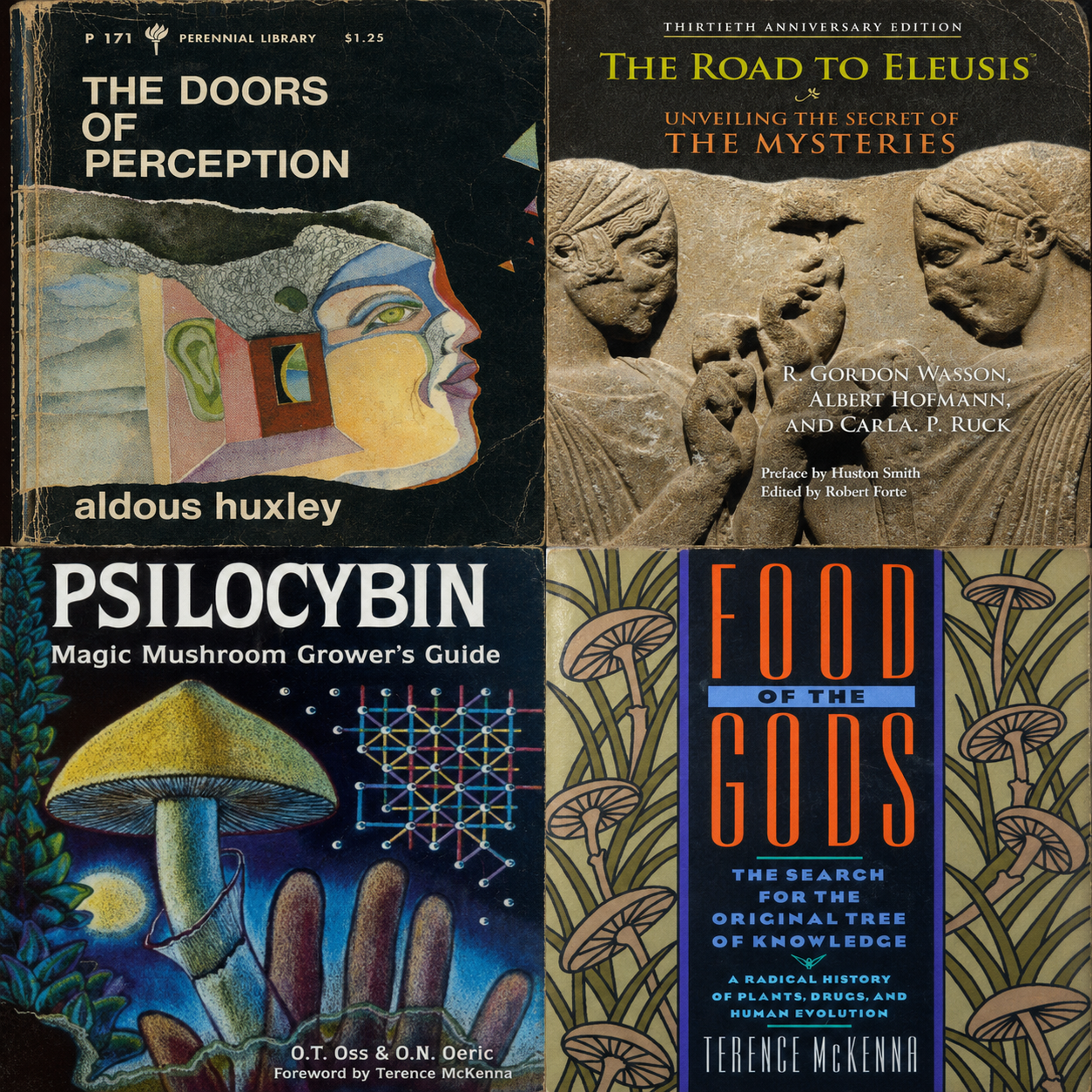
The history of psychedelics is inseparable from the books that shaped public understanding of them. Long before clinical trials, a handful of writers cracked open the doors of perception and invited everyone to look through.
These are more then books. They’re cultural artefacts. Each one arrived at a moment when the conversation needed a new vocabulary, and each one supplied it. Here are the books that did the most to shape how humanity thinks about psychedelics.
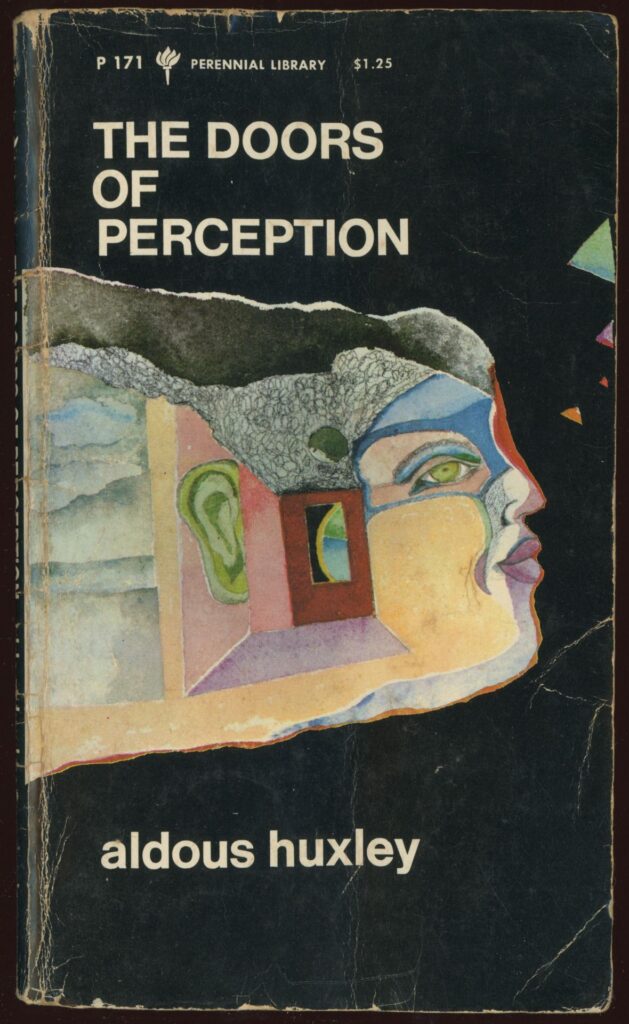
1. The Doors of Perception — Aldous Huxley (1954)
If there is a ground zero for modern psychedelic literature, this is it.
In May 1953, Aldous Huxley swallowed four-tenths of a gram of mescaline with psychiatrist Humphry Osmond and spent the next several hours staring at a vase of flowers as if he had never seen a flower before. The Doors of Perception is his account of what happened.
What made the book extraordinary wasn’t Huxley’s lucid description of the trip itself. It was his framework for understanding it. Drawing on Bergson’s “reducing valve” theory of the brain, he proposed that ordinary consciousness is a filter, narrowing the flood of reality down to a manageable trickle. Psychedelics, he argued, temporarily open the valve. What rushes in is more real than normal perception, not less.
That idea, radical in 1954, now sits at the centre of contemporary theories like the entropic brain hypothesis and predictive processing models of psychedelic action. Huxley was decades ahead.
The book also gave Jim Morrison the name for his band. Its cultural reach is difficult to overstate.
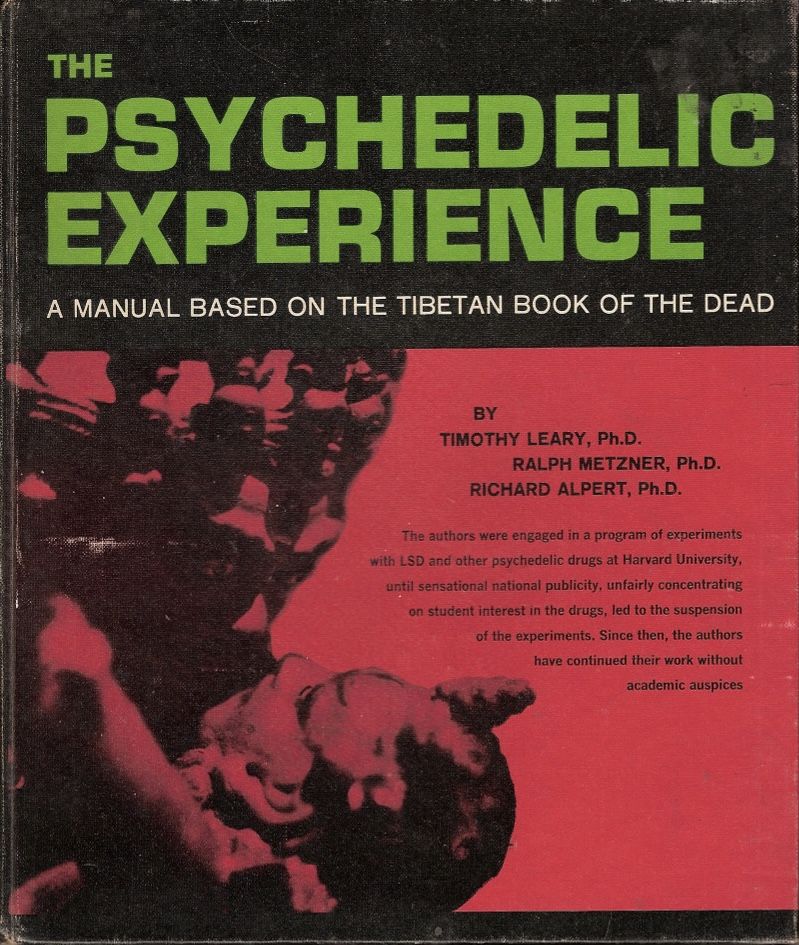
2. The Psychedelic Experience — Timothy Leary, Ralph Metzner & Richard Alpert (1964)
If Huxley opened the door, Leary kicked it off its hinges.
The Psychedelic Experience is a manual for navigating the LSD journey structured around the Tibetan Book of the Dead. Its opening line, “a psychedelic experience is a journey to new realms of consciousness,” became a kind of liturgy for the counterculture.
Leary’s core argument was that set and setting determine the quality of a psychedelic experience, and that with the right preparation, the dissolution of ego that psychedelics provoke could be a liberation rather than a catastrophe. He wasn’t wrong. Decades later, clinical researchers at NYU and Imperial College London would base their therapeutic protocols on almost exactly this insight.
The book’s influence was enormous and not entirely positive. Leary’s missionary zeal turned psychedelics into a political flashpoint, accelerating the backlash that led to the Controlled Substances Act of 1970. It arguably set the research back by thirty years. But the ideas in this book never went away, and they’re now the foundation of a multi-billion dollar therapeutic industry.
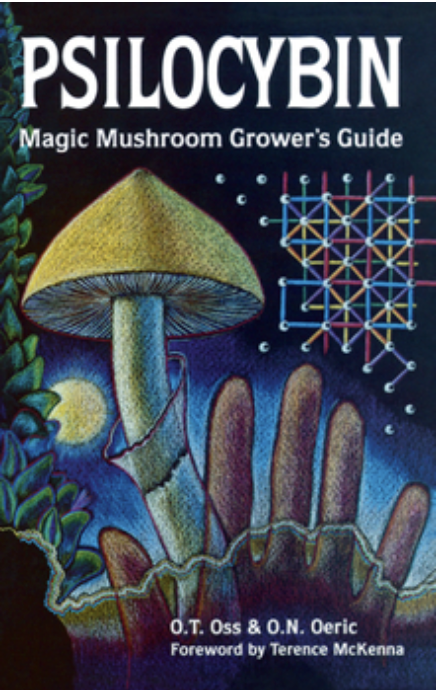
3. Psilocybin: Magic Mushroom Grower’s Guide — O.T. Oss & O.N. Oeric (1976)
This one didn’t appear on any bestseller list. It arrived under pseudonyms, published by a small press in Berkeley. But it may have done more to democratise psychedelic access than any other book in history.
“O.T. Oss” and “O.N. Oeric” were, of course, Terence and Dennis McKenna. The brothers had returned from the extraordinary La Chorrera expedition of 1971, described later in Terence’s True Hallucinations, and they brought back a reliable method for cultivating psilocybin mushrooms at home using brown rice and mason jars.
Before this book, psilocybin was largely confined to ceremonial use in Mesoamerica or expensive laboratory synthesis. After it, anyone with a pressure cooker, a few dollars in supplies, and a willingness to follow instructions could grow their own. The PF Tek method the book popularised (later refined by Robert McPherson) is still the entry point for home cultivators today.
The downstream effects are hard to measure precisely because they’re everywhere. The current wave of psychedelic therapy research is partly built on data from people who self-administered psilocybin mushrooms, many of whom first learned cultivation from a lineage tracing back to this book. The mycology community Terence helped foster produced researchers, therapists, and advocates who now sit on advisory boards and run clinical trials.
It is a technical manual. It is also a historical document.
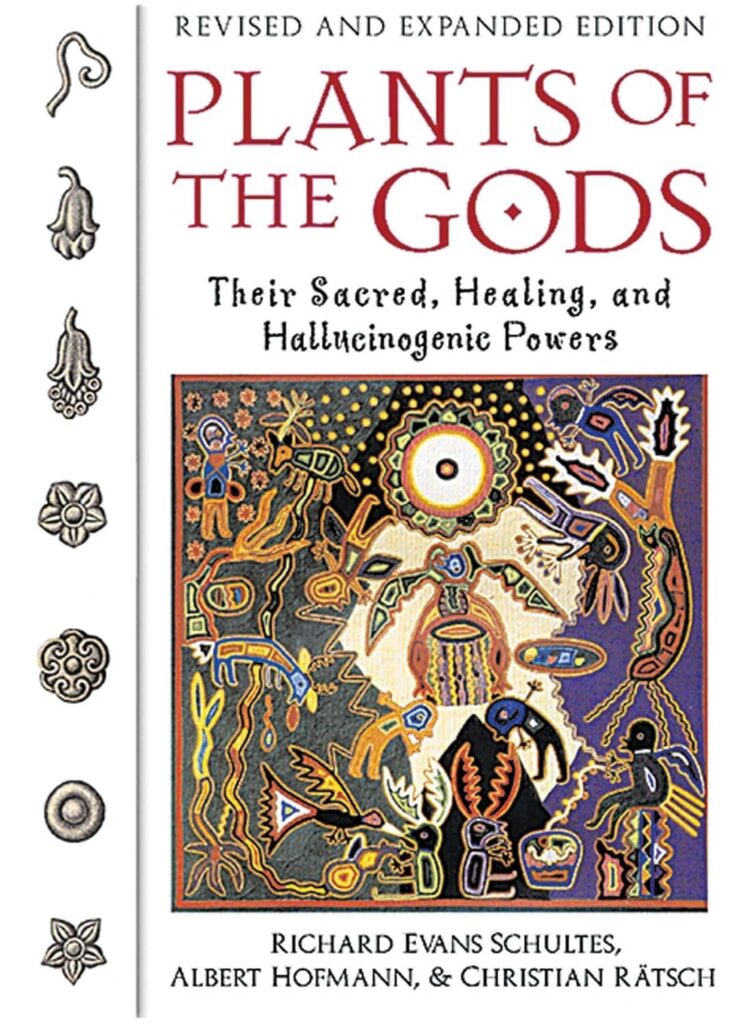
4. Plants of the Gods — Richard Evans Schultes & Albert Hofmann (1979)
Richard Evans Schultes was the greatest ethnobotanist of the twentieth century. Albert Hofmann discovered LSD and first synthesised psilocybin in the lab. Together they wrote a book that mapped the entire landscape of plant-based psychedelics across human cultures and millennia.
Plants of the Gods is rigorous, encyclopaedic, and visually stunning. It documented the ritual and ceremonial use of psychoactive plants from the Amazon to the Himalayas, treating indigenous knowledge with the seriousness it deserved at a time when much of academia dismissed it.
For researchers, it became a canonical reference. For the psychedelic community, it provided a sense of deep historical legitimacy.
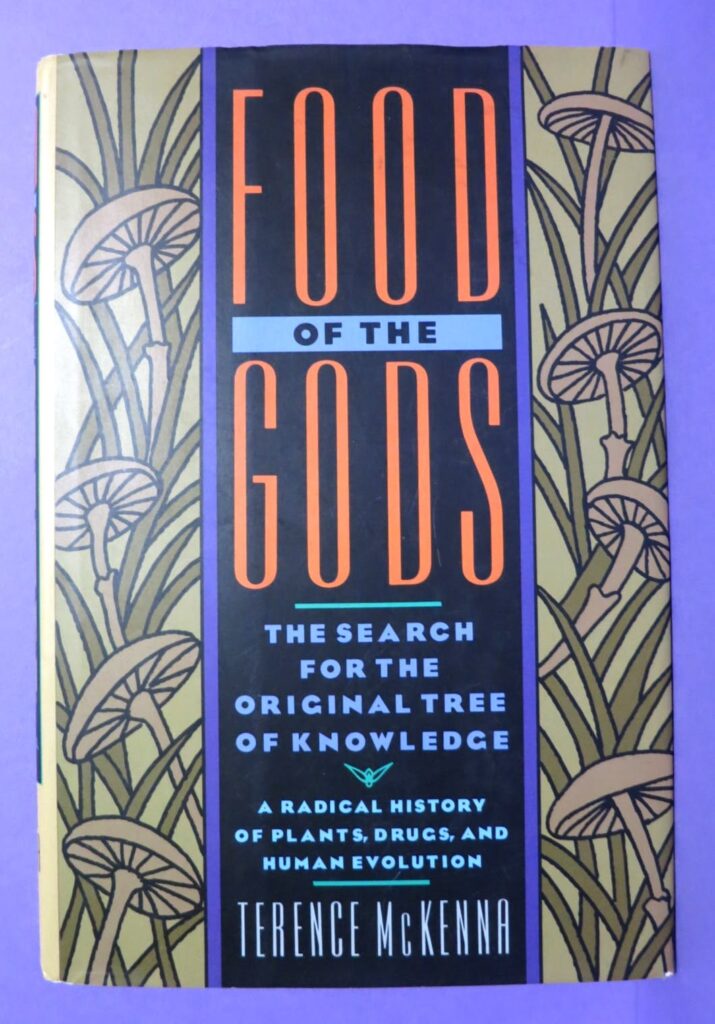
5. Food of the Gods — Terence McKenna (1992)
No list of influential psychedelic books is complete without Terence McKenna’s magnum opus.
McKenna’s “Stoned Ape” hypothesis, the provocative claim that psilocybin mushrooms catalysed human cognitive evolution, is not accepted by mainstream science. That doesn’t diminish the book’s importance. Food of the Gods reframed the entire relationship between psychedelic plants and human culture, arguing that consciousness alteration is not a deviation from human nature but a feature of it.
McKenna was also one of the first writers to place the crisis of modern consciousness, the disconnection, the violence, the ecological destruction, directly in the context of the suppression of psychedelic experience. That argument, once considered fringe, now appears in the work of Michael Pollan, in MAPS fundraising materials, and in the speeches of psychedelic researchers who cite “mental health epidemic” as the engine driving therapeutic interest.
McKenna’s prose style, allusive, baroque, intoxicating, is inseparable from his arguments. He made psychedelics intellectually respectable for a generation of readers who found Leary’s evangelism too chaotic and Huxley’s refinement too distant.
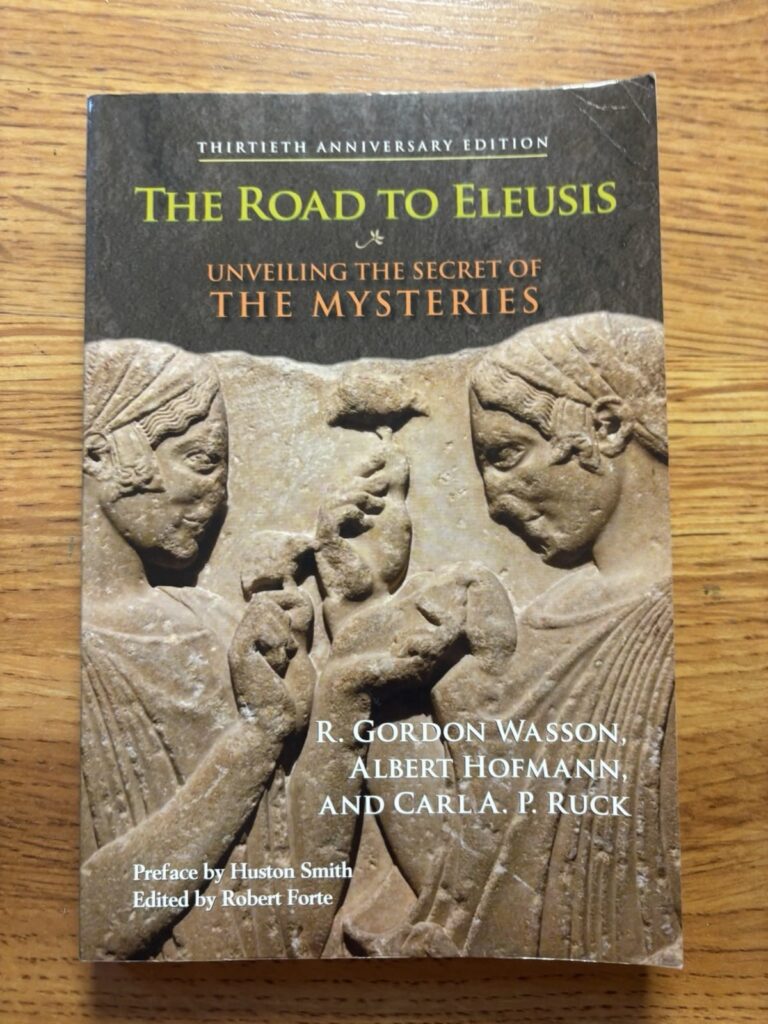
6. The Road to Eleusis — Wasson, Hofmann & Ruck (1978)
The question this book asks is audacious: was the sacred drink consumed at the Eleusinian Mysteries, the most important religious ritual in ancient Greece, a psychedelic?
The authors’ answer is yes. They proposed that the kykeon, the barley drink at the centre of the Mysteries, was prepared with ergot (Claviceps purpurea), a fungal grain parasite that contains ergine, a compound closely related to LSD.
The argument remains contested. But the book opened the possibility that psychedelic experience was not a twentieth-century accident but a thread running through Western civilisation from its origins. Brian Muraresku’s The Immortality Key (2020) extended this argument into early Christianity and became a New York Times bestseller, suggesting how fertile this territory remains.
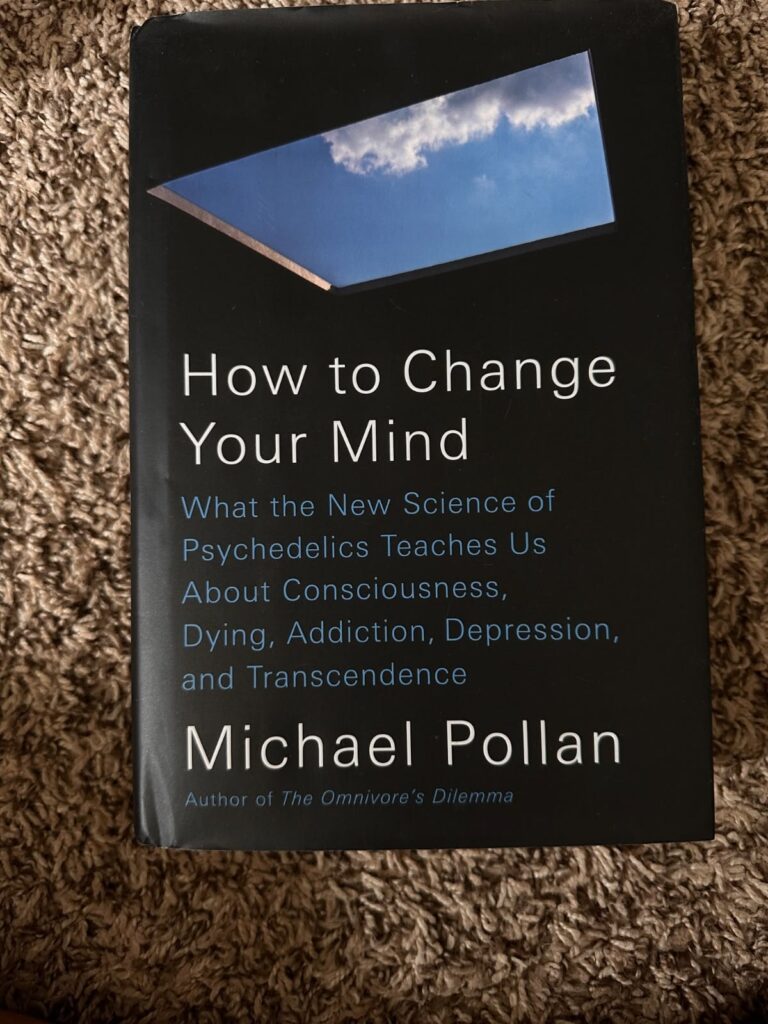
7. How to Change Your Mind — Michael Pollan (2018)
The book that brought psychedelics from the subculture into the mainstream.
Pollan is the most trusted food and science writer in America, and when he applied his meticulous, sceptical journalistic method to psychedelics, the result was a cultural event. How to Change Your Mind introduced the science of psilocybin therapy, the history of LSD research, and the neuroscience of the default mode network to an audience of millions who had never seriously considered any of it.
The book arrived at exactly the right moment. The clinical research was producing striking results. The stigma, while not gone, was eroding. Pollan gave readers, including doctors, politicians, and investors, permission to take psychedelics seriously.
The measurable effects include legislative change (Oregon Measure 109, Colorado Proposition 122), a wave of venture capital into psychedelic medicine companies, and an acceleration of the clinical trial pipeline that has produced studies like EPIsoDE, CANOPY, and PLASTICITY.
What These Books Share
Each of these texts arrived when a new vocabulary was needed. Huxley gave us the reducing valve. Leary gave us set and setting. The McKennas gave us the cultivation method. Pollan gave us the default mode network explained over dinner-party language.
The psychedelic renaissance we’re living through is a scientific phenomenon, yes. But it’s also a literary one. The ideas that made the research fundable, the therapy culturally legible, the policy reform politically imaginable, first appeared in books.
The next chapter will be written in clinical journals and legislative chambers. But it will be read, and understood, through the language these books built.
The Spore Report covers psychedelic research, mycology, and the science of consciousness. Subscribe for weekly deep-dives.