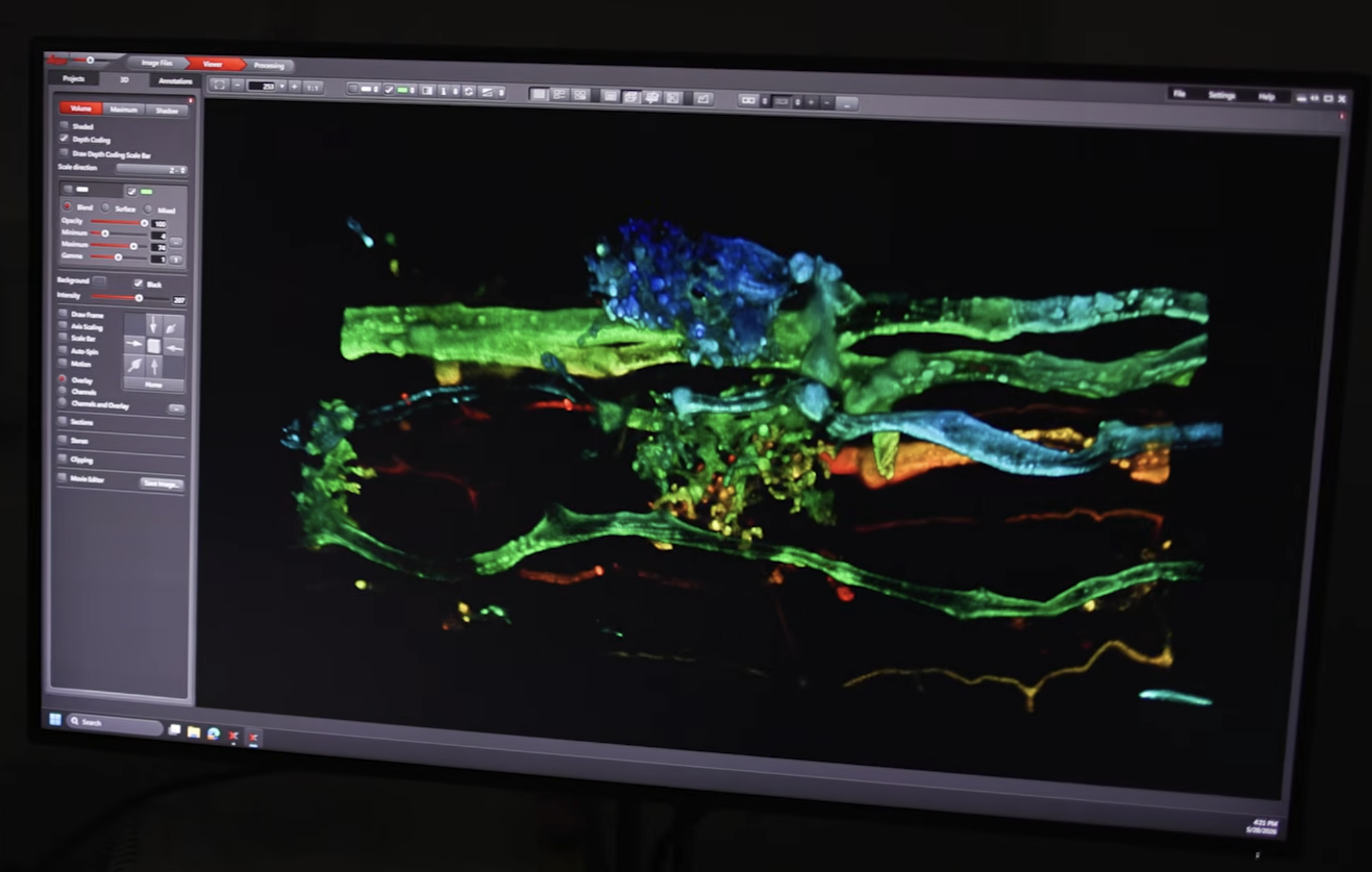
For decades, researchers studying arbuscular mycorrhizal (AM) fungi had only static images to work with. That changed when Dr Jennifer McGaley, a postdoctoral researcher at Cambridge’s Cereal Symbiosis Lab, pulled off a 56 hour microscopy marathon that produced the first continuous time-lapse of mycorrhizal fungi growing, pulsing, and collapsing inside living plant cells, as reported here by the University of Cambridge.
McGaley split the shifts with her student Ben Schneider, working the microscope in 45 minute intervals with naps stitched between them. They captured an entire life cycle playing out in real time: branching structures called arbuscules inflating inside root cells, trading nutrients, then fading away, all without killing the host.
A Relationship 450 Million Years in the Making
AM fungi have barely changed in 450 million years, and researchers increasingly think they were the reason plants could colonize land at all. By acting as an external root system, the fungi may have given early algae the foothold they needed to leave the ocean behind. The relationship they built with plants still runs on the same basic trade. The fungi scavenge minerals from soil far more efficiently than plant roots can manage alone, and in exchange, plants hand over carbon, fats, and sugar built from sunlight.
The exchange happens at the arbuscule, a branching tendril that pushes into a plant cell without rupturing it. The fungus inflates a space inside the cell almost like a balloon, and nutrients pass across the membrane in both directions before the structure collapses and the plant cell resets. Nobody yet understands the mechanics of that reset.
Read: Fungi Are The Missing Piece Of Regenerative Farming
What the Footage Revealed
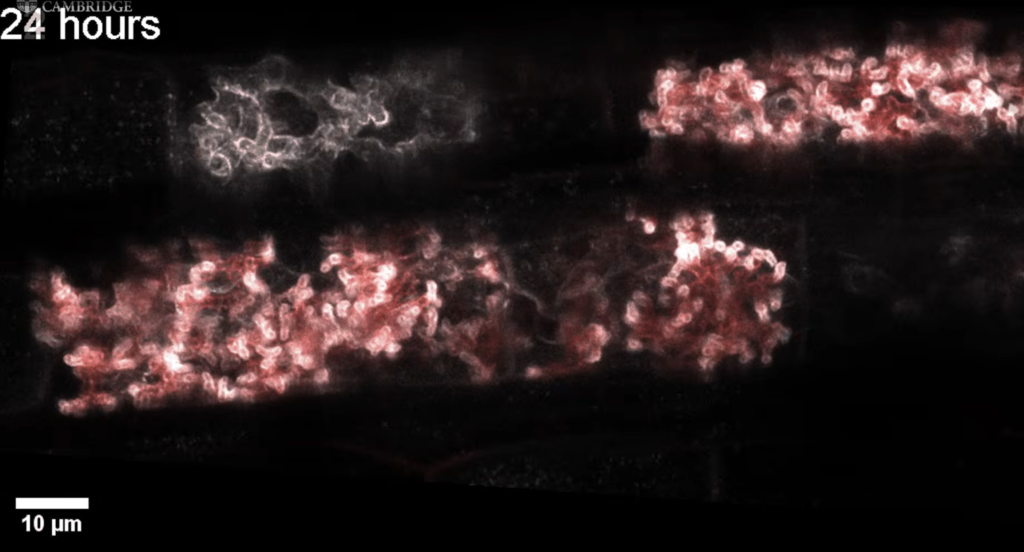
The most striking finding wasn’t the process itself but its variability. AM fungi were already known to be short-lived. Some structures survive less than eight hours. But McGaley’s footage showed that within a single fungal network, some branches persist two to three times longer than others, and different branches specialize in moving different nutrients, some favoring nitrogen, others phosphorus. The plant membrane effectively partitions the root into separate compartments, each hosting a different piece of the exchange.
That specialization suggests the fungal network isn’t running on a single, uniform script. It’s closer to an ecosystem operating inside another ecosystem, with different branches making different resource bets simultaneously and the whole structure never settling into stasis. Growth and collapse aren’t opposing events here. They’re the same continuous process viewed at different moments.
Beyond the Lab
Some estimates suggest that over a third of human carbon emissions eventually end up cycling through AM fungal networks, making them a significant and underappreciated player in carbon drawdown. Fungal partnerships also help plants tolerate drought and harsh conditions, which has obvious relevance as growing conditions become less predictable.
But that partnership is fragile in ways we don’t fully track. Heavy fertilizer use lets plants bypass the fungal trade entirely, since if nutrients are already available for free, there’s no incentive for the symbiosis to establish. Tilling and fungicide use disrupt the networks directly. Researchers at the Cereal Symbiosis Lab are now testing mycorrhiza-based bio-fertilizers that could boost rice yields by 5 to 15 percent, essentially trying to restore a partnership that industrial agriculture has spent a century eroding.
Read: Fungi Are Key to Regeneration
The Open Questions
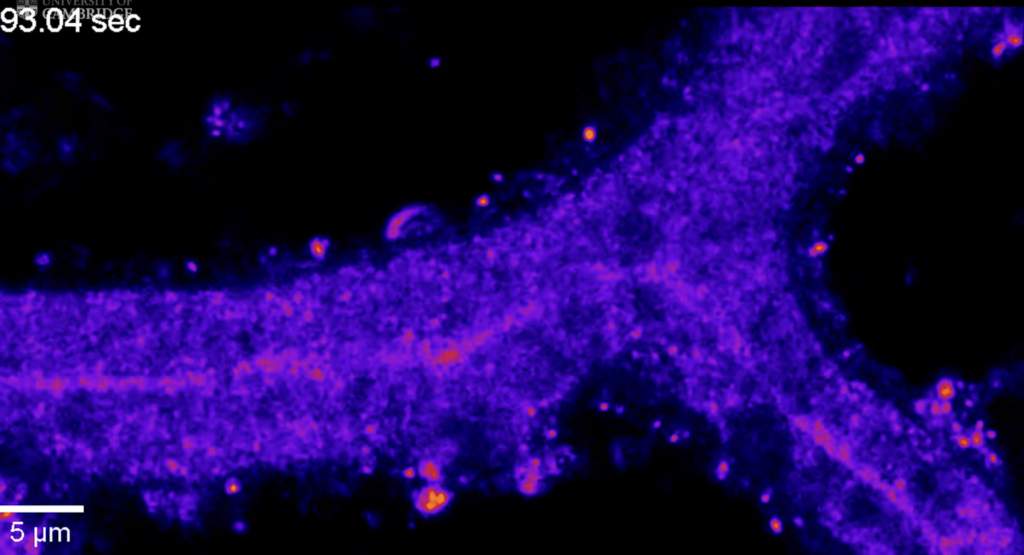
McGaley’s technique, a 3D-printed observation chamber paired with a confocal microscope flipped to image downward into soil, opens the door to questions nobody could previously investigate. How does a fungal network integrate information across its full span to decide where to direct resources? How does a plant determine when a fungal partner has stopped holding up its end of the trade? The boundary between parasite and partner, it turns out, is something that gets renegotiated continuously rather than fixed once.
There’s also a deeper question sitting underneath the biology: where does the boundary of a single organism even sit in a network this distributed and this intertwined with its host? AM fungi don’t fit cleanly into the categories we use for individuality, and McGaley’s approach, close, patient observation without forcing the data into an existing framework, seems like the right response to that uncertainty.
Her next goal is to time-lapse multiple fungal species interacting within the same root system, which should reveal whether the specialization she’s already seeing extends into competition, cooperation, or something with no clean human analogy at all.
Source: University of Cambridge, Department of Plant Sciences, published 30 June 2026.
Sign up to our newsletter to keep up with the research here.