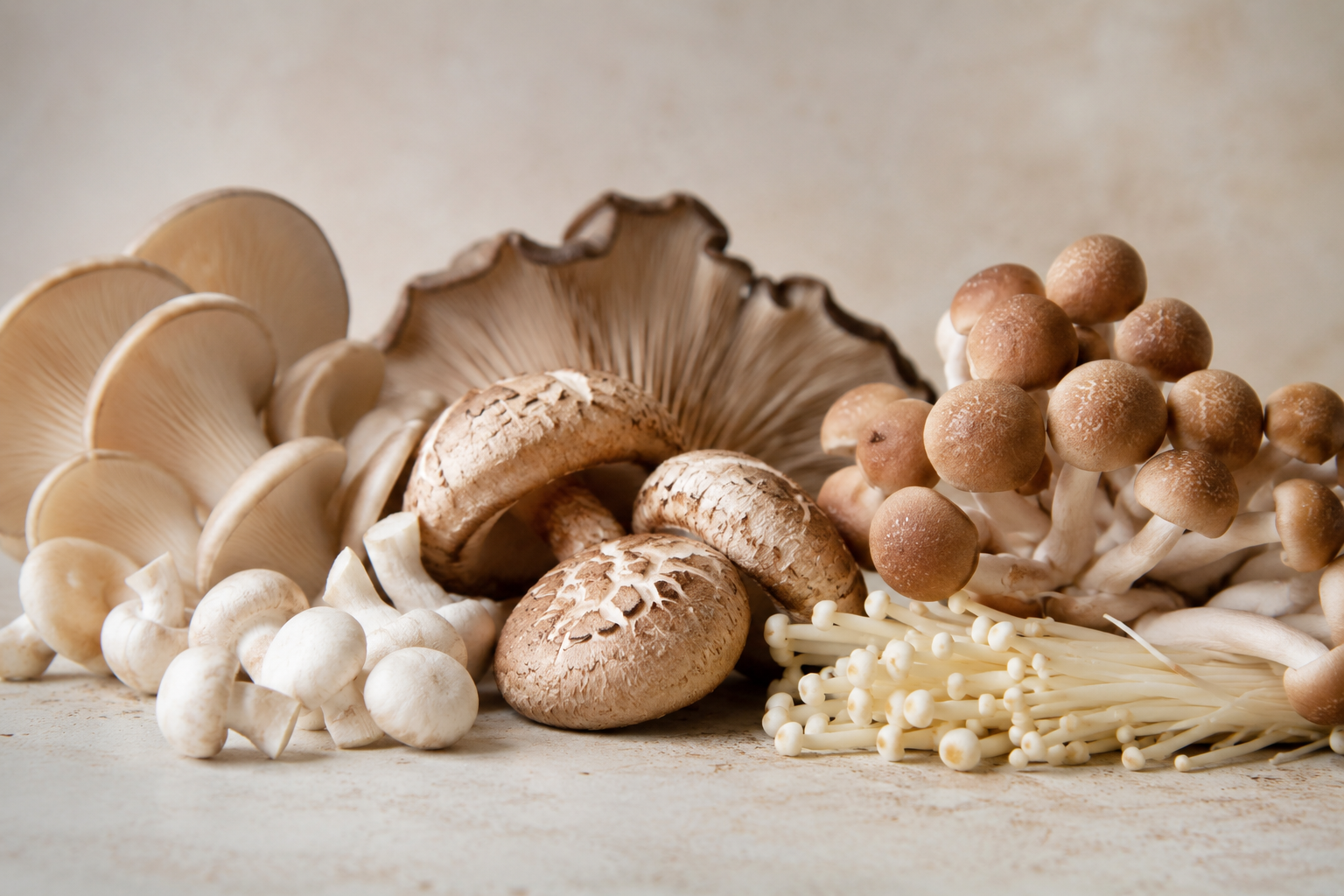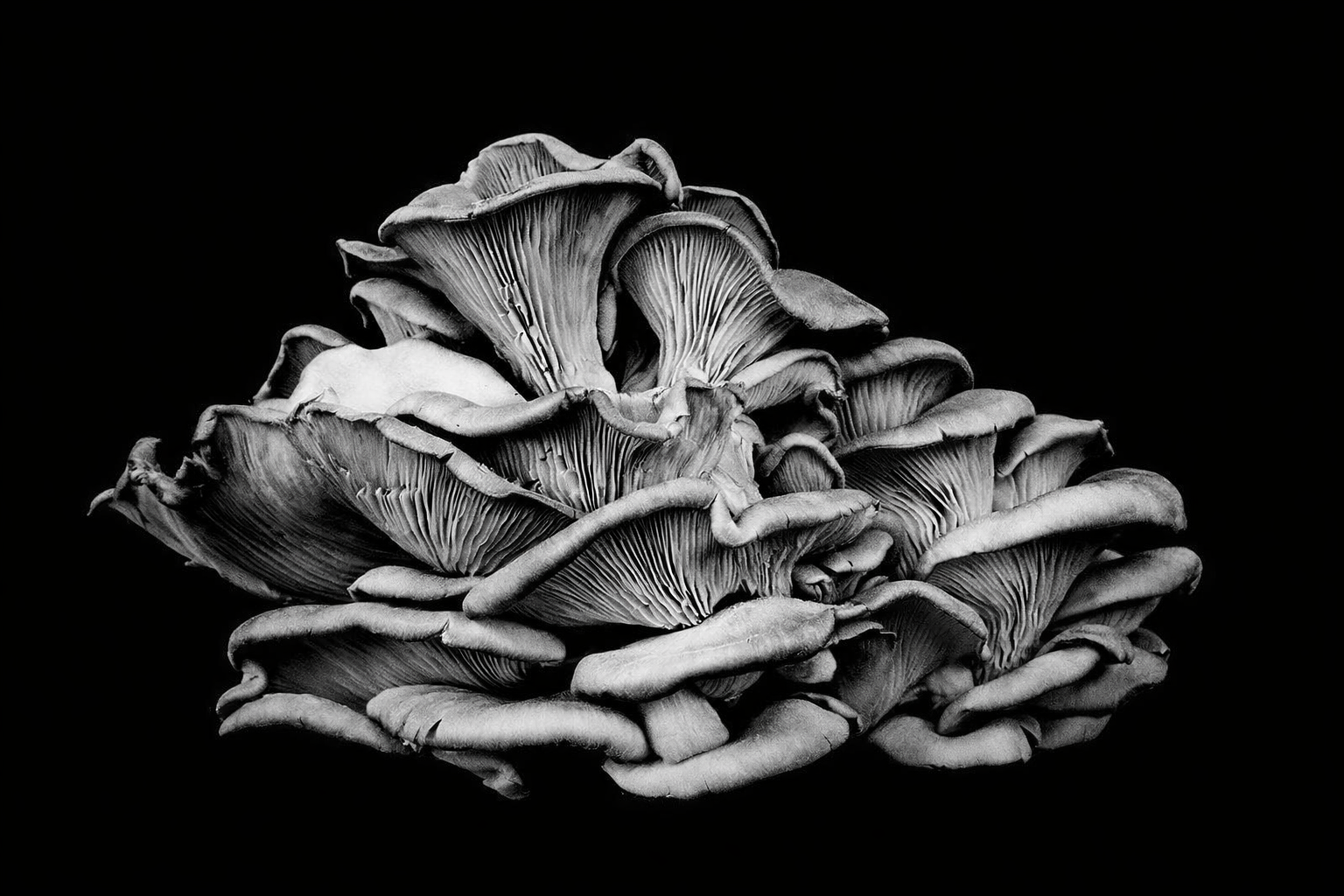
We’re hurtling toward 10 billion people on this planet. Chemical pesticides are wrecking farmland. And our current food system, built on industrial monocultures and factory farms, is simultaneously one of the biggest contributors to the crisis and one of its most vulnerable victims.
So what do we do? Regenerative farming and decentralising the food supply offers some hope, but faces scaling issues.
Well now a team of researchers at Cornell suggest another potential solution in the form of wast-eating, protein-producing fungi.
The Fungal Biorefinery
In February 2026, a team led by Ke Wang, an assistant research professor of food science at Cornell AgriTech, published a sweeping review in Trends in Food Science & Technology. The paper, with Krishna Kalyani Sahoo as first author, lays out what they call an “emerging circular fungal biorefinery” – which is a fancy way of saying: fungi can turn agricultural waste into high-protein, nutrient-rich food.
The review examined the entire pipeline, from feedstock to fork. They looked at how agricultural residues (think grape pomace, apple waste, mixed green waste from farms), food-processing byproducts, and other organic waste streams can be pre-treated and then fed to specific fungal strains through precision fermentation.
Here’s what they found:
Fungal fermentation can effectively upcycle low-value waste into nutritious food. The mycelium (that fibrous, root-like network that forms the body of the organism) naturally mimics the texture of muscle fibres. Which means it has a structural advantage over most plant-based proteins that need extensive processing just to approximate something meat-like.
But it’s not so simple. The process is multifactorial, meaning variables like carbon-to-nitrogen ratios, temperature, aeration, and bioreactor design all dramatically affect yields. Advanced techniques like co-cultivation (growing multiple microbial species together) and genetic engineering can boost productivity, but the whole system requires careful optimisation.
And then there’s the consumer problem. Kalyani Sahoo pointed out that while younger consumers and “reducetarians” are drawn to the sustainability framing, particularly the idea of upcycling waste, plenty of people still associate fungi with mould and decay. Overcoming that, she says, requires careful storytelling.
Regeneration vs Extraction
Now here’s where it gets interesting for those of us who think about regenerative agriculture.
The dominant narrative in regenerative circles is (rightly) focused on soil health, biodiversity, and closing nutrient loops on-farm. But there’s a massive blind spot: what happens to the waste after harvest? What about the pomace, the husks, the residues, the processing byproducts?
Most of it gets composted at best, landfilled at worst. It’s the leaky bucket in an otherwise increasingly circular system.
Fungal biorefineries plug that leak.
Imagine a regenerative farm that doesn’t just grow food, but processes its own waste streams on-site through fungal fermentation, producing a secondary protein product while closing the nutrient cycle. The spent fungal biomass goes back into the soil. The resulting protein feeds the local community.
It’s the logical extension of regenerative principles applied beyond the soil and into the processing chain. Wang herself noted that these systems could convert regional waste streams into locally produced, high-value foods.
Decentralisation
That word regional is important.
Because the thing about fungal biorefineries is that they don’t need to be massive. Unlike industrial meat production or even large-scale plant protein extraction, fungal fermentation can operate at relatively modest scales. Different feedstocks from different regions. Different fungal strains optimised for local waste streams.
What the Cornell team is describing, whether they frame it this way or not, is a distributed food production model. Not one mega-factory churning out identical mycoprotein patties for the global market, but a network of regional biorefineries, each adapted to local agricultural waste, each feeding local communities.
That’s decentralisation in practice.
It’s the difference between Quorn (a single product, made from a single strain, sold globally) and a future where your local biorefinery converts your region’s apple pomace or grain husks into a protein product specific to your area. Terroir, but for mycoprotein.
Hurdles
Let’s not get carried away, though. The review is open about the challenges.
Scaling this up is expensive and technically demanding. Current lab-scale pretreatment methods like autoclaving aren’t economically viable at scale. There are safety concerns too, as fungal biomass is high in nucleic acids (RNA), which can elevate uric acid levels in the blood, a risk factor for gout. Commercial producers like Quorn have RNA reduction steps built into their process, but that adds cost and complexity.
And the regulatory landscape is patchy. Different fungal strains have different approval statuses in different countries. Getting a new mycelial food product to market still involves navigating a maze of food safety authorities.
None of these are dealbreakers. But they’re real, and anyone selling you a frictionless fungal future is probably also selling you something else.
So What Now?
The bottom line is we’ve spent decades trying to solve the protein problem by scaling up. Bigger farms, bigger factories, and bigger supply chains. This research suggests we should be looking down. Into the soil. Into the waste streams. And into the mycelial networks that have been diligently recycling organic matter for hundreds of millions of years.
Fungi don’t need a pitch deck or venture capital. They just need feedstock and the right conditions. And we have plenty of feedstock. And currently we just throw it away.
When it comes to the system we use to feed ourselves, the revolution we need isn’t necessarily a technological one. It’s philosophical. It’s the recognition that waste isn’t useless. Rather, it’s an input we haven’t been creative enough to use. And fungi, those ancient, patient, unglamorous organisms, might be the bridge between the food system we have and the one we need.
Source: An emerging biorefinery of mycelial food products from sustainable feedstocks – Trends in Food Science & Technology, Volume 170, April 2026, 105614
If this kind of thinking resonates with you – the intersection of fungi, regeneration, and building genuinely resilient food systems – you’ll want to be reading The Spore Report. It’s where we dig into the stories that sit at the edges of mycology, agriculture, and the future of food. Join us.