For at least 5,700 years, people have used mescaline-containing cacti in spiritual ceremonies across what is now Mexico and the southwestern United States. Long before modern neuroscience existed, Indigenous cultures recognised that these plants could profoundly alter perception, emotion and consciousness.
Now, scientists are beginning to uncover how one of the world’s oldest psychedelics changes the brain.
A new study from Northeastern University, published in Neuroscience Bulletin, suggests mescaline works differently from better-known psychedelics like psilocybin and LSD. While all three increase communication across the brain, mescaline appears to uniquely alter the brain’s sensory “gatekeeper”, a region called the cerebellum.
The findings could help explain not only psychedelic experiences but also why some psychiatric conditions involve hallucinations and sensory overload.
Looking Inside The Mescaline Brain
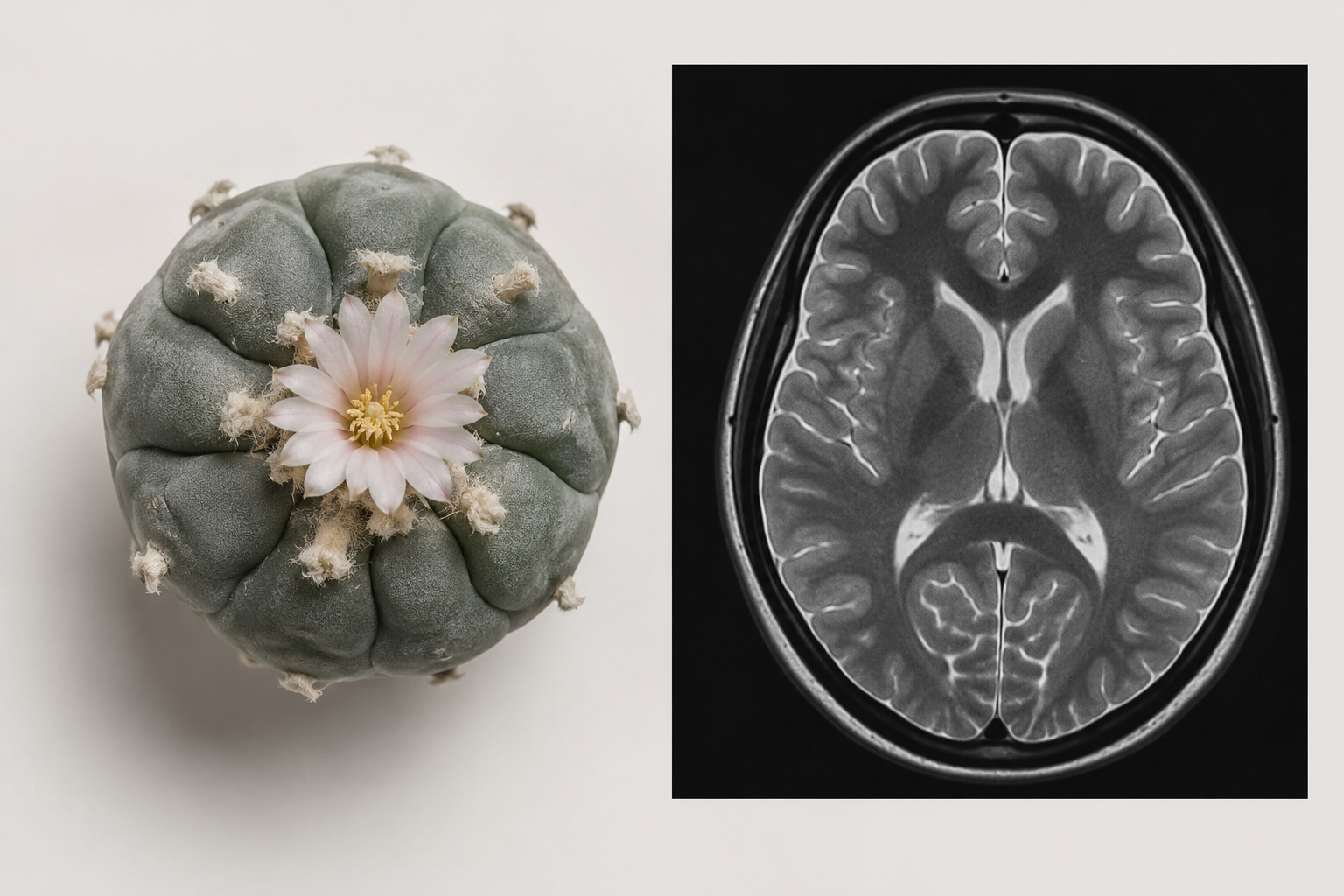
The researchers used advanced MRI brain imaging to study awake rodents after they received mescaline. Previous research has shown that psychedelics such as psilocybin and LSD create widespread hyperconnectivity, where normally separate brain regions begin communicating far more extensively than usual. Mescaline produced this same effect, but with an unexpected twist.
Activity within the cerebellum decreased dramatically, even as the cerebellum increased its communication with other parts of the brain. Lead researcher Noah Cavallaro described the finding as “paradoxical.”
“It’s being shut down within, but it’s talking more to other parts of the brain,” he told North Eastern Global News.
The Brain’s Sensory Filter
Although traditionally associated with movement and balance, neuroscientists increasingly recognise the cerebellum as an important filter for incoming sensory information.
Every second, the brain receives enormous amounts of information from sight, sound, touch, smell and the body’s internal signals. Most of this information never reaches conscious awareness because the cerebellum helps determine what deserves attention and what can safely be ignored.
The researchers believe mescaline partially disrupts this filtering process. Instead of simply flooding the brain with activity, it may change which information gets through.
That could help explain why ordinary sensations suddenly become vivid, emotionally meaningful or seemingly profound during a psychedelic experience.
Because rodents cannot describe hallucinations, the researchers tested sensory processing indirectly. Animals exposed to mescaline no longer responded normally to rewarding smells. They also performed unusually on a neurological test known as prepulse inhibition, which measures the brain’s ability to filter repeated sounds.
Normally, after hearing the same loud noise several times, the brain gradually stops reacting. Mescaline-treated animals successfully filtered very low and very high frequencies, but struggled with sounds in the middle range. Rather than completely disabling sensory filtering, mescaline appeared to make it selective.
A Window Into Mental Illness?
The findings may have implications beyond psychedelic science. People experiencing schizophrenia, PTSD and other psychiatric disorders can also struggle to filter sensory information appropriately. The researchers note that early schizophrenia has previously been associated with similar patterns of widespread brain hyperconnectivity.
Understanding how mescaline alters sensory gating could therefore help scientists better understand both psychedelic experiences and disorders involving hallucinations or sensory overload.
That doesn’t mean psychedelics cause these illnesses. Instead, they may temporarily recreate certain aspects of altered perception, allowing researchers to study the underlying brain mechanisms in controlled conditions.
An Ancient Medicine
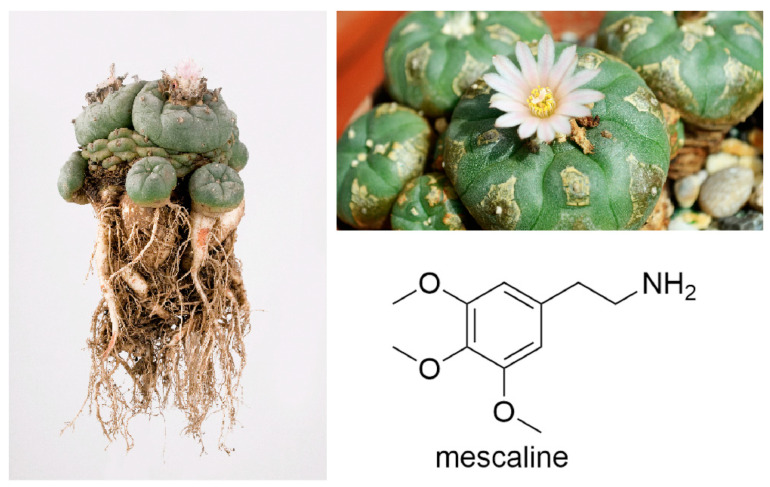
While mescaline is attracting growing scientific interest, it’s important to remember that it is far more than a research chemical.
For thousands of years, mescaline-containing cacti, particularly peyote, have played central roles in Indigenous ceremonies, healing traditions and religious practices. Many Indigenous communities continue to emphasize that these plants are sacred medicines, not simply compounds to be isolated, patented or commercialized.
Modern neuroscience can deepen our understanding of how mescaline affects the brain, but it cannot fully explain why these traditions have endured for millennia or replace the cultural contexts in which these medicines have been carefully stewarded.
The Next Step
The current research was conducted in rodents, so it cannot tell us exactly how the human brain responds. The researchers now hope to extend their work into clinical studies, examining how different doses of mescaline influence human brain activity.
As psychedelic science expands beyond psilocybin and LSD, mescaline offer a unique chance to understand consciousness through one of humanity’s oldest medicines while uncovering entirely new brain mechanisms that modern neuroscience is only beginning to recognise.
Source: Cavallaro, N., Rai, P., Akins, D. et al. Mescaline Alters Cerebellar Function, Global Connectivity, and Frequency-Selective Acoustic Gating: A BOLD fMRI Study in Awake Rats. Neurosci. Bull. (2026). https://doi.org/10.1007/s12264-026-01632-3
Keep up with the research here.