Every cell in your body runs on a 24 hour clock. It’s what tells your body when to release certain hormones, when to feel sleepy, when to digest food, and roughly when to wake up. As we get older, that clock starts to wobble. Sleep gets lighter and more broken up, and the daily rhythm that used to run like clockwork becomes weaker and less predictable.
A new study looked at why this happens, and at whether a compound found mostly in mushrooms, called ergothioneine (EGT), might help.
How scientists tested this
Researchers grew cells in a dish that had been engineered to glow in time with their internal body clock. As the clock ticks through its 24 hour cycle, the cells get brighter and dimmer, so scientists can literally watch the rhythm happening in real time.
To recreate what happens to the clock as we age, they used a drug called FK866. This drug blocks the body’s ability to make NAD+, a molecule your cells need for energy production, and one that’s known to drop off steadily as we get older.
Blocking NAD+ this way made the cells’ daily rhythm weaker, slower, and less consistent from one cycle to the next, exactly the kind of thing we see happen naturally with age. In short, low NAD+ seems to throw the body clock off.
Where ergothioneine comes in
When the researchers added EGT alongside the NAD+-blocking drug, things improved slightly. The rhythm got a bit stronger again, the cycle length came closer to normal, and it became more consistent from day to day.
The reason seems to come down to NAD+ itself. EGT raised NAD+ levels in these cells, even while the drug was actively trying to destroy it. NAD+ is needed to power an enzyme called SIRT1, which helps keep the body clock running properly, so by protecting NAD+, EGT appears to help protect the clock too.
This isn’t just a one-off finding
This lines up with a separate, more detailed study published in Cell Metabolism that dug into how ergothioneine raises NAD+ in the first place. Interestingly, EGT doesn’t seem to work mainly as an antioxidant (which is how it’s usually described), it’s actually not a very strong one. Instead, it breaks down inside cells into a small amount of hydrogen sulfide (yes, the “rotten egg” gas), which switches on an enzyme that helps regenerate NAD+.
In that study, EGT extended the lifespan of worms by 20%, and in middle-aged rats it nearly doubled how long they could run on a treadmill before tiring out, while also raising NAD+ levels directly in their muscles. When two separate pieces of research point to the same mechanism independently, that’s a good sign it’s a real effect worth paying attention to.
A quick primer on ergothioneine
Humans can’t produce ergothioneine ourselves, yet our bodies have a dedicated built-in system just for absorbing and holding onto it once we eat it. That’s not an accident. It builds up in places under a lot of stress, like the brain, the eyes, the immune system, and inside mitochondria (the energy factories in our cells), where it’s thought to offer protection.
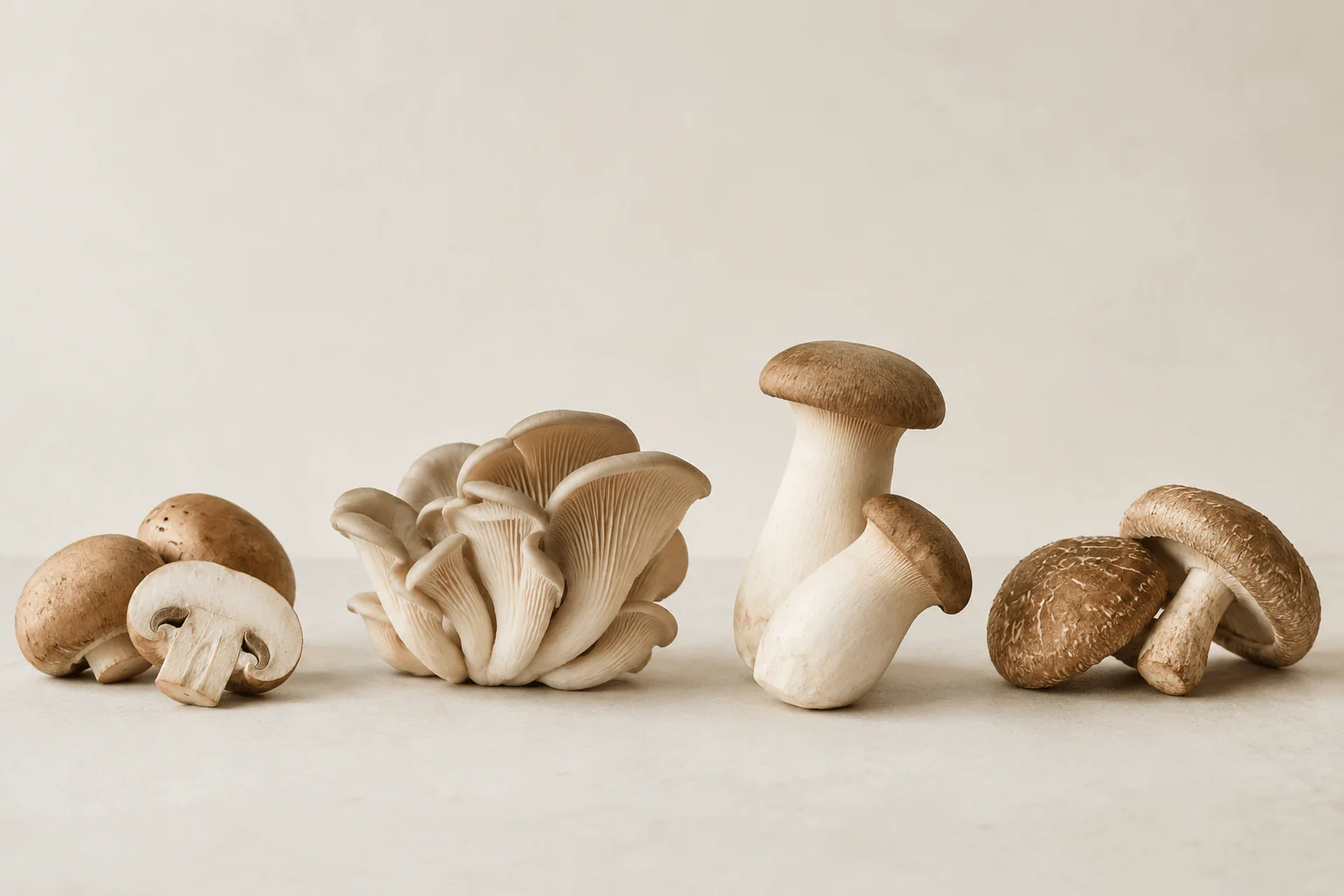
Mushrooms are by far the best source of it. If you’re eating for it specifically, the richest options are oyster, maitake, shiitake, porcini, lion’s mane, button, cremini, and portobello mushrooms.
Other recent ergothioneine research worth knowing about
This isn’t the only recent study pointing at this compound. A large Nature Aging study tested almost a thousand different substances in the blood of over a thousand middle-aged people to see which ones best predicted brain health, and ergothioneine came out on top of the entire list (we covered that one in full here).
A separate study out of Singapore found that people whose bodies were actively using up more ergothioneine had far lower rates of Alzheimer’s-related cognitive decline, even when they had the same amount of disease-related plaque buildup in the brain as people who weren’t using much of it. People with low ergothioneine use, by comparison, saw their decline risk more than double (full writeup here).
Neither study proves that ergothioneine is directly responsible, but it’s the same pattern showing up again. This mushroom compound keeps appearing in places you wouldn’t expect it to matter this much.
A dose of caution
We want to be upfront about something the researchers themselves pointed out. The effect on the body clock in this study was small. The drug used to knock out NAD+ is a pretty blunt tool, it hits hard, and even against that level of disruption, EGT’s benefit was modest rather than dramatic.
That doesn’t make it meaningless. This is a cell study, using one specific way of draining NAD+, and it points to a real, believable mechanism. But it’s an early result.. What we’d want to see next is this tested in more animal studies with a gentler, more realistic model of aging, and eventually in human sleep studies, to see whether people can actually feel a difference in their sleep or daily energy.
For now, this is another small piece of evidence for ergothioneine’s role in healthy aging, alongside its links to telomeres, oxidative stress, and mitochondrial health. The circadian angle is new, and it’s promising, but it’s still early days.
Source: Ergothioneine attenuates age-related declines in circadian rhythmicity, Wakita, et al, Biochemical and Biophysical Research Communications, Volume 830, 2026, DOI: 10.1016/j.bbrc.2026.154272.
Keep up with the research here.