Most psychedelic experiences happen in living rooms, forests or ceremonial spaces. Batuhan Bintas’ happened inside one of the world’s most prestigious neuroscience laboratories.
In 2016, he became one of just 12 volunteers selected to take part in Imperial College London’s landmark DMT study. Researchers injected him with a high dose of intravenous DMT while his brain activity was recorded inside an MRI scanner, hoping to better understand what happens to the human brain during one of the most intense altered states known to science.
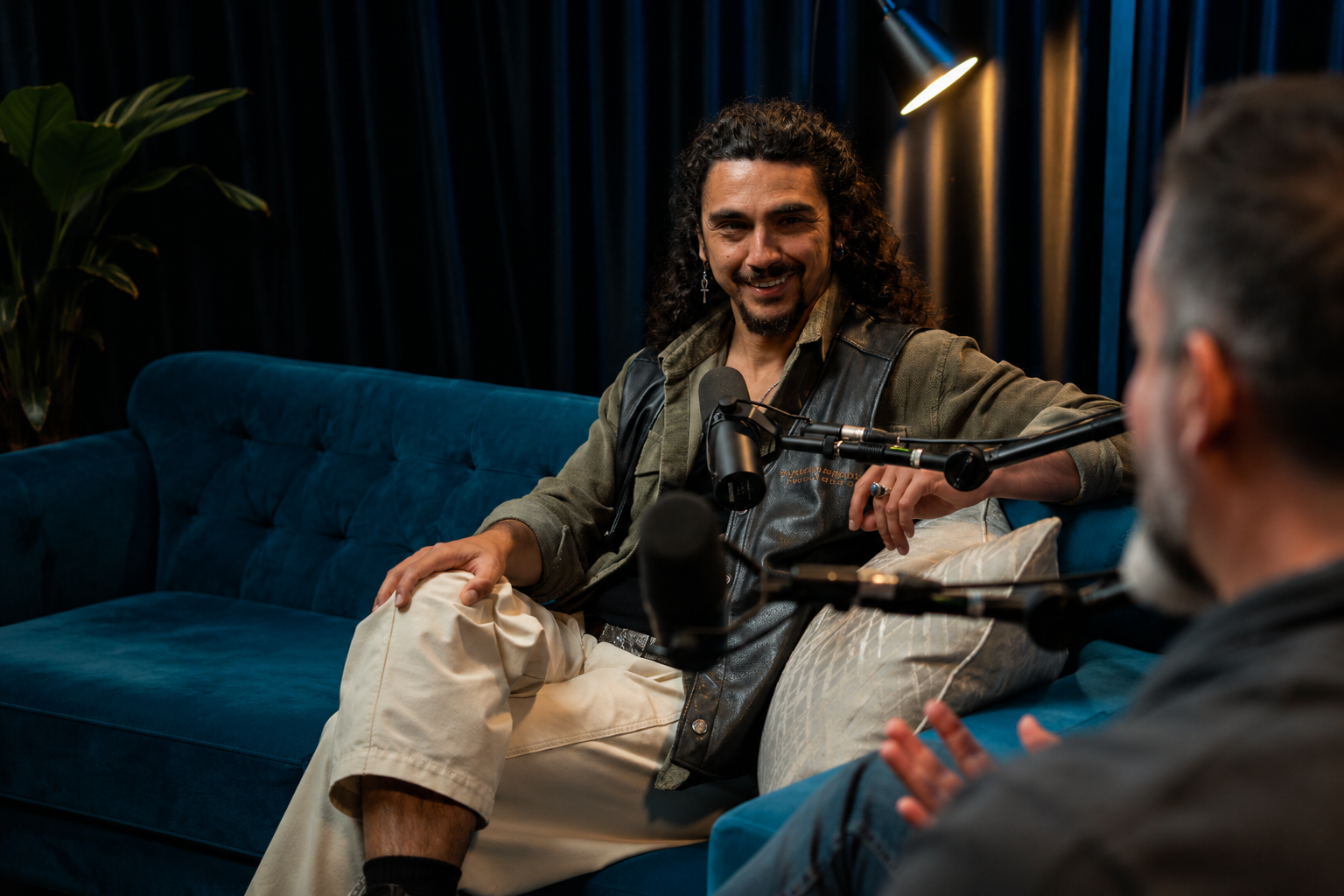
But while the scientists were collecting brain scans, Bintas says he was somewhere else entirely. Speaking on the Hodgecast podcast, he described an experience that would completely reshape his understanding of consciousness, religion and reality itself.
“It felt like coming home.”
Bintas had experimented with psychedelics before joining the study, but says nothing prepared him for DMT. Rather than feeling strange or alien, his first breakthrough felt oddly familiar.
“I know this place,” he remembers thinking.
It’s a description echoed by many experienced DMT users. Instead of reporting a bizarre hallucination, they often describe the experience as a kind of remembering, as though they’ve returned somewhere they’ve forgotten rather than travelled somewhere new. That feeling of familiarity became one of the defining themes of his psychedelic journey.
Meeting Ganesh
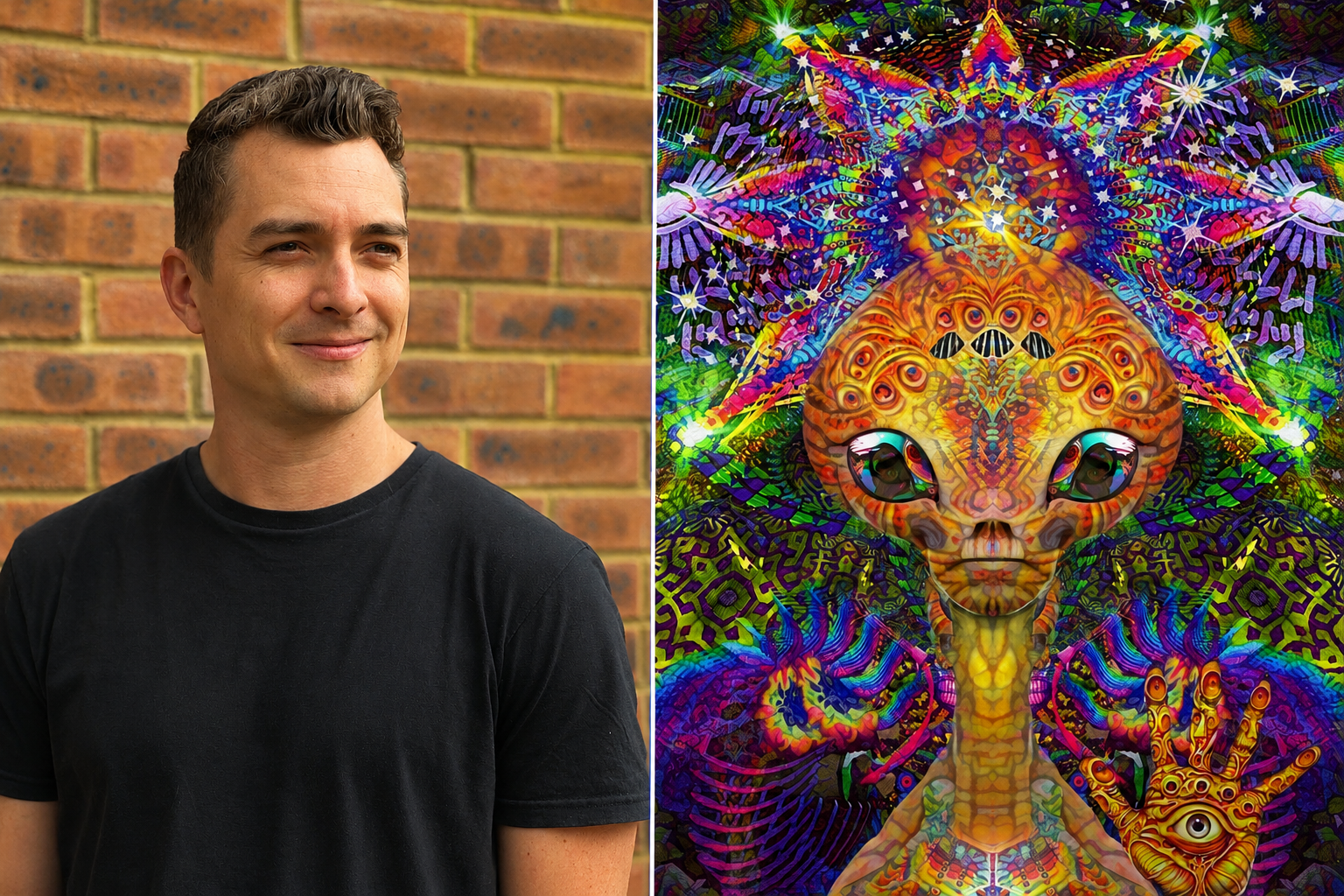
Perhaps the most intriguing story from the interview came from a DMT experience before the Imperial study. Within seconds of breaking through, Bintas says he travelled through a tunnel of rapidly shifting geometric patterns before arriving in front of a towering being with an elephant’s head and multiple arms.
He had no idea what he was looking at. Raised in a Muslim family in Turkey, he knew virtually nothing about Hinduism. Weeks later, while walking through Camden Market in London, he wandered into an Indian shop and froze. There, hanging on the wall, was the exact figure he had seen during his DMT experience. It was Ganesh.
Curious, he began searching online and discovered countless reports from other DMT users describing encounters with the same Hindu deity, even people who also claimed they knew little or nothing about Hindu mythology beforehand.
Of course, anecdotes like these don’t constitute scientific evidence. Memory is fallible, expectation shapes experience, and extraordinary claims require extraordinary evidence. But stories like this continue to fuel one of the biggest unanswered questions in psychedelic science. Why do so many people report strikingly similar experiences?
The operating table
The experience became stranger still. After encountering Ganesh, Bintas says he found himself surrounded by intricate fractal structures before suddenly arriving in what looked like a futuristic laboratory. There he encountered the now-famous “mantis beings” frequently described in DMT reports. According to Bintas, the entities appeared to be working on him.
“I could feel they were doing something,” he said. When he resisted, one of the beings allegedly responded telepathically: “You gave consent when you smoked DMT.”
Whether interpreted as a vivid hallucination, symbolic dream imagery or something more mysterious, encounters like these remain one of the most fascinating, and controversial, aspects of the DMT experience. Similar reports have appeared for decades, from Terence McKenna’s “machine elves” to more recent clinical interviews with experienced users.
Did psychedelics inspire religion?
The conversation eventually moved beyond neuroscience and into history. Bintas argues that psychedelics may have played a much larger role in the development of the world’s religions than is commonly acknowledged.
He points to repeated links between sacred plants and ancient cultures:
- Soma in the Vedic tradition.
- The Eleusinian Mysteries of ancient Greece.
- Acacia trees surrounding the biblical Burning Bush.
- Blue lotus imagery in ancient Egypt.
- Mushroom symbolism in early Christian art.
These ideas remain highly debated among historians, and the evidence varies considerably from one tradition to another. Some connections are better supported than others, while many remain speculative. But the broader question, whether altered states influenced humanity’s earliest spiritual traditions, is receiving increasing scholarly attention.
For Bintas, his own experiences convinced him these traditions may have been attempts to describe encounters that modern people continue having under psychedelics today.
Is the brain producing consciousness… or receiving it?
One of the interview’s most thought-provoking ideas concerns consciousness itself. Most neuroscientists view consciousness as something generated by the brain. Bintas proposes a different possibility. What if the brain functions more like a radio?
A radio doesn’t create music. It tunes into broadcasts that already exist. Likewise, he suggests psychedelics may temporarily retune the brain to forms of consciousness that are normally inaccessible.
It’s an idea that has been explored, in different forms, by thinkers ranging from Aldous Huxley and William James to more recent consciousness researchers. While mainstream neuroscience doesn’t currently support the brain-as-receiver model, it remains an intriguing philosophical framework for interpreting psychedelic experiences.
Why these conversations matter
Whether you interpret DMT as neurochemistry, symbolism, or genuine contact with something beyond ordinary perception, conversations like this highlight why psychedelic research has become one of the most exciting areas of modern science.
Clinical trials are revealing remarkable therapeutic potential for depression, PTSD and addiction. Meanwhile, neuroscience is beginning to map what happens in the brain during these extraordinary states.
But alongside the data sits something equally important: human experience. Thousands of people describe encounters that feel more real than everyday life, dissolve their fear of death, transform their beliefs, or permanently change the direction of their lives.
Science can measure changes in brain networks. It can record blood flow and neural activity. Whether it can eventually explain why these experiences feel so profoundly meaningful remains one of the biggest unanswered questions in consciousness research. Perhaps that’s why DMT continues to fascinate both neuroscientists and philosophers alike.
For now, the brain scans tell us what the brain is doing. The experiences tell us something else entirely. Exactly what that “something else” is remains one of the greatest mysteries in modern science.
Watch the full interview here.
Follow the research here.