
Dr Chris Timmermann has spent more than a decade studying one of the strangest and most revealing questions in neuroscience: what happens when the brain’s normal model of reality begins to fall apart?
His work has taken him deep into the neuroscience of DMT, 5-MeO-DMT, meditation, ego dissolution and altered states of consciousness. He completed his PhD in neuropsychopharmacology at Imperial College London, where he led some of the world’s first brain-imaging studies of DMT, and until 2025 headed Imperial’s DMT Research Group. He is now co-director of the UCL Centre for Consciousness Research, where his work has broadened to include psychedelics, meditation, breathwork and other non-ordinary states.
What makes Timmermann particularly interesting is that he is willing to study mystical experiences with an open mind. He doesn’t simply dismiss things like entity encounters, ego dissolution or mystical states as meaningless hallucinations, but he also doesn’t jump to the conclusion that they prove the existence of another dimension. His interest is in what these experiences can tell us about the mind.
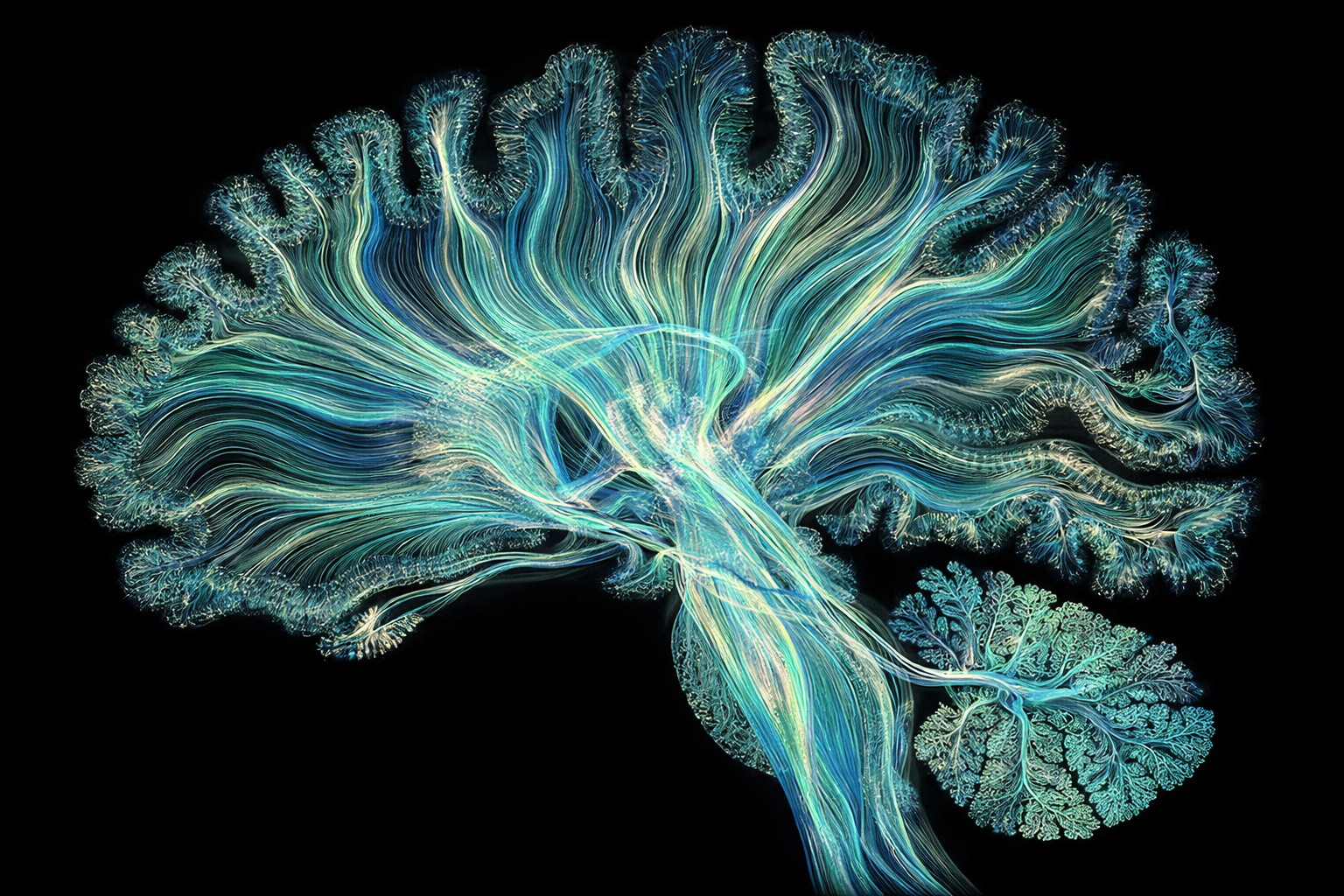
One of the key ideas running through his work is that our ordinary experience of reality is not a direct window onto the world. The brain is constantly building models, making predictions and filtering incoming information so that we can function efficiently. And psychedelics appear to loosen some of those constraints.
The Brain Doesn’t See Reality
In a recent interview, Timmermann described how DMT acts strongly at the serotonin 5-HT2A receptor and may disrupt the usual organisation of cortical activity. In predictive-processing terms, some of the brain’s higher-level expectations and filters become less dominant. This may allow visual activity, memories, emotions and other normally constrained processes to interact in unusual ways, helping to explain the geometry, fractals, autobiographical material and immersive worlds that people often report.
But he makes an important distinction. Removing the filters of the mind is not necessarily the same thing as removing a filter on reality itself. A psychedelic experience may reveal processes that are normally hidden within consciousness without proving that the person has gained access to an objectively separate realm.
That distinction becomes especially interesting in Timmermann’s work with extended DMT.
What Happens When You Extend a DMT Trip?
A normal smoked DMT experience is extraordinarily fast. Someone can move from ordinary consciousness into a completely immersive altered state within seconds, with the most intense part lasting only a few minutes. For researchers, that creates a problem. If the most interesting part of the experience is over almost as soon as it begins, it is difficult to study how the experience develops over time.
Timmermann and colleagues therefore began using continuous intravenous DMT infusion, often referred to as DMTx. An initial dose brings the participant into the state, while smaller amounts are then continuously infused to keep DMT levels relatively stable. But the aim is not simply to let people trip for longer. It’s to give scientists enough time to watch, and one day understand, exactly how the experience changes.
And it’s leading them to some fascinating findings.
“The Alien Becomes Familiar”
At the beginning, participants can be thrown into experiences that feel completely alien. They may encounter strange beings, impossible geometry, unfamiliar environments and an overwhelming sense of novelty. But as the experience continues, some of that alienness can start to change.
Timmermann summed it up beautifully in the interview: “The alien becomes familiar. The metaphysical becomes personal.”
He gave the example of one participant who initially encountered a threatening giant spider. At first, it seemed like a bizarre external entity. But as the extended experience continued, the participant began to interpret the spider as representing his wife and aspects of their relationship that he needed to confront. Something that began as an apparently alien encounter became psychologically meaningful.
Timmermann suspects that some of the extreme strangeness of DMT may come from how rapidly the brain is thrown into a radically different state. There is so much novelty, so quickly, that the mind initially struggles to build a coherent story around what is happening. When the state is prolonged, the brain has more time to make sense of it.
This could help explain why DMT is not simply experienced as random chaos. Existing theories of psychedelics often talk about increased entropy, reduced top-down control or loosened brain constraints, but those ideas do not fully explain why psychedelic experiences can still feel highly organised. People report narratives, entities, conversations, personal insights and emotionally meaningful scenes. If the brain’s normal order is being disrupted, why does another kind of order emerge?
What About DMT Entities?
The entity encounters are one of the clearest examples. In Timmermann’s extended-DMT research, around 60% of participants reported encountering some form of entity when researchers asked them during the experience. But the details varied considerably. Some people encountered clowns or jesters, others reassuring or mysterious beings, and some entities appeared to communicate while others did not.
Importantly, Timmermann says his team did not see the kind of extreme recurrence sometimes claimed in online DMT culture. None of the participants in this particular study reported the famous “machine elves” or praying-mantis beings. For him, that suggests the specific content of these encounters may be strongly shaped by culture, memory and expectation.
The more interesting commonalities may lie underneath the specific characters. People repeatedly report the sense of being transported somewhere else, inhabiting an immersive three-dimensional space, seeing vivid geometric structures and encountering apparently autonomous beings. Those recurring features may tell us something fundamental about how the human brain constructs experience.
Timmermann is careful, though, not to say that this proves the entities are either real or unreal. His position is more disciplined than that. The fact that an experience feels completely convincing does not necessarily tell us what exists independently of the person having it. Human perception is capable of producing experiences that feel utterly real and still turn out to be misleading.
Psychedelics Can Change What You Believe Reality Is
That same caution runs through his research on psychedelics and belief.
Timmermann has studied how psychedelic experiences can change people’s basic assumptions about consciousness and reality. His work has found that people can move away from strict materialist views after psychedelic experiences and become more open to ideas such as panpsychism, the view that consciousness may be a fundamental or widespread feature of reality.
For some people, this amounts to a kind of ontological shock. They do not simply come back thinking that they had an unusual drug experience. They come back questioning what reality actually is.
But again, Timmermann does not treat that shift in belief as proof that panpsychism is true. Psychedelics can change what people believe about consciousness without necessarily settling the philosophical question of what consciousness is.
A 10-Week Deep Dive Into the Psychedelic Mind
This autumn, Timmermann is opening up much of that territory in a 10-week live online course called Unlocking The Psychedelic Mind, which I will be partaking in.
The course is designed as a deep dive into psychedelic neuroscience, but it goes well beyond simply explaining what different drugs do in the brain. It explores how psychedelics alter perception, consciousness and the sense of self, how those changes may relate to mental health and healing, and how modern neuroscience fits alongside older traditions for working with non-ordinary states.
The first part of the course looks at the foundations of psychedelic neuroscience, including neuroplasticity, brain network changes and the relationship between psychedelics, therapy and society. It then moves into their therapeutic potential and what psychedelic states might reveal about the nature of self and consciousness.
From there, Timmermann explores leading models such as REBUS, the Entropic Brain and the CTSC model, before moving into psychedelic neurophenomenology and the way lived experience, embodiment and context interact with changes in the brain.
The fourth module goes directly into Timmermann’s specialist territory: DMT, 5-MeO-DMT and the edges of consciousness. It looks at what happens to the brain and the self during some of the most intense psychedelic states, before exploring the overlap between psychedelics and meditation.
The final part of the course moves into emerging areas such as creativity, flow states, psychedelic apprenticeship and the future of psychedelic neuroscience.
Who Is the Course For?
The course is open to anyone curious about psychedelics, whether they are researchers, clinicians, therapists, wellness practitioners, experienced psychonauts or simply people interested in the science of consciousness. No formal scientific background is required.
By the end of the course, participants should have a solid grasp of neuroplasticity, brain network modulation, REBUS and the Entropic Brain, as well as a deeper understanding of how psychedelics affect perception, cognition and the experience of self.
The course also looks at the therapeutic potential and risks of compounds such as psilocybin, DMT and 5-MeO-DMT, while exploring broader issues around ethics, culture, meditation, creativity and human flourishing.
How the Course Works
Unlocking The Psychedelic Mind begins on Tuesday 29 September 2026 and runs for ten live online sessions through to 8 December, with a reading week on 3 November.
Each Zoom session lasts around two hours, combining approximately 75 minutes of teaching with 45 minutes of discussion and Q&A, along with a short grounding practice at the beginning. Recordings are emailed after each session, so people who cannot attend every session live can still follow the course.
There are also two optional community events: an in-person London mixer on 28 September and an online social on 26 October. The socials are designed to connect the international learning community, which includes everyone from researchers and clinicians to therapists, practitioners and psychonauts.
Why This Feels Like a Particularly Good Time to Learn From Timmermann
Psychedelic science is beginning to mature beyond the first wave of questions. The early focus was understandably on whether psychedelics could help conditions such as depression, anxiety and addiction. Those questions remain hugely important, but the field is now moving into deeper territory.
Why do these experiences take the forms they do? What happens when the sense of self disappears? How much of the psychedelic experience is shaped by culture and expectation? Can people learn to navigate altered states more skillfully? What can meditation teach psychedelic neuroscience? And what can all of this tell us about ordinary waking consciousness?
Few researchers have spent as much time experimentally exploring those questions as Chris Timmermann.
You are not simply learning about DMT from somebody who has read the papers. You are learning from someone who has spent years administering DMT in laboratory settings, recording what happens in the brain and talking to people while their ordinary model of reality is being radically altered.
These substances give researchers an extraordinary experimental tool to study consciousness itself. They allow scientists to watch the sense of self weaken, watch entire worlds emerge, watch people encounter seemingly autonomous beings, watch those experiences become personally meaningful, and then ask what all of that tells us about the much more familiar reality we return to when the drug wears off.
Maybe psychedelics reveal another dimension. Maybe they don’t. Science currently has no way of settling that question. What they are clearly revealing, however, is just how dynamic and constructed our ordinary experience of reality is.
Chris Timmermann has spent more than a decade trying to understand that process. This autumn, his course offers a rare chance to explore those questions directly with him. I can’t wait.
Unlocking The Psychedelic Mind with Dr Chris Timmermann begins Tuesday 29 September 2026.

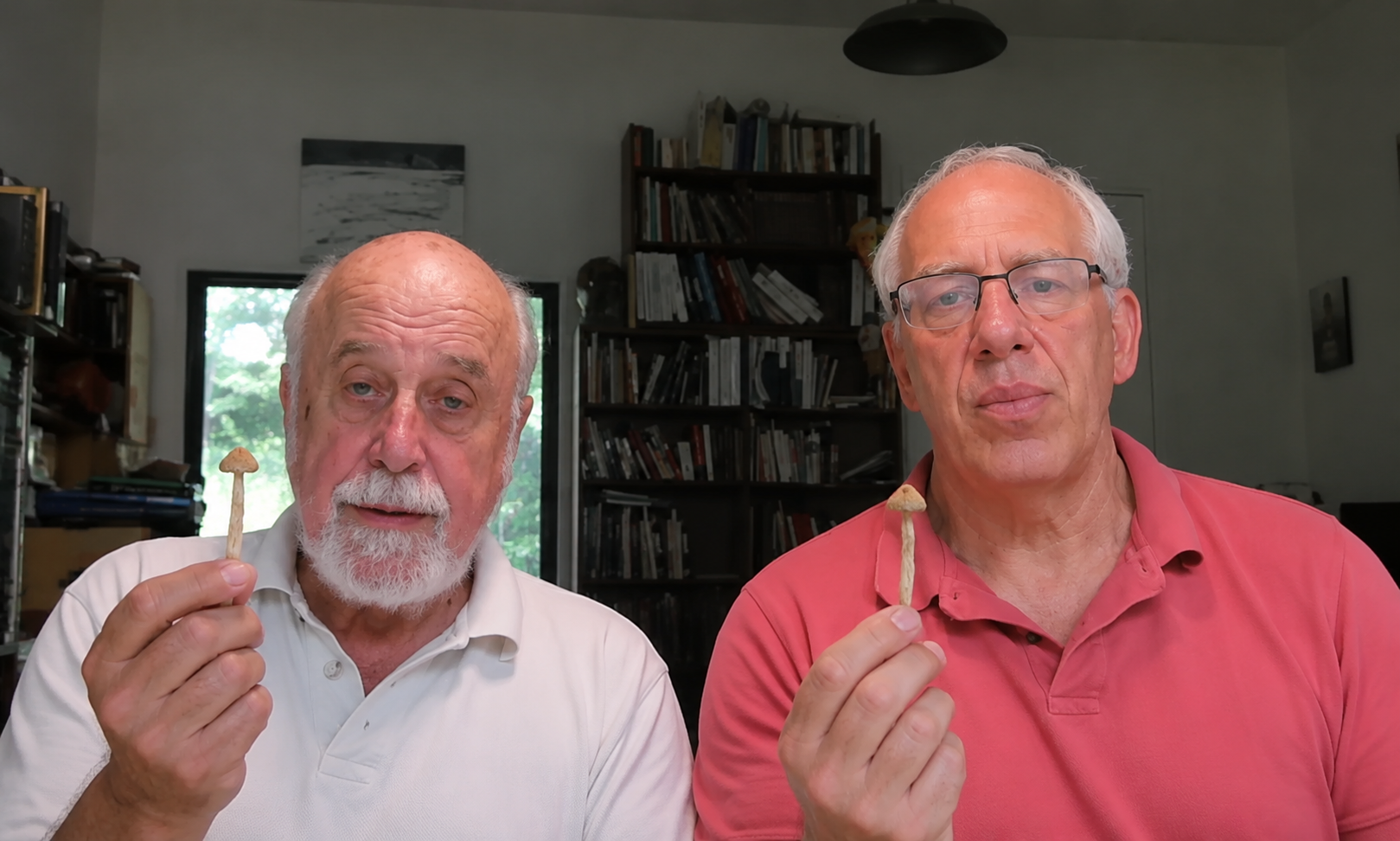
The most useful distinction here is between the structure of the experience and the ontology people infer from it. Timmermann’s new micro-phenomenology paper is especially interesting because perceived presences tended to appear only after bodily effects, multisensory integration and a three-dimensional space had formed. That gives researchers a testable sequence for how an immersive world is constructed without deciding whether the entities exist independently.
Speaking personally, DMT has made universal consciousness feel like a serious possibility to me. But the public evidence currently seems strongest for a dynamic model-building process, and for psychedelics’ ability to change metaphysical beliefs – not for any one metaphysics being established. I’d be interested to know whether extended DMT makes that construction sequence more stable across people, or mainly gives each person more time to reinterpret initially alien material.