
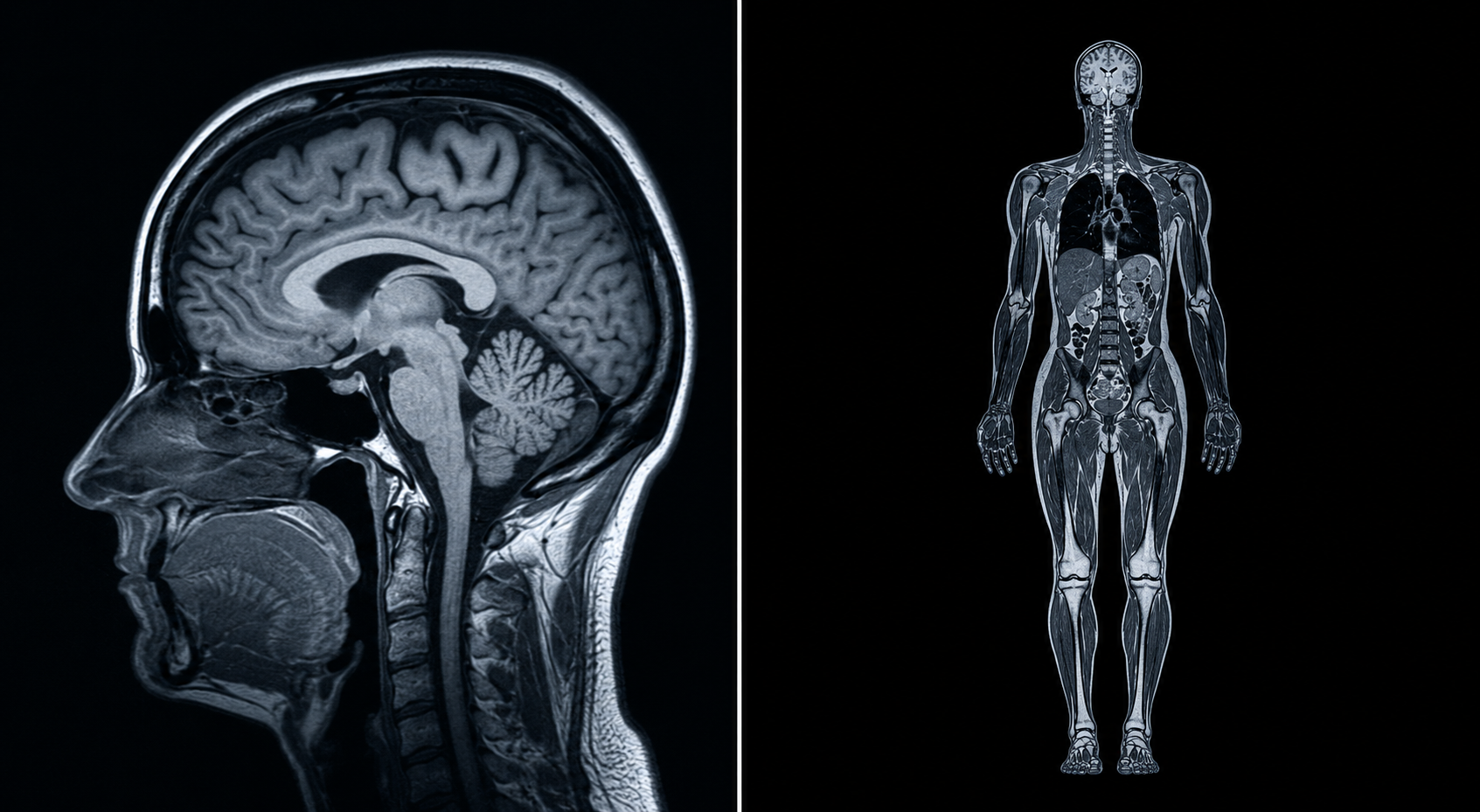
For years, psychedelic science has focused on what happens in the brain. Researchers have shown that compounds like psilocybin can increase neuroplasticity, disrupt rigid thought patterns, and help people overcome depression, addiction and PTSD. But what if that’s only half the story?
A new paper published in the Journal of Psychedelic Studies argues that psychedelics may also push the body into a temporary state of heightened adaptability. The authors call this a Pivotal Physical State (PiPS), a proposed physiological counterpart to the well-known concept of Pivotal Mental States (PiMS).
Whole-Body Transformation
PiMS describes those rare windows during which the brain becomes unusually plastic, making lasting psychological change possible. PiPS extends that idea beyond the brain, proposing that the body’s major systems (including the immune system, stress response, metabolism and gut) may also become temporarily more flexible and capable of recalibration.
The theory is built on a growing body of evidence showing that psychedelics affect far more than consciousness. Studies have reported changes in inflammation, cortisol, immune signalling, autonomic nervous system activity, brain-derived neurotrophic factor (BDNF), and even mitochondrial function following psychedelic administration. Rather than viewing these as unrelated side effects, the authors suggest they may all be part of a coordinated whole-body adaptive response.
According to the paper, psychedelics may briefly push the body out of its normal equilibrium through a controlled physiological stress response. That temporary disruption could then trigger repair and adaptation, much like the way exercise, fasting or cold exposure improve health by exposing the body to manageable stress. This concept, known as hormesis, is already well established in biology, and the authors believe psychedelics may harness similar mechanisms.
The Biological Systems Behind PiPS
The researchers outline several biological pathways that could contribute to these pivotal physical states. One involves the widespread 5-HT2A serotonin receptor, the primary target of classic psychedelics. While these receptors are abundant in the brain, they’re also found throughout the body, including the gut, cardiovascular system and immune cells. Activation of these receptors may influence inflammation, autonomic function and immune regulation alongside changes in consciousness.
The paper also highlights the role of the stress hormone cortisol. Although chronic stress is harmful, a brief cortisol surge may actually be beneficial, activating protective pathways that recalibrate stress circuits and reduce inflammation once the challenge has passed. Previous studies have already shown that psilocybin can lower inflammatory markers such as TNF-α, IL-6 and C-reactive protein while temporarily increasing cortisol, suggesting the body’s stress response may play an important therapeutic role rather than simply being a side effect.
Beyond stress hormones, the authors discuss several other systems that may contribute to PiPS, including the vagus nerve, oxytocin signalling, the gut microbiome, mitochondrial health, sigma-1 receptors and BDNF-driven plasticity. Together, these pathways could help explain why psychedelic therapy sometimes produces improvements that extend beyond mental health, with emerging evidence hinting at benefits for chronic inflammation, trauma-related disorders and even recovery from physical injury.
Introducing “Bodyset”
One particularly interesting aspect of the paper is the introduction of “bodyset.” Most people familiar with psychedelics know the importance of set and setting, aka your mindset and environment. The authors argue there’s a third factor that deserves equal attention: the body’s physiological state before the experience.
Factors such as inflammation, stress hormones, autonomic balance, sleep, immune health and metabolism may all influence how someone responds to psychedelics and whether those pivotal states ultimately lead to healing or dysregulation.
Importantly, this is a theoretical paper rather than new experimental evidence. The authors are proposing a framework that brings together findings from neuroscience, immunology, endocrinology and physiology into a single model. They argue that future psychedelic research should routinely measure biomarkers such as inflammatory cytokines, cortisol, heart-rate variability and immune activity alongside psychological outcomes to test whether PiPS truly exists.
Why It Matters
If the idea proves correct, it could fundamentally change how we think about psychedelic medicine. Rather than acting solely as drugs that reshape the mind, psychedelics may temporarily reopen windows of plasticity across the entire organism, allowing both the brain and the body to recalibrate together.
It’s an ambitious hypothesis, and one that still requires substantial experimental validation. But if future studies support the PiPS framework, psychedelic therapy may ultimately be understood not just as a treatment for mental illness, but as a catalyst for whole-body adaptation and healing.
Source: Uthaug, et al, Pivotal physical states: The somatic equivalent to pivotal mental states. Journal of Psychedelic Studies (published online ahead of print 2026), 2054.2026.00482, Article 2054.2026.00482. https://doi.org/10.1556/2054.2026.00482
Keep up with the research here.

Hi there,
My father is diagnosed with psp there is no possible to heal him right now. He is the man who always trusted medical treatment. I don’t believe that and I believe in other opportunities. PSP means Tau protein accumulates in the brain. Do you think these mushrooms can help?