
A new study out of Copenhagen just gave us one of the most direct human tests yet of a question that’s been floating around psychedelic science for a while: does psilocybin actually rebuild synapses in the human brain, and does the environment you take it in matter for whether that happens?
The short answer is complicated (as usual), but fascinating.
The setup
Researchers in Copenhagen gave 15 healthy volunteers a single strong dose of psilocybin (0.3 mg/kg). Using a PET brain scan, they measured how many connections between brain cells (synapses) each person had, once before taking psilocybin and again a week later. More synapses generally means the brain is more flexible and able to change.
Earlier research in pigs found that psilocybin increased synapse levels a week after dosing. The Copenhagen team wanted to see if the same thing happens in people.
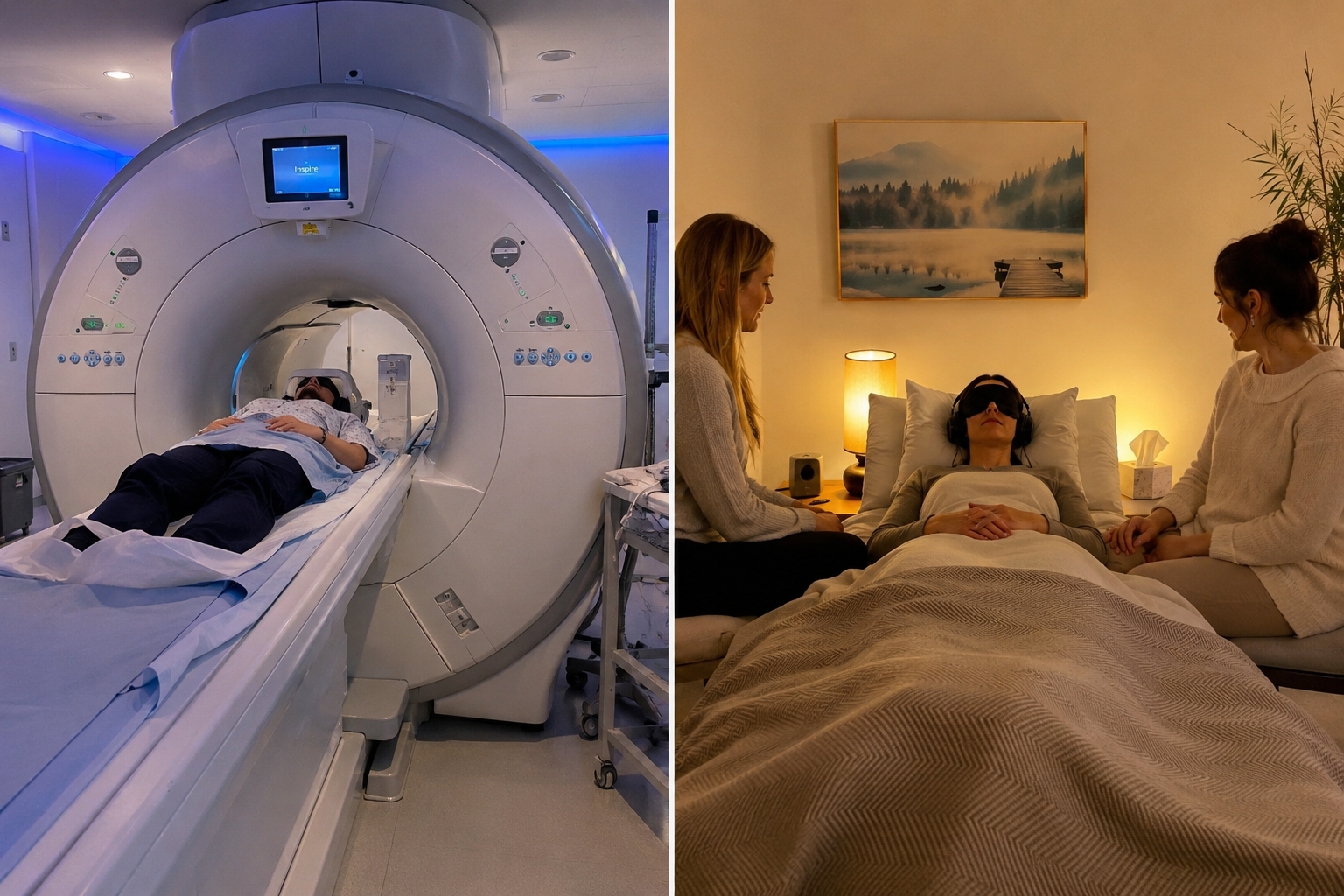
Five people took the psilocybin while lying inside a noisy MRI scanner. The other ten took it in a cozy, calm room with soft music playing and two support people staying with them the whole time, similar to how psilocybin therapy is usually done in clinical settings.
What they found
Overall, across everyone in the study, there wasn’t a significant increase in brain connections. In fact, the study was stopped early because the early results weren’t looking promising enough to continue.
But when researchers looked separately at the two groups, a clear pattern showed up. The people who took psilocybin in the calm, comfortable room:
- Had more powerful, meaningful experiences during their trip
- Felt better and reported more lasting benefits three months later
- Showed a 5 to 6% increase in brain connections in two key brain regions
The people who took it in the MRI scanner didn’t show any of this. Their experiences felt less profound, the benefits didn’t last as long, and their brain connections didn’t increase.
The researchers also noticed a pattern (though not strong enough to be certain) suggesting that people who had more intense, meaningful experiences tended to show bigger increases in brain connections afterward. This isn’t proven yet, but it fits with everything else they found and hints that how meaningful your trip feels might actually affect your brain on a physical level.
Why this matters
This is the first study to try to actually measure, using brain scans in real people, whether a single dose of psilocybin changes the brain’s wiring. That alone makes it worth paying attention to.
That said, the study was small (just 15 people, split into a group of 5 and a group of 10), the main result didn’t reach statistical significance, and the setting-based findings weren’t the main thing the study set out to test, they came from digging deeper into the data afterward. The researchers themselves say these results should be seen as early and suggestive only.
This doesn’t prove that a nice room makes psilocybin rewire your brain. But it’s a strong enough hint that it’s worth testing properly in a bigger study.
One more interesting detail is that healthy people, like those in this study, might simply have less room for their brain connections to increase, since their systems are already working pretty normally. People with depression tend to have fewer brain connections to begin with, so psilocybin might have a bigger, more noticeable effect on them.
The bigger picture
This study doesn’t tell us “psilocybin definitely grows brain connections.” Instead, it suggests the environment you take psychedelics in (the room, the music, having supportive people around, feeling safe) might not just affect how the experience feels in the moment. It might actually affect what happens in your brain afterward.
If a calm, supportive environment can measurably change the brain, not just how someone feels about their experience, that backs up something psychedelic therapists have believed for years. It also helps explain why therapy rooms for psilocybin sessions are designed to feel warm and safe rather than clinical.
Researchers will likely follow up on this with bigger studies, including a comparison group who don’t get psilocybin, and testing this in people who are actually dealing with conditions like depression, where the effects might be even stronger.
Keep up with the research here.

This may also suggest that the lsd they are making that removes the hallucinations may be Like being in the mri machine.