A new feature in Targeted Oncology profiles Moran Amit, a head and neck surgical oncologist at MD Anderson Cancer Center, and the two psilocybin-assisted psychotherapy trials he’s currently running for cancer patients. It’s one of the clearer accounts we’ve seen of how serious academic medicine is treating this space right now, and the details are worth unpacking.
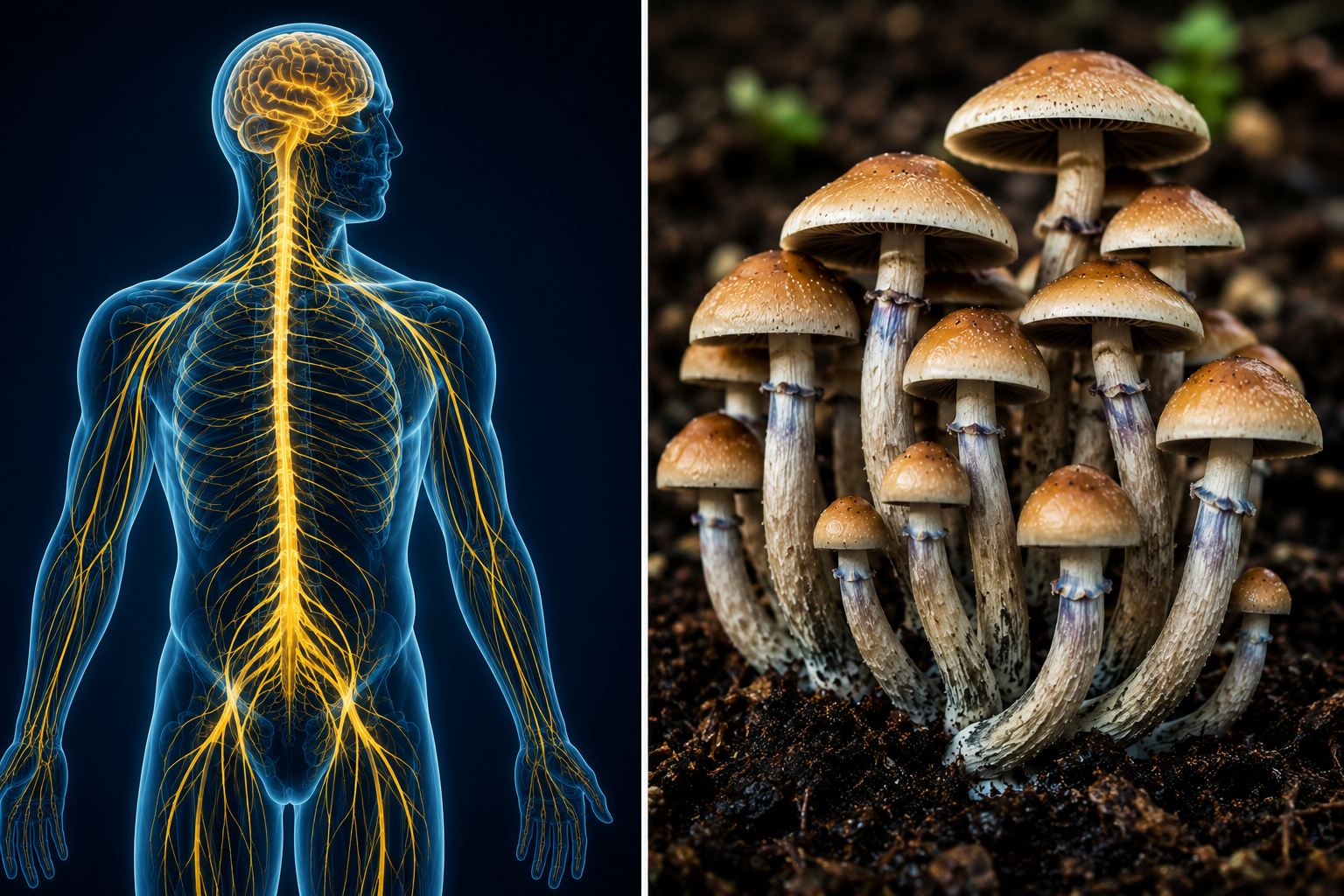
Amit’s route into psychedelics wasn’t through psychiatry. It was through tumour biology. His lab published research in Nature in 2020 showing that cancer can hijack the nervous system, reprogramming nerve tissue to serve the tumour’s own growth. Following that logic forward, he started asking whether the nervous system could be recruited to fight back. The compounds with the best profile for that kind of work, he found, were tryptamines. Psilocybin was already in the literature, so he started digging.
What he found redirected him. The clinical need wasn’t so much about fighting tumours through nerves. It was about what happened to patients after the tumour was dealt with.
Head and neck cancer has one of the highest suicide rates of any cancer type. The anatomy involved – the mouth, throat, face – is how people eat, speak, breathe, and move through the world. Surgery and radiation change all of that, often permanently. “They’re cured from cancer,” Amit said, “but they’re not going back to society.”
The gap in the existing research
Most psilocybin research in oncology to date has focused on terminally ill patients, and that data is robust. What hasn’t been studied much is everyone else: patients in active curative treatment, living with cancer as a chronic condition for years, and survivors who’ve finished treatment but are still carrying the weight of what they went through.
Amit’s first trial targets the first group. His second, which he says the team identified as a need almost immediately after launching the first, targets the second. He draws an analogy to veterans: “You survived the war, but now you’re back home, and it’s really sometimes hard to get back.”
The protocol
Both trials follow the same basic structure. Patients go through preparation sessions with therapists, then two full dosing days at MD Anderson, each with two therapists present throughout. Integration sessions follow each dosing day, then the cycle repeats. The total course runs two to three weeks. Amit notes the team deliberately built a non-clinical space for sessions, wanting to remove the hospital atmosphere from the experience entirely.
Patient feedback, he says, has described the effect as years of therapy compressed into a few sessions. Early safety data across dozens of patients has been encouraging, though he’s clear the full dataset isn’t in yet.
The open questions
This isn’t a debate about whether psilocybin works for depression or anxiety. That evidence base is well established. The unresolved questions here are specific to oncology: is it safe to administer alongside active chemotherapy or radiation? And practically, how do you dose a patient who can’t swallow, or can’t speak? Both are real clinical scenarios in head and neck cancer.
So what comes next. Amit’s team is planning a trial to test whether psilocybin can mitigate neurotoxicity from cancer treatment itself, not psychological distress, but actual physical nerve damage caused by chemotherapy and radiation. If that research develops the way the framing suggests it might, it would represent a significant expansion of psilocybin’s clinical relevance in oncology, from psychotherapy adjunct into somatic medicine.
The full profile is worth reading.
Source: “How Turning to Psychedelics Can Help Patients With Cancer Heal,” Targeted Oncology, June 20, 2026.
Keep up to date with research on psilocybin, psychedelics, fungi and more with our newsletter.