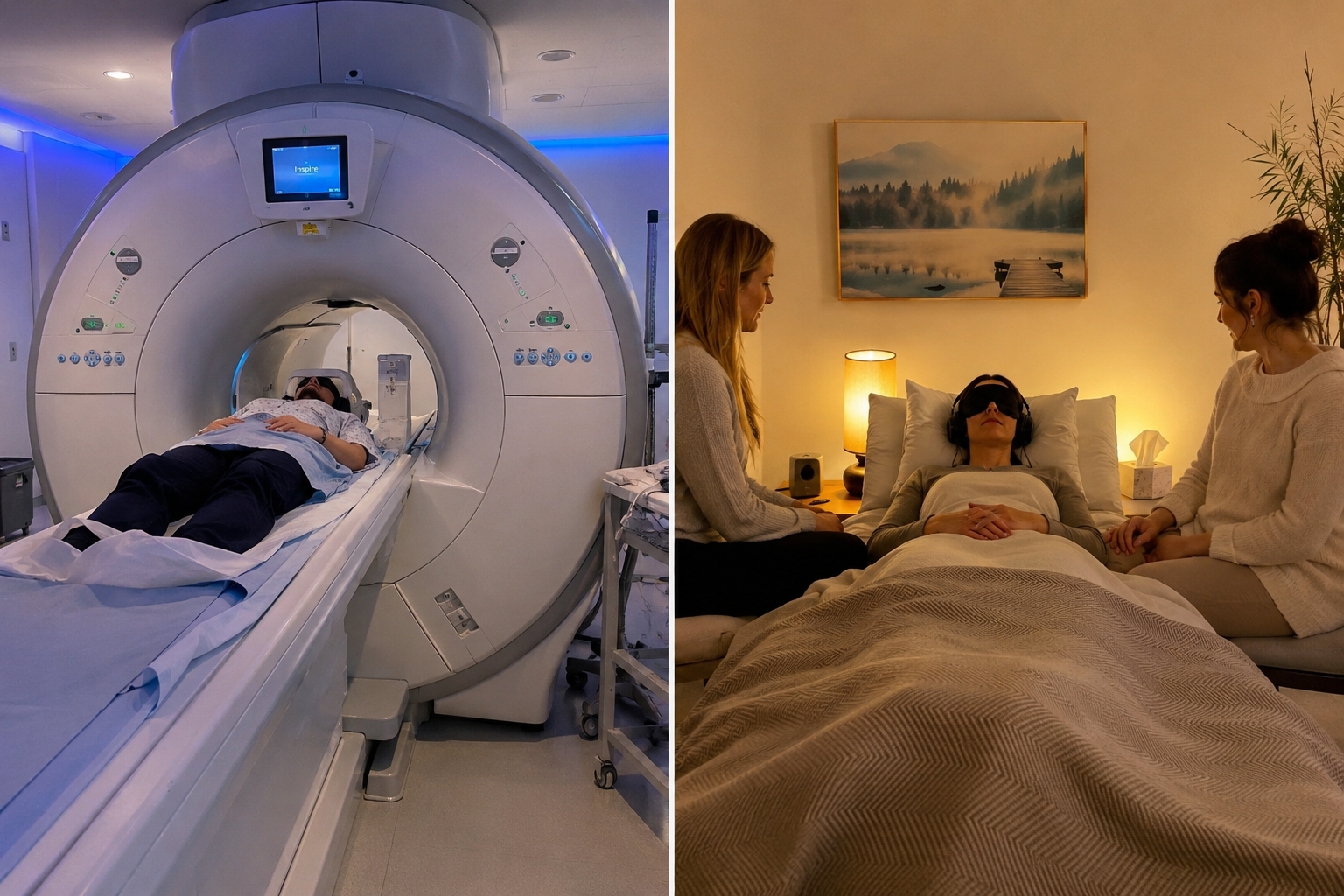
A new systematic review out of Wroclaw Medical University just took a hard look at one of the most talked about claims in the microdosing world, that a small amount of LSD or psilocybin can quiet the noise of a distracted mind. The conclusion, published in the International Journal of Molecular Sciences, is that the current evidence is too weak to support it. In the one placebo-controlled trial that met scientific rigor, low-dose LSD performed no better than a sugar pill on core ADHD symptoms.
That’s not a fun headline for a publication like ours. But it’s an interesting result, and one worth sitting with rather than dismissing.
Why so many adults are reaching for this in the first place
The researchers, led by Prof. Donata Kurpas, point out that a lot of adults with ADHD simply aren’t getting relief from stimulants or non-stimulants, or they’re getting relief alongside side effects they’d rather not live with. So they go looking elsewhere, and social media is more than happy to hand them an answer. Psychedelics, taken sub-perceptually, supposedly sharpens focus and steadies mood without any of the hallucinogenic effects.
The team combed through the literature and found five studies that met their bar for inclusion. Three observational microdosing studies, one randomized controlled trial, and a small ritual ayahuasca pilot. In the naturalistic studies, people reported feeling sharper, calmer, and more emotionally regulated in the short term. But naturalistic studies are the kind of data that expectancy effects, self-selection, and inconsistent dosing tend to inflate. They can tell us what people experience but they can’t tell us why.
The gold-standard trial, double-blind and placebo-controlled, used low-dose LSD and found both groups improved similarly. Statistically, there was no separation between drug and placebo on the core symptoms that define ADHD.
The mechanism problem
Psychedelics do most of their known work through the serotonergic system, driving the kind of neuroplasticity that shows massive promise for depression and PTSD. ADHD, on the other hand, is fundamentally a dopamine and noradrenaline story, the neurotransmitters that govern executive function, working memory, and impulse control.
Kurpas is careful to say the hypothesis remains just that, a hypothesis, and one that current pharmacology doesn’t obviously support.
Which raises the question: is this a case where psychedelics simply don’t work for ADHD, or a case where we haven’t yet figured out how to study them properly?
A more hopeful reading of the same data
It’s worth remembering that a single RCT, using a single compound, at a single dose, in a small sample, is not the final word on anything. It’s a first pass. And there are real reasons to think the current study designs might be missing what’s actually going on.
For one, dosing standardization in psychedelic research is still in its infancy. Fadiman and Gruber’s “sweet spot” model, the idea that microdosing benefits only appear in a narrow window and vanish entirely outside it, has already caught out at least one ADHD study that used a dose twice the size of an effective microdose on the assumption that more would be easier to measure. If that pattern holds across this newer research too, then a null result may say more about dose selection than about whether the underlying mechanism is real.
For another, most published psilocybin research uses the isolated compound rather than the whole mushroom extract, and there’s a growing argument that the additional compounds fungi produce alongside psilocybin change how the whole thing behaves in the body. If that’s true, an isolated-molecule trial and a whole-mushroom microdose could plausibly produce different results in the same population, and right now we simply haven’t tested that distinction directly for ADHD.
There’s also the emotional regulation angle, which the review itself flags as an area of subjective improvement even where core attention symptoms didn’t move. A huge proportion of adult ADHD experience is the emotional dysregulation, the rejection sensitivity, the shame spirals that pile on top of the attention difficulties. If psychedelics are doing something useful there, a trial designed only to measure attention and impulsivity on a standard rating scale would miss it entirely.
None of this rewrites the data we have. But it’s a reminder that “no significant difference from placebo” is a statement about a specific protocol, not a verdict on an entire field. Kurpas herself is calling for standardized dosing, clear diagnostic criteria, longer follow-up, and outcome measures that go beyond symptom checklists into sleep, relationships, and daily functioning.
Where this leaves us
The honest answer is that we don’t yet know if psychedelics can help with adult ADHD. There is plenty of anecdotal research, but stronger evidence doesn’t exist.
The people reporting real benefit deserve research designed carefully enough to find out whether that benefit is real, and if so, why.
Keep up with the research here.