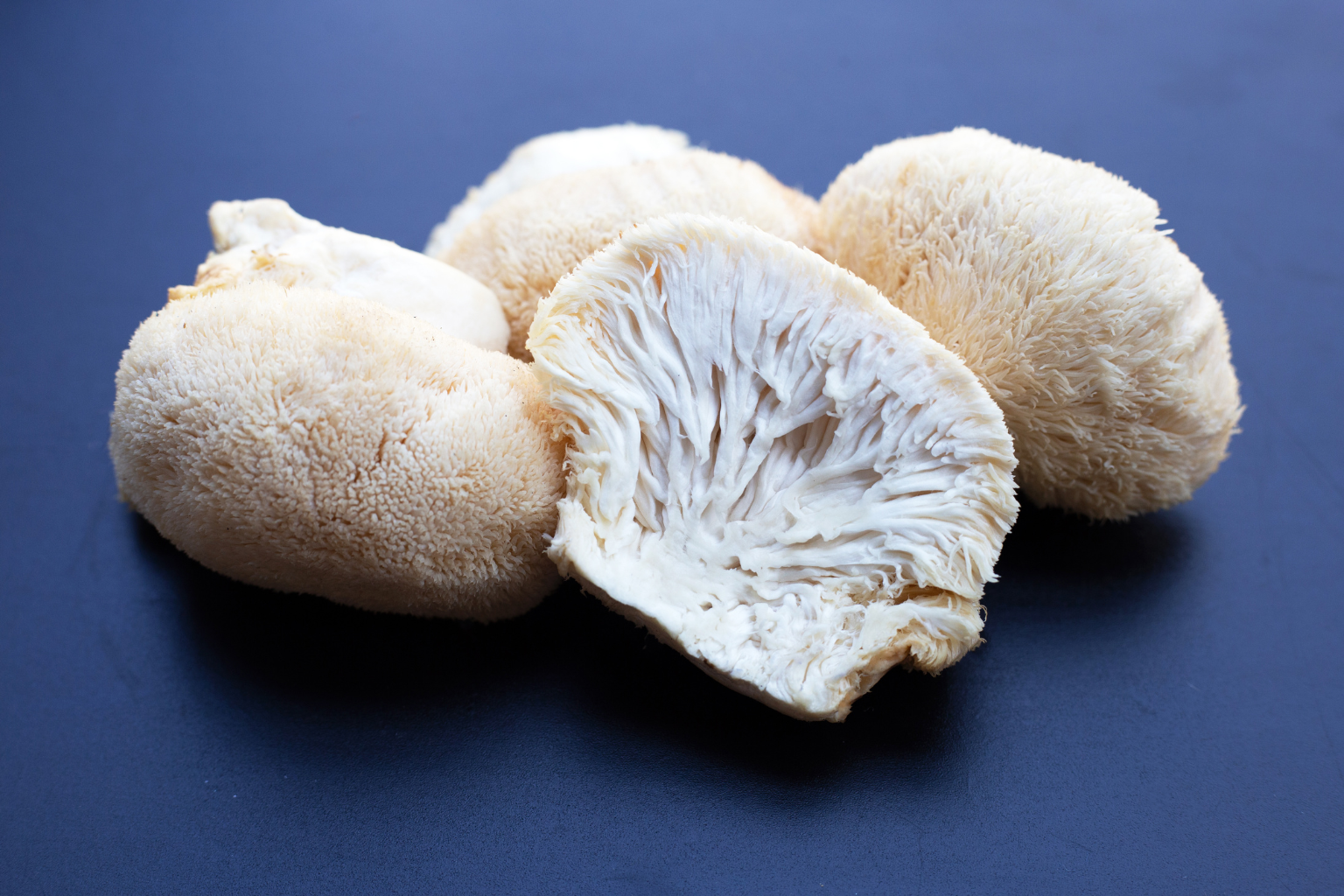
A new study screened 29 Lion’s Mane strains, optimised one for maximum ergothioneine output, and tested its extract against Alzheimer’s disease in a transgenic mouse model. The results span cognitive function, brain inflammation, oxidative stress, and the gut microbiome.
There is no shortage of Lion’s Mane hype. Most of it centres on hericenones and erinacines, the compounds that stimulate nerve growth factor and have earned the mushroom its reputation as a brain health supplement. But a study just published in Frontiers in Nutrition points toward a different active compound in Hericium erinaceus – one that has been accumulating serious research attention across the broader longevity and brain health literature.
It’s called Ergothioneine. And the findings are worth a careful look.
What the Researchers Did
The team started by testing 29 different strains of Lion’s Mane mushroom, looking for whichever one naturally produced the most ergothioneine (EGT) – a powerful antioxidant that most mushrooms make in small quantities. One strain, HE-17, won out.
Then they got to work optimising. By tweaking things like humidity, fermentation time, and the nutrients the mushroom was grown on, they pushed EGT production as high as they could. The end result was a water-based extract that contained roughly 2.4 times more EGT than the raw mushroom material.
They then gave this extract to mice that had been genetically engineered to develop Alzheimer’s-like disease: amyloid plaques building up in the brain, memory declining, and neurons deteriorating. Over 90 days, different groups of mice received either a low dose of the extract, a high dose, or pure EGT on its own at the same amount as the low dose. Then they tested the mice on memory and examined their brains.
The Results
The memory test works like this: a mouse is placed in a circular pool of opaque water with a hidden platform just below the surface. Healthy mice learn where it is and navigate straight to it. Mice with Alzheimer’s-like disease circle aimlessly, spending less time in the right area and crossing the platform location less often.
The untreated Alzheimer’s mice behaved exactly as expected – scattered, unfocused, spending less time near where the platform had been. The mice that received the Lion’s Mane extract showed clear improvement, spending more time in the right zone and crossing the platform more frequently. High-dose performed better than low-dose, and both outperformed the untreated Alzheimer’s group.
When the researchers looked at brain tissue under a microscope, the same pattern held. Untreated Alzheimer’s mice showed shrunken, disorganised neurons in the hippocampus (the brain region most critical for memory). High-dose extract partially reversed this. Neurons were better preserved, more orderly, closer to what a healthy mouse brain looks like.
At the molecular level, two of the defining features of Alzheimer’s disease – amyloid plaques and tau tangles – were both reduced in the treated groups. One interesting detail is that the mice that received pure EGT had slightly more amyloid remaining than the mice that got the full mushroom extract. That suggests other compounds in Lion’s Mane are pulling their weight too, not just the ergothioneine.
Inflammation and Oxidative Stress
Alzheimer’s is often described as a memory disease, but at the cellular level it’s characterized by slow, chronic in the brain over years or decades. The researchers measured three proteins the immune system produces when it’s in a state of alarm: TNF-alpha, IL-1beta, and IL-6. In the untreated Alzheimer’s mice, all three were significantly elevated in both the blood and the brain tissue.
The Lion’s Mane extract brought them down. The high dose brought them down further.
Alongside the inflammation, the researchers measured oxidative stress, which is essentially the accumulation of toxic byproducts that damage cells when the brain’s natural antioxidant defences are overwhelmed. In Alzheimer’s, those defences are compromised. Key antioxidant enzymes like superoxide dismutase and catalase were depleted in the untreated Alzheimer’s mice, while markers of cellular damage were elevated. The extract partially restored the antioxidant system, and the high dose also brought acetylcholine back up – the neurotransmitter most directly linked to memory and focus, and one of the first casualties of Alzheimer’s.
So how does EGT actually do this? Here’s where it gets interesting. Most antioxidants you eat drift passively through the body and distribute fairly randomly. EGT is different. Your body has a dedicated transporter (called OCTN1) that actively pulls EGT out of the bloodstream and concentrates it in tissues that are under the most oxidative stress. The brain happens to be one of the places OCTN1 is most abundant. So EGT accumulates exactly where the damage is happening, and once there, it neutralises the reactive molecules driving that damage.
The Gut Microbiome
Alzheimer’s disease has a gut component that most people haven’t heard of. People with Alzheimer’s tend to have a characteristic imbalance in their gut bacteria, including elevated levels of two bacterial groups (Fusobacteriota and Proteobacteria) that are associated with inflammation and gut barrier breakdown. When the gut lining is compromised, inflammatory signals can travel via the bloodstream and the vagus nerve all the way to the brain, making neuroinflammation worse.
The low-dose Lion’s Mane extract significantly reduced both of these bacterial groups. It also increased Lactobacillus, a genus of bacteria associated with better cognitive function, including the production of acetylcholine (the same neurotransmitter that Alzheimer’s disease destroys in the brain).
Strangely, the high dose didn’t produce the same gut shifts even though it worked better in the brain. That inconsistency probably just reflects how complex the gut ecosystem is. It doesn’t always respond in a neat, dose-dependent way. But the broader implication is that EGT is absorbed in the gut before it ever reaches the brain. What happens in that gut environment along the way may play an important part in how the compound works.
What This Means (and What It Doesn’t)
Some important caveats before reading too much into this.
These were mice. Specially engineered mice that develop Alzheimer’s-like pathology fast, which makes them useful for research, but human Alzheimer’s disease takes decades to develop and involves a level of genetic and lifestyle complexity that no mouse model fully captures. Many compounds that work brilliantly in these mice have failed in human trials.
The study also only used male mice. Alzheimer’s disease affects women at roughly twice the rate it affects men, and sex differences in how the disease progresses are real. Female animals need to be in future studies.
What this research does offer is a detailed, biologically plausible picture of how an EGT-rich Lion’s Mane extract interferes with Alzheimer’s pathology at multiple levels simultaneously. That’s a meaningfully different profile from a single pharmaceutical compound hitting a single target.
The mushroom is not a treatment for Alzheimer’s disease. But it contains a compound your brain actively recruits and concentrates in its most stressed regions, and one that appears to work on several of the mechanisms that drive neurodegeneration at once. That’s a different conversation from the usual Lion’s Mane narrative, which focuses almost entirely on nerve growth factor. And it may be the more important one.
If you’re in the UK, these two are worth checking out.
Our dual-extracted Lion’s Mane captures the full spectrum of bioactive compounds the researchers identified – water and alcohol extraction means nothing gets left behind. Pair it with our 25mg L-Ergothioneine and you’re giving your brain the dedicated dose that your body actively transports and concentrates in its most stressed regions.
Lion’s Mane Capsules
L-Ergothioneine 25mg